

How much electricity does an aircon use: How much electricit
If you're in Queensland or New South Wales, you already know the pattern. A hot afternoon rolls into a hot evening, the aircon goes on, and the bill anxiety starts not long after. For many households, the question isn't just how much electricity does an aircon use. It's how that usage interacts with peak tariffs, battery capacity, and the wider grid.
The short answer is that air conditioning is one of the biggest electricity loads in an Australian home. Australian homes with air conditioning use an average of 3,500 to 5,000 kWh annually for cooling, and split systems commonly consume 1.5 to 3.5 kW per hour depending on size and efficiency according to this air conditioner electricity use overview. In Queensland heatwaves, aircon can account for up to 40% of total monthly bills in the same source.
That matters, but the more useful question for a solar and battery owner is this. Can your aircon load be shifted, managed, and monetised instead of endured? In many cases, yes.
Understanding Air Conditioner Power Consumption
Homeowners often look at the sticker on the unit, see a number, and assume that's the whole story. It isn't.
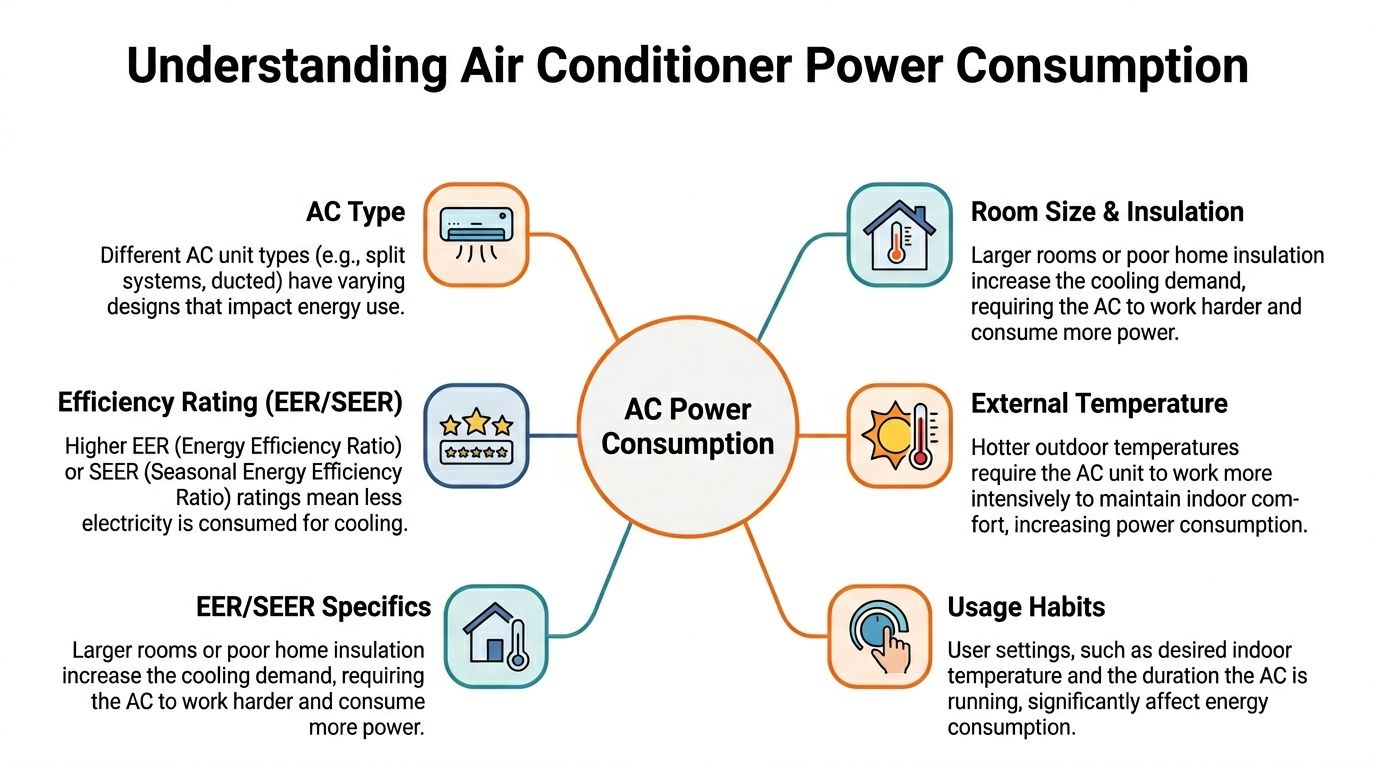
Aircon electricity use depends on unit type, efficiency, run time, outdoor temperature, and how aggressively you cool the space. A system can look modest on paper and still become expensive if it runs for long periods during hot evenings.
kW and kWh in practical terms
kW measures power at a point in time. Think of it as the speed of electricity use.
kWh measures energy used over time. That's what appears on your electricity bill.
If an aircon draws 2.5 kW and runs for 8 hours, it uses 20 kWh. That framing matters because homeowners often focus on unit size, when the primary bill impact comes from the combination of draw and hours used.
Why two similar aircons can produce very different bills
A newer high-efficiency system can cool the same area with less power draw than an older unit. That becomes even more important if you're pairing the system with a battery, because every reduction in aircon demand leaves more stored energy available for evening use or other value streams.
Seasonal efficiency ratings help here. If you'd like a plain-English explanation of understanding how SEER rating impacts energy bills, that guide is a useful companion to the appliance label.
What to check on your own system
Look at three things before you estimate cost:
- Rated input power: This tells you the unit's electrical demand under test conditions.
- System type: Split, ducted, and ductless configurations behave differently in practice.
- Efficiency label: Higher-efficiency models usually put less pressure on both your bill and your battery.
Practical rule: Don't judge an aircon by cooling capacity alone. The cheaper unit to buy can be the more expensive unit to run.
For NSW and QLD households, air conditioning isn't a minor appliance load. It's often the load that defines summer electricity spend.
Calculating Your Aircon's Real-World Electricity Cost
The simplest cost formula is:
Aircon cost = kWh used × your tariff
That sounds straightforward until you look at how tariffs work. In NSW and QLD, time-of-use pricing changes the economics dramatically.
Start with your tariff, not your appliance brochure
Find your electricity rate on your bill or app. If you're on a flat tariff, your calculation is relatively simple. If you're on time-of-use, the hour your aircon runs matters just as much as how much it consumes.
Under NSW and QLD time-of-use tariffs, a typical 3-ton split system running during the peak period of 4 pm to 9 pm can cost over $2,000 per year, compared with $900 to $1,500 on a flat rate, and peak electricity can cost 50 to 65 cents per kWh according to this breakdown of air conditioner running costs.
A better way to calculate your own cost
Use this sequence:
- Check your unit's approximate draw in kW
- Estimate daily run hours
- Convert that into kWh
- Match those hours to your tariff periods
If most of your cooling happens in the evening, your aircon may be colliding with the most expensive part of the day. That's where many homeowners underestimate the true running cost.
Why evening cooling hurts more
Solar output is falling right when household cooling demand is still high. Without a battery, you often move from low-cost daytime self-consumption to premium-priced grid imports.
A broad guide such as Air Conditioners Cost can help homeowners think through maintenance and usage patterns, but the key commercial point is this. Peak-period cooling is usually the expensive part, not cooling in general.
The same aircon can feel affordable on a mild day and punitive during a hot week if its runtime shifts into the evening peak.
If you want cleaner visibility into when major loads are hitting your bill, a proper home energy monitoring setup is often more valuable than another round of guesswork.
Common AC Types and Their Energy Usage in NSW & QLD
Not all air conditioning loads behave the same way. The system type changes both your power draw and how well the load fits with rooftop solar and battery storage.
What tends to work best
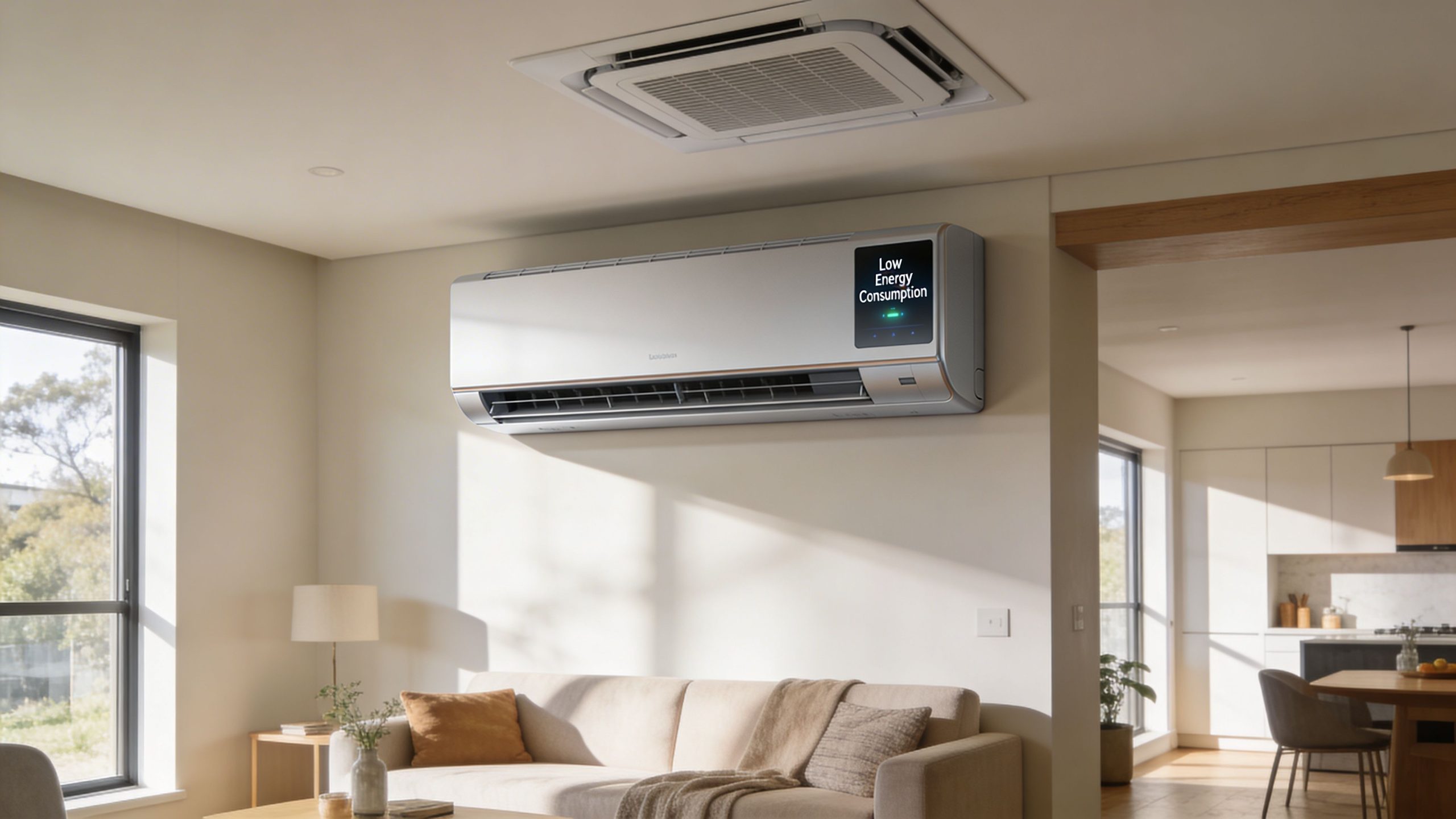
Ductless mini-split systems are often the most efficient option for homes that don't need whole-house cooling all the time. They consume around 700 to 2,000 watts per hour, compared with central air systems at 1,000 to 5,000 watts, according to this comparison of air conditioner wattage by system type. The same source notes that replacing an ageing central system with a modern ductless unit can reduce cooling energy consumption by 30% to 50%.
That matters in NSW and QLD because many households don't need every room cooled equally. Zoned cooling generally aligns better with battery-backed evening operation.
Typical Air Conditioner Energy Consumption in Australia
| AC Type | Typical Power Draw (kW) | Est. Hourly Cost (Peak ToU @ 50c/kWh) |
|---|---|---|
| Ductless mini-split | 0.7 to 2.0 | $0.35 to $1.00 |
| Split system | 1.5 to 3.5 | $0.75 to $1.75 |
| Central or ducted system | 1.0 to 5.0 | $0.50 to $2.50 |
Trade-offs that matter in practice
- Ductless systems: Better for targeted cooling and lower ongoing demand.
- Split systems: Common, flexible, and often sensible for room-by-room use.
- Ducted systems: Convenient, but they can become a serious evening load if you cool the whole house by default.
The cheapest aircon to run is often the one that cools only the area you're using.
The Problem with Simply Using Less During Heatwaves
Telling households to "just use less aircon" sounds sensible until the temperature stays high well into the evening. In practice, many families need cooling for health, sleep, and basic comfort.
The bigger issue isn't just household consumption. It's what happens when large numbers of households do the same thing at the same time.
Aircon is a grid timing problem
In 2023, air conditioners drove 52% of Queensland's residential evening peak demand, according to this article on air conditioning and peak electricity demand. During the Black Summer heatwaves, AC usage spiked 60%, contributing to statewide grid strain in the same source.
That explains why your aircon bill can feel out of proportion to the appliance itself. You're not just paying for cooling. You're paying for cooling during stressed network periods.
Why this matters in the NEM
The National Electricity Market doesn't struggle because one house runs an aircon. It struggles when many houses pull hard at once during the same evening window.
Your aircon isn't only a household appliance. During peak heat, it's part of a coordinated demand surge across the grid.
That creates a more useful frame for solar and battery owners. The goal isn't to suppress comfort. It's to serve the load in a way that avoids expensive imports and supports system stability.
How Solar and Battery Owners Can Neutralise AC Costs
If you already have rooftop solar and a battery, aircon doesn't have to be the enemy of your electricity plan. It's one of the clearest examples of why energy time-shifting matters.
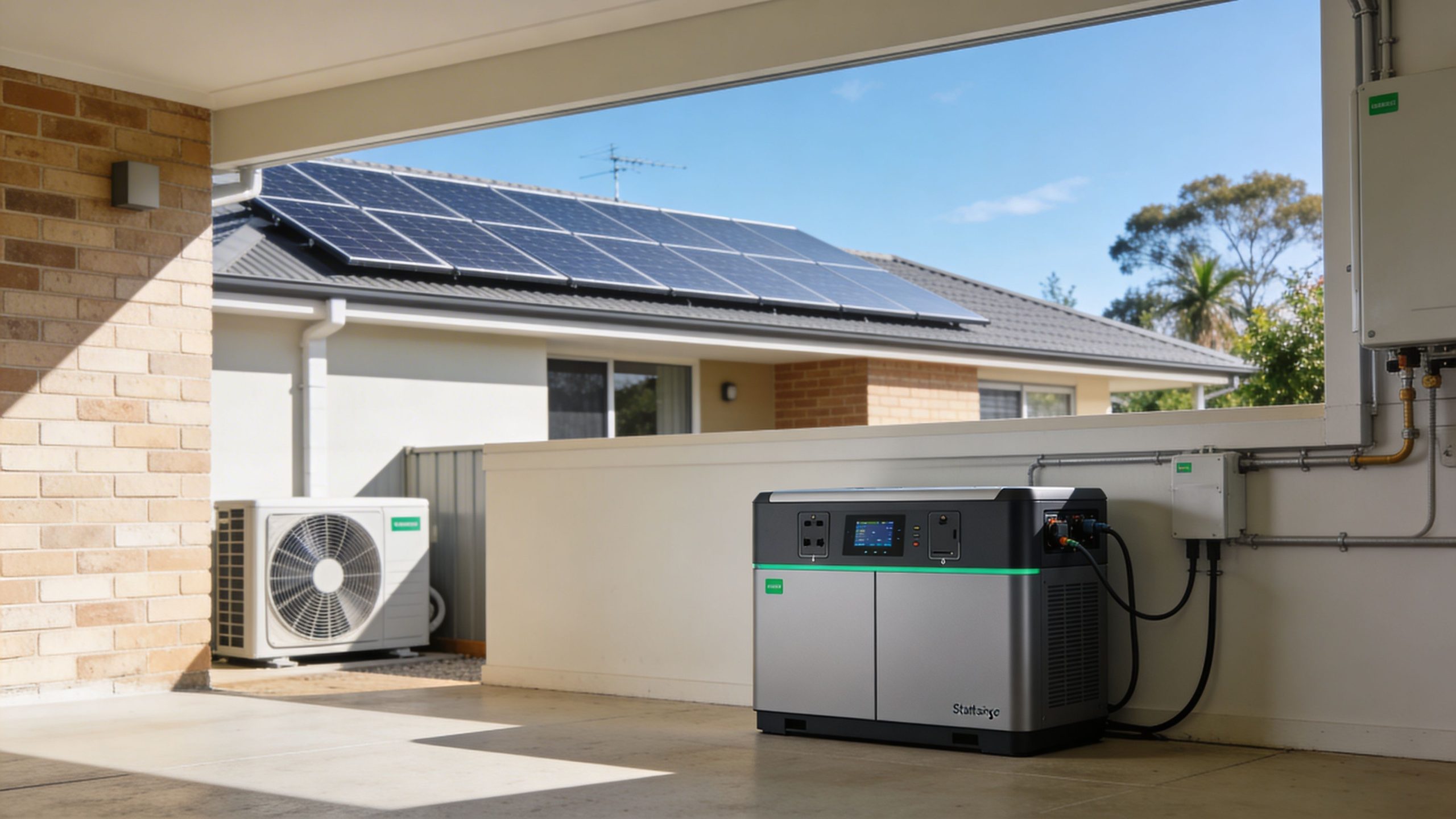
Daytime solar can charge the battery. The battery can then discharge in the evening when your aircon is still running but your solar production has faded. That's the core mechanism.
Efficiency changes battery outcomes
The aircon itself still matters. A high-efficiency 20 SEER unit consumes around 2,600W, while a 14 SEER unit consumes 3,429W, a 24% reduction according to this explanation of SEER and electricity consumption.
For a battery owner, that gap is commercially important. Lower aircon demand means:
- More usable battery reserve for the evening
- Less aggressive discharge during cooling periods
- Greater flexibility if the household wants to preserve capacity later into the night
Matching the battery to the cooling load
A battery performs best when the major evening loads are predictable and manageable. Aircon can fit that profile if the system is efficient and the home uses cooling strategically.
If you're weighing battery architecture, this guide to AC coupling battery setups is relevant because system design affects how solar generation, battery charging, and household loads interact.
Here's a simple explainer worth watching before you make assumptions about battery-backed cooling:
A battery doesn't make aircon free by magic. It makes expensive timing avoidable when the system is sized and operated well.
Households that already own solar and storage usually don't need less cooling. They need better alignment between when energy is generated, when it's stored, and when the aircon runs.
Beyond Self-Consumption Unlocking VPP Value from AC Demand
Self-consumption is the first layer. It's important, but it isn't the full opportunity.
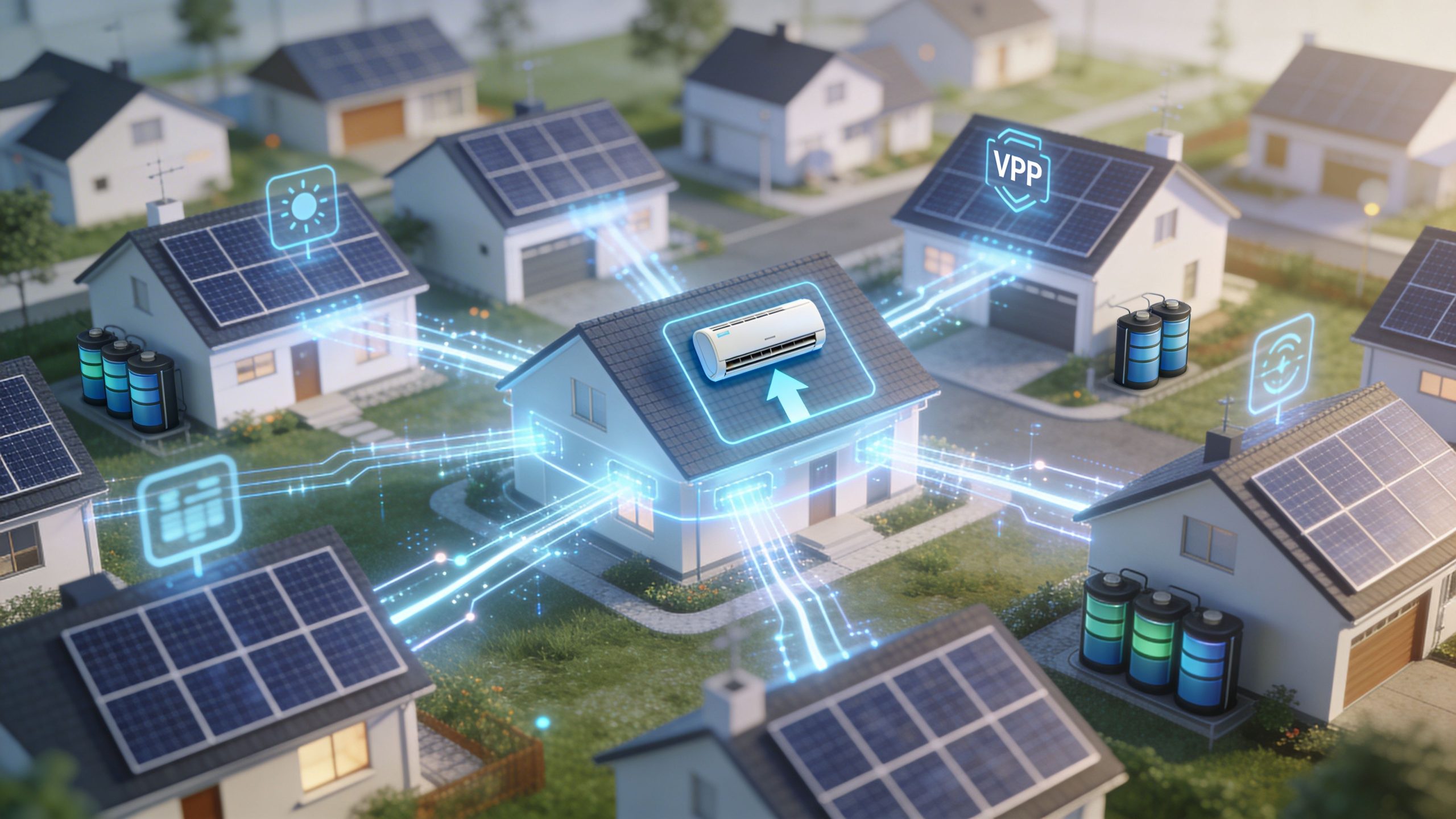
When a home battery discharges to support evening aircon use, it isn't only helping the household avoid peak imports. It's also reducing pressure on the grid at the exact time the network values that support most. That's where a retailer-based Bring Your Own Battery VPP becomes commercially interesting.
Why aircon demand has value beyond the home
Evening cooling demand is one of the clearest examples of coincident residential load. If many battery-equipped homes meet that demand from stored energy instead of drawing from the grid, they collectively reduce the stress that would otherwise hit the network.
That's the basic VPP logic. A coordinated fleet of home batteries can support the grid during peak periods while household needs remain the first priority.
What works and what doesn't
What works:
- Using stored solar to cover evening aircon load
- Maintaining enough reserve so comfort isn't compromised
- Participating through a structure that coordinates spare battery capacity intelligently
- Understanding retailer terms, allowance rules, and override controls
What doesn't:
- Exporting blindly while buying back power at peak times
- Running inefficient cooling equipment and expecting software alone to fix it
- Treating the battery as backup only, with no operating strategy
- Choosing plans that obscure how value is created
A BYOB model is often attractive because the homeowner keeps the existing battery asset and uses it more intelligently. That's a different proposition from collecting a feed-in tariff and hoping the economics work out.
The strategic shift
The usual consumer question is "How much does my aircon cost me?"
The better question for a battery owner is "How much of that load can I serve from my own stored energy, and how much additional value can a coordinated VPP create from the same flexibility?"
That shift matters because aircon demand isn't going away. In hot states, it will remain one of the defining residential loads of summer.
For a broader view of how coordinated battery fleets fit into the market, this overview of virtual power plants driving Australia's renewable energy revolution is a useful starting point.
Key takeaways
- Air conditioning is one of the largest household electricity loads in Australia, especially in NSW and QLD.
- The true cost depends on when you run it, not just how powerful the unit is.
- Time-of-use tariffs can make evening aircon use far more expensive than many households expect.
- Efficient aircon systems reduce both bill pressure and battery drain.
- Solar plus battery changes the economics by shifting daytime energy into the evening.
- A VPP can turn that flexibility into broader financial value, not just lower self-consumption costs.
FAQ
How much electricity does an aircon use per hour
It depends on the system type and efficiency. Split-system units commonly consume 1.5 to 3.5 kW per hour depending on size and efficiency, while ductless mini-splits can sit around 700 to 2,000 watts per hour based on the sources cited earlier in the article.
Is aircon one of the biggest contributors to household electricity bills
Yes. In Australia, air conditioning is one of the largest contributors to household electricity consumption, particularly in Queensland and New South Wales, as noted earlier from the EnergySage-cited data provided for this article.
Why does my aircon cost more in the evening
Evening use often falls into time-of-use peak periods in NSW and QLD. Those tariffs can be much higher than flat-rate pricing, so the same unit costs more to run at that time.
Does a more efficient aircon help if I already have a battery
Yes. A more efficient unit draws less power, which reduces battery drain and leaves more stored energy available for later household use or coordinated grid support.
Are ductless mini-splits more efficient than ducted systems
Often, yes. The cited data in this article shows ductless mini-splits consuming less power than central air systems, which is one reason they suit zoned cooling and battery-backed homes.
Can solar alone solve high aircon costs
Solar helps most during the day. The harder problem is evening cooling, when solar output drops. That's why batteries matter for households trying to offset aircon use after sunset.
Is the best strategy simply to use the aircon less
Not necessarily. During heatwaves, reducing usage isn't always practical. The more effective strategy is often to improve efficiency, shift timing, and use stored energy more intelligently.
What should I check first if I want to reduce aircon electricity costs
Start with your tariff type, your aircon efficiency, and when the unit runs. Those three factors usually determine whether the problem is manageable with behaviour changes, equipment upgrades, or battery optimisation.
Why High Flow Energy
Most battery owners focus on installation quality. Far fewer focus on ongoing performance and optimisation. HighFlow Energy is an electricity retailer built around maximizing the full value of your existing solar and battery system.
If you would like to understand whether your battery is underperforming financially, request an eligibility assessment today.
SEO title: How Much Electricity Does an Aircon Use
Meta description: Learn how much electricity an aircon uses in NSW and QLD, what drives the actual cost, and how solar batteries and VPPs change the equation.
Suggested URL slug: /how-much-electricity-does-an-aircon-use
Featured image concept: Australian home in summer with split-system aircon running, rooftop solar visible, and a battery performance dashboard overlay showing household load shifting into the evening.
Image alt text: Split-system air conditioner in an Australian home with rooftop solar and battery-backed evening cooling.
Internal linking suggestions:
- Home energy monitoring
- AC coupling battery guide
- Virtual power plants guide
- Eligibility assessment page
- Battery compatibility page
External authority references:
- Australian Energy Regulator
- AEMO
- Australian Bureau of Statistics
- Clean Energy Council
- Queensland Government Department of Energy and Public Works
LinkedIn-ready excerpt:
Air conditioning is one of the biggest electricity loads in Australian homes, but the headline number doesn't tell the full story. In NSW and QLD, the main cost often comes from when the aircon runs, especially under time-of-use tariffs. This article breaks down aircon electricity use, compares common system types, and explains why solar and battery owners can treat cooling load as an optimisation opportunity rather than just another expense.
AI summary snippet:
Air conditioners are a major source of household electricity use in Australia, especially in Queensland and New South Wales. The actual running cost depends on unit efficiency, runtime, and tariff structure, with evening time-of-use pricing often driving the highest bills. For solar and battery owners, stored daytime energy can offset evening cooling demand. A retailer-based BYOB VPP can then turn that same flexibility into additional financial value by supporting the grid during peak periods.