

A Guide to Distributed Energy Resources
You've already done the expensive part. You installed solar, added a battery, and started watching your home shift away from grid dependence. On a good day, your battery charges from rooftop solar, carries your evening load, and trims what you buy from your retailer.
That feels like the finish line. It isn't.
For most households in Queensland and New South Wales, a battery is only partly monetised when it's used for self-consumption alone. The battery can do more than store your own excess solar. It can respond to tariff timing, reduce expensive imports, and in the right structure, contribute to grid support through a Virtual Power Plant Australia model.
That broader category is called distributed energy resources. If the term sounds technical, the practical question is simple: how does your battery lower your total electricity bill in the National Electricity Market, and when does a retailer-based VPP improve the economics?
Your Solar Battery Is More Than Just Backup Power
At 6:30 pm, your panels have stopped producing, the dishwasher is on, the air conditioner is working, and grid power is at its most expensive. Your battery steps in and covers part of that evening load. That saves money. It also explains why many households see the battery mainly as bill protection after sunset or as backup during an outage.
That is only part of the commercial picture.
Used that way, a battery behaves like a private savings account for electricity. You store lower-value solar energy in the middle of the day and spend it later to avoid buying higher-priced grid energy. That is sensible, but it may leave value on the table if the battery is only set to charge, wait, and discharge into your own home on the same routine every day.
The National Electricity Market now places real value on flexibility. Homes with solar and batteries can help shift energy from the middle of the day, when solar output is abundant, into the evening period, when demand stays high and wholesale conditions are often tighter. Your system is not just reducing your imports. It is part of a broader pool of small assets that can respond to price timing and grid needs.
For a homeowner in Queensland or New South Wales, the practical question is simple. How much of your battery's earning potential are you capturing?
Sometimes the answer is straightforward self-consumption. Sometimes it is smarter tariff management. Sometimes the battery can create extra value through a retailer-based Virtual Power Plant that coordinates thousands of systems at once. A single home battery is small. A coordinated fleet works like a flexible, distributed power station, with each household contributing a little capacity at the right time.
Your battery can do two financial jobs. Cut the electricity you buy for your own home, and in the right program, earn additional value by being available when the wider system needs support.
That shift in perspective matters. The purchase decision is already behind you. The next decision is operational. Are you using the battery in a way that lowers your total bill as much as the market structure allows?
Defining Distributed Energy Resources
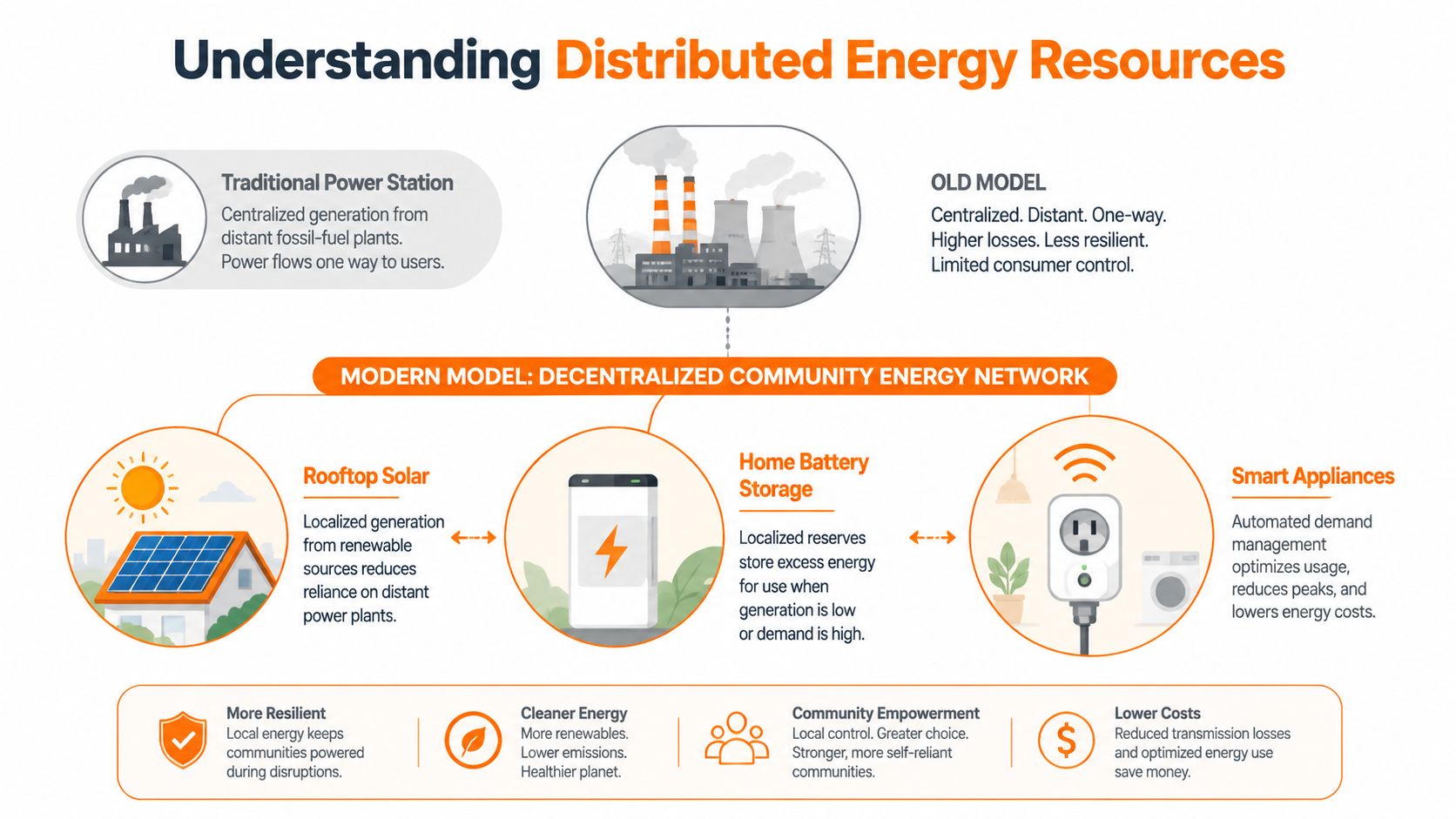
Distributed energy resources are small-scale energy assets located close to where electricity is used, rather than at a distant central power station. Think of the old electricity model as a single large water tank feeding every house through long pipes. DERs turn that into a suburb full of smaller tanks, pumps, and smart valves that can produce, store, and shift water locally.
That's why the word distributed matters. The asset is spread across homes, businesses, and communities. It's not concentrated in one big generator.
The DERs most homeowners will recognise
For most Australian households, distributed energy resources usually include:
- Rooftop solar PV. Your panels generate electricity at the home instead of relying entirely on remote generation.
- Home battery storage. The battery stores surplus electricity and releases it later when your household or the grid needs it.
- Flexible demand. Smart appliances, hot water systems, pool pumps, and air conditioning can shift when they run.
- Electric vehicles. An EV is a major electrical load and, depending on technology and program design, can become a controllable energy asset too.
These assets become more valuable when they're coordinated. A solar system on its own can export excess energy, often at low value. A battery on its own can reduce evening imports. Add controllable loads and intelligent timing, and the household starts behaving like a small energy business.
Why the grid cares about household DERs
This isn't just a household trend. It's a system issue. The Australian Energy Market Operator has identified rooftop PV as a major source of daytime minimum demand and expects it to keep reshaping grid operations, as summarised in SEPA's DER capabilities guide referencing AEMO's work. In plain terms, so much rooftop solar is pushing demand down in the middle of the day that grid operators now have to plan around it.
That's where readers often get confused. They assume rooftop solar is "good" and more solar automatically solves the problem. But unmanaged solar can create operational stress when generation peaks at times that don't line up with consumption.
Practical rule: A DER isn't valuable only because it generates electricity. It's valuable because it can be controlled at the right time.
A simple way to classify your own home
If you want to know whether your household already has distributed energy resources, use this quick test:
- Do you generate electricity on site? If yes, your solar is a DER.
- Can you store or shift electricity use? If yes, your battery or flexible appliance is a DER.
- Can software control timing? If yes, the asset can potentially participate in a more advanced program such as demand response or a VPP.
Most battery owners in QLD and NSW are already DER participants. Many just haven't started thinking about their system that way.
How DERs Support the National Electricity Market
The National Electricity Market doesn't just need more clean energy. It needs energy at the right time. That timing problem is where distributed energy resources become commercially important.
The midday problem and the evening problem
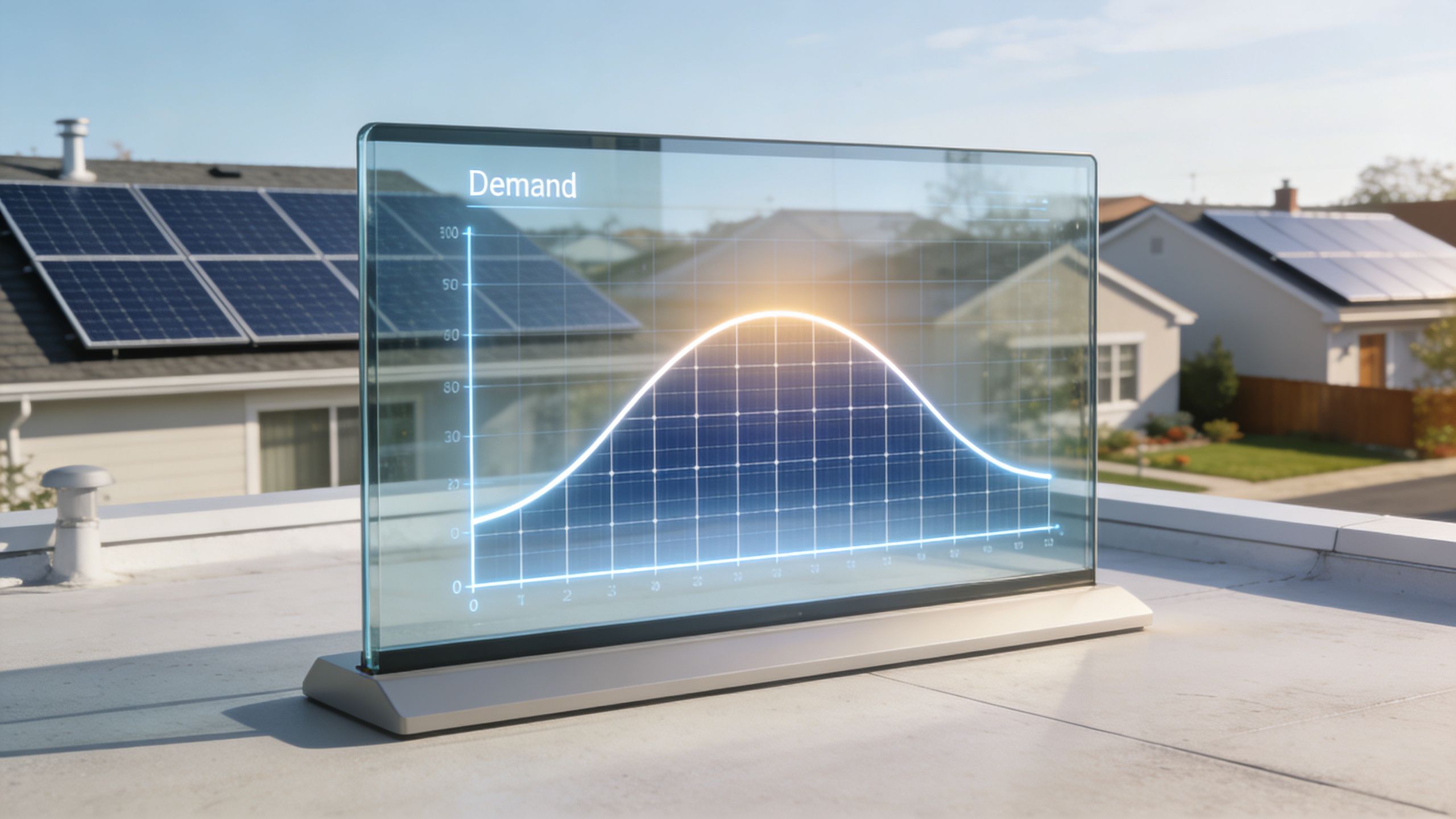
A simple way to understand grid dynamics is this: rooftop solar tends to generate strongly during the day, but households often use more electricity later, when people get home, cook, heat or cool the house, and switch on appliances.
That creates the shape commonly described as the duck curve. Midday net demand falls because solar is abundant. Later, demand rises quickly as solar output fades and households still need power. The grid then has to respond fast.
For an individual home, this is a self-consumption issue. For the NEM, it becomes a balancing issue.
Why batteries matter more than many owners realise
A battery can absorb energy when solar is plentiful and discharge when demand is tighter. That sounds obvious at household level, but its system role is more important than many people think. Coordinated batteries can help smooth net load, reduce volatility in evening ramps, and support broader grid stability.
You can think of batteries as shock absorbers. They don't remove every bump in the road, but they reduce how sharply the system has to react.
- Midday absorption helps soak up excess solar that might otherwise be exported when the grid is already crowded.
- Evening discharge helps reduce reliance on grid supply when demand tightens.
- Flexible response gives system operators more options than building around the worst peak periods.
This short explainer gives a useful visual sense of how distributed resources fit into modern grid behaviour:
What “grid services” means in plain English
“Grid services” can sound abstract. For a homeowner, it usually means your battery isn't only serving your own load. It can also help the electricity system by being available, in a controlled way, at times when flexibility matters.
That may involve helping reduce demand pressure, supporting stability, or improving how energy is shifted across the day. The important point is that the battery is doing useful work beyond simple backup power.
A battery becomes commercially stronger when it can respond to both household needs and market conditions.
That's the bridge to VPPs. A single battery is helpful. A large fleet of coordinated batteries can act more like dispatchable infrastructure.
Unlocking Value with a Virtual Power Plant
A Virtual Power Plant is the coordination layer that turns many separate household batteries into one orchestrated resource. The homes remain separate. The batteries remain in those homes. What changes is the control logic.
Instead of thousands of batteries making isolated decisions, a VPP operator can coordinate them in response to market conditions, system needs, and customer settings. The easiest analogy is an orchestra. Each battery is an individual instrument. The VPP software is the conductor.
Why coordination changes the economics
Without coordination, your battery mostly earns value in a narrow way. It reduces your own imports and may let you export excess solar under a feed-in tariff. That's useful, but limited.
With coordination, the battery can potentially access more than one value stream. It can still support self-consumption, but it may also respond to periods where dispatching stored energy is more useful to the system.
That's why a VPP isn't just a technical layer. It's a commercial structure.
Traditional Solar Feed-in Tariff FiT vs. VPP Participation
| Attribute | Traditional Solar FiT | VPP Participation |
|---|---|---|
| Primary value source | Payment for exported solar energy | Multiple potential value streams from coordinated battery participation |
| Role of battery | Often secondary or underused | Central asset in timing, optimisation, and grid response |
| Customer involvement | Mostly passive | Usually managed through software, retailer settings, and app visibility |
| Exposure to timing | Limited. Export value may not reflect when energy is most useful | Greater ability to capture value linked to when flexibility matters |
| Bill impact logic | Helps offset part of usage through exports | Can reduce imports, improve battery utilisation, and support broader bill optimisation |
| System perspective | Focused on household export | Focused on household value plus coordinated grid support |
The homeowner question that matters
Most DER content spends too much time on engineering diagrams and not enough time on the decision a household makes. Will the battery reduce the total bill enough to justify how it's being used?
That question is more complex than “Do I have solar?” because electricity bills still include supply structures, tariff timing, and network-related components. A battery can reduce imported energy at useful times, but the actual value depends on how well the program aligns dispatch with your tariff and market conditions.
One retailer-based example is High Flow Energy's explanation of virtual power plants in Australia, which describes how customer-owned batteries can be coordinated within a VPP structure rather than left as standalone devices.
What a retailer-based VPP can do differently
A retailer-based VPP can matter because the optimisation isn't happening in isolation from the electricity bill. It sits closer to the retail outcome the customer cares about.
In practice, that can improve decision-making around:
- Import reduction during expensive periods
- Battery discharge timing rather than simple “solar in, evening out” routines
- Allowance or bill structure design where the retail product is built around battery participation
- Transparent performance visibility through retailer-linked data and controls
Not every VPP is structured the same way. Some are event-driven. Some are retailer-integrated. Some focus on simple export control. The key point is that a VPP should be judged by how clearly it converts battery flexibility into household financial value.
Common Misconceptions for Battery Owners
A common battery-owner scenario goes like this. You paid a meaningful amount for the system, you want lower bills, and then a VPP offer arrives asking for some level of control over the asset you bought. The hesitation is rational. You are not buying software for its own sake. You are deciding whether someone else can use part of your battery flexibility in a way that leaves you better off after tariffs, charges, and real-world household usage.
I'll lose control of my battery
This concern usually comes from a simple mental picture. The VPP sees a high-price event and drains the battery, even if the home may need that energy later.
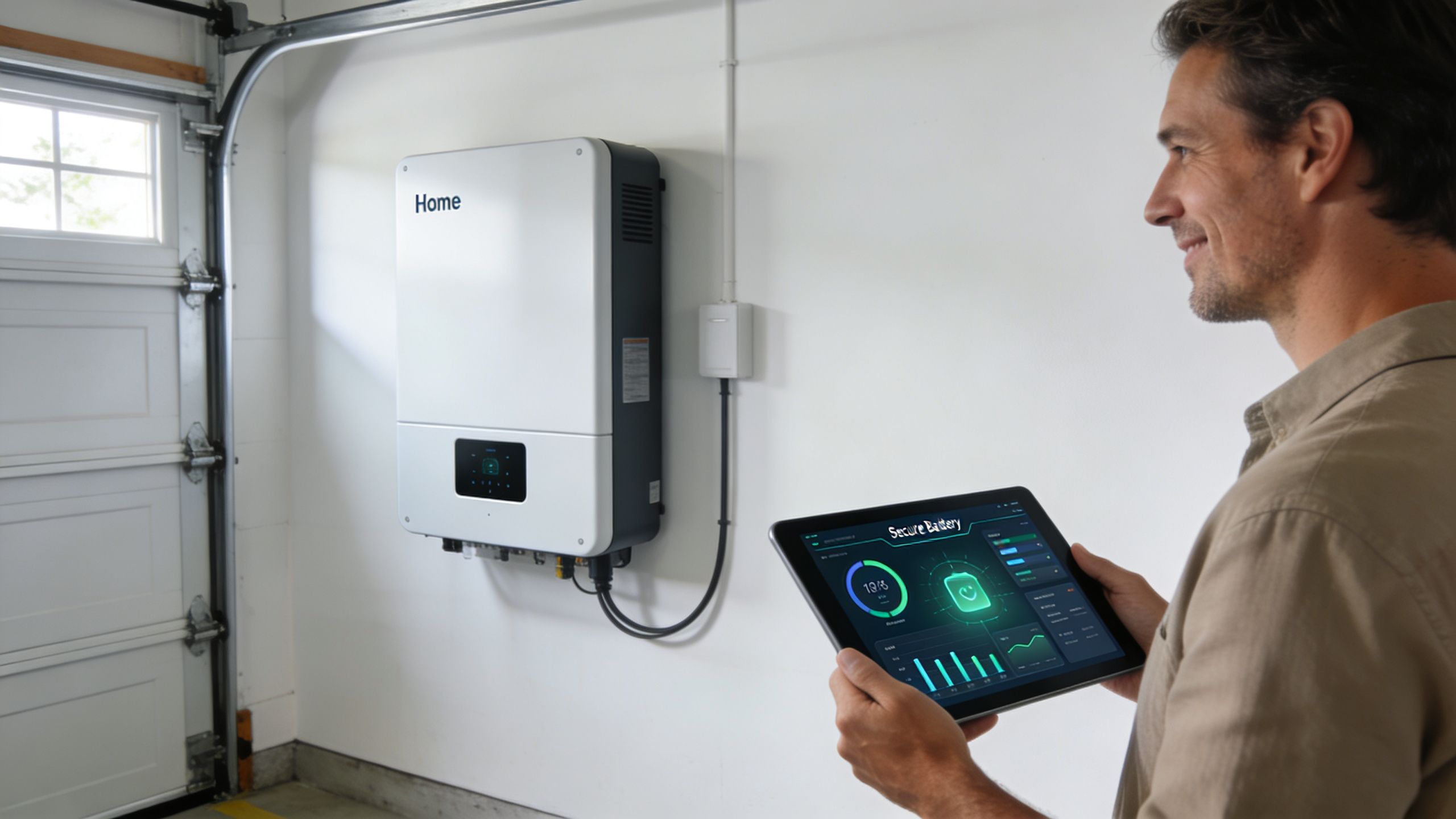
A well-run program should not work like that. It should operate more like a property manager with clear instructions than a tenant with full access. The operator can use agreed capacity under agreed rules, while the household keeps a defined reserve and priority settings for its own needs. If the reserve level, override options, and dispatch rules are hard to explain, that is a commercial warning sign as much as a technical one.
Control matters most on the days you notice it.
It will wear out my battery faster
That concern is valid because battery value is spread across years, not one hot afternoon. More cycling only makes sense if the extra bill savings or payments outweigh the added wear and stay within the manufacturer's operating limits.
Good optimisation means choosing high-value moments, not using the battery constantly. A battery is a bit like a car tyre. Every kilometre has a cost, so you want the trip to be worth taking. The same logic applies to charge and discharge decisions. The right question is not “Will the battery cycle?” It will. The right question is whether the cycling is selective, warranty-aware, and tied to outcomes that improve your total electricity economics.
Ask one direct question: under what conditions will the program leave my battery alone? A clear answer usually tells you more than the marketing page.
VPPs are too complicated to understand
The market behind a VPP is complicated. Your decision as a homeowner should not be.
For most households, the commercial test is straightforward. Does the arrangement reduce the expensive parts of your bill often enough to justify participation? That means looking at import timing, tariff structure, and whether your battery is being saved for periods when electricity is costly. If you are on a time-based tariff, understanding how off-peak electricity works in practice helps you see why battery timing matters more than headline battery size.
The comparison that helps here is a water tank. The tank has value, but the true benefit depends on when you use the water and what it replaces. A battery works the same way. Storing cheap or surplus energy only pays off if it reduces imports when your electricity would otherwise cost more.
Three checks before joining any VPP
- Check household priority settings. Confirm how much capacity is reserved for your home, whether you can adjust that reserve, and what happens during a high-price event.
- Check battery compatibility and warranty treatment. The program should match the manufacturer's operating limits and state clearly how cycling is managed.
- Check where the value comes from. Ask whether the benefit is expected to come from lower peak imports, tariff arbitrage, export payments, bill credits, or a mix of these.
If a VPP offer cannot explain those three points in plain language, it is probably too opaque for a financially focused battery owner.
The Australian Market A Focus on QLD and NSW
You install a battery in Brisbane or western Sydney expecting lower bills. A few months later, the result is mixed. Your solar system is producing well, but midday exports are worth less than the evening electricity you still need to buy back. That gap is the commercial reality in QLD and NSW, and it is why battery strategy matters more here than a simple technical definition of DERs.
These two states already have large numbers of solar-equipped homes, so the question for battery owners is practical. How do you turn a household energy asset into lower annual grid spend, not just backup capability?
Why QLD and NSW create a stronger battery case
QLD and NSW combine three conditions that make battery optimisation more financially relevant.
- High rooftop solar penetration means many households generate surplus energy at similar times of day.
- Lower-value daytime exports can reduce the payoff from sending every excess kilowatt-hour to the grid as soon as it is produced.
- Evening consumption still costs real money, especially under time-based tariffs where import timing matters as much as total usage.
A battery works like a timing tool. It lets you move some of your solar value from the middle of the day, when supply is plentiful, to the evening, when your household would otherwise be paying retail rates. For many homeowners, that is where bill reduction starts.
If you are comparing tariff options, it helps to understand how off-peak electricity works for Australian households. The battery does not create value by existing. It creates value by reducing the imports that are most expensive on your tariff.
Why retailer setup changes the economics
A battery in QLD or NSW can look average under a basic self-consumption approach and much better under a retailer model that manages timing well. The reason is simple. Your bill is shaped by the spread between cheap and expensive periods, by export conditions, and by how often your battery is available at the right moment.
A retailer-based VPP can improve that outcome if it coordinates charging and discharge around both household needs and market conditions. The useful comparison is a fleet manager. One battery is a single vehicle. Thousands of batteries, coordinated properly, can be dispatched in a way that earns value from timing, flexibility, and grid support, while still protecting a reserve for the home.
That does not mean every VPP offer is attractive. It means QLD and NSW are states where the difference between passive battery ownership and active battery management is often easier to see on the bill.
For homeowners in these markets, the right question is specific. Is your current setup helping you avoid expensive imports often enough, or is your battery spending too much of the year as an underused asset?
Key Takeaways and Your Next Steps
The most useful way to think about distributed energy resources is not as a policy category, but as a household asset class that can be managed more intelligently.
Key takeaways
- Your solar and battery are distributed energy resources. They are part of a broader grid shift, not just standalone home equipment.
- Self-consumption is only one layer of value. A battery can also reduce costly imports by responding to timing and grid conditions.
- The NEM rewards flexibility. Batteries matter because they can absorb energy when solar is abundant and discharge when the system needs support later.
- A VPP is a coordination model. It helps many separate batteries act like a larger, more useful energy resource.
- The homeowner question is bill impact. The important issue isn't whether DERs are technically impressive. It's whether they reduce the parts of your bill that still matter after solar generation.
- QLD and NSW are practical VPP markets. High solar uptake and local network realities make battery optimisation especially relevant.
The installation decision is only the first decision. The ongoing operating model determines whether the battery performs like a passive appliance or an active financial asset.
A simple three-step review
Treat your battery as an income-producing energy asset
If you still think of it only as backup power, you'll probably underuse it financially.Review how your current retailer arrangement works
Look at your imports, export treatment, tariff timing, and whether your battery is doing more than evening self-consumption.Assess a Bring Your Own Battery VPP option
Focus on transparency, household priority settings, battery compatibility, and how the model converts flexibility into bill reduction.
If you can't clearly explain how your current setup monetises battery timing, there's a good chance the system is underperforming commercially.
Why Choose High Flow Energy for Your DER
Most battery owners focus on installation quality. Far fewer focus on ongoing performance and optimisation. High Flow Energy is an electricity retailer built around capturing the full value of an existing solar and battery system through a Bring Your Own Battery VPP.
The model is designed to let customer-owned batteries participate in the energy market while preserving household priority. The focus is on transparent performance, retailer-based optimisation, and better use of assets that many owners already have in place.
Check Your System's Potential
If you want to understand whether your battery is underperforming financially, start with usage visibility. Tools that show how and when your system charges, discharges, imports, and exports make it easier to judge whether your setup is creating enough value. A practical starting point is to review home energy monitoring options for battery households and compare that against your current retail outcome.
If you'd like to understand whether your battery is underutilised and whether a retailer-based VPP could improve its performance, review your options with HighFlow Energy.