


Cars That Charge: Turning Your EV into a Financial Asset in 2026
Imagine your car doing more than just getting you from A to B. What if it could actively lower your electricity bills and even provide a financial return while parked in your driveway? We’re moving beyond simply plugging in—we're talking about turning a major household expense into a powerful financial asset.
This guide is for Australian solar and battery owners who understand that an electric vehicle (EV) is more than just transport. It's a key to unlocking greater value from your existing energy hardware.
Your Car Is Now One of Your Best Energy Assets
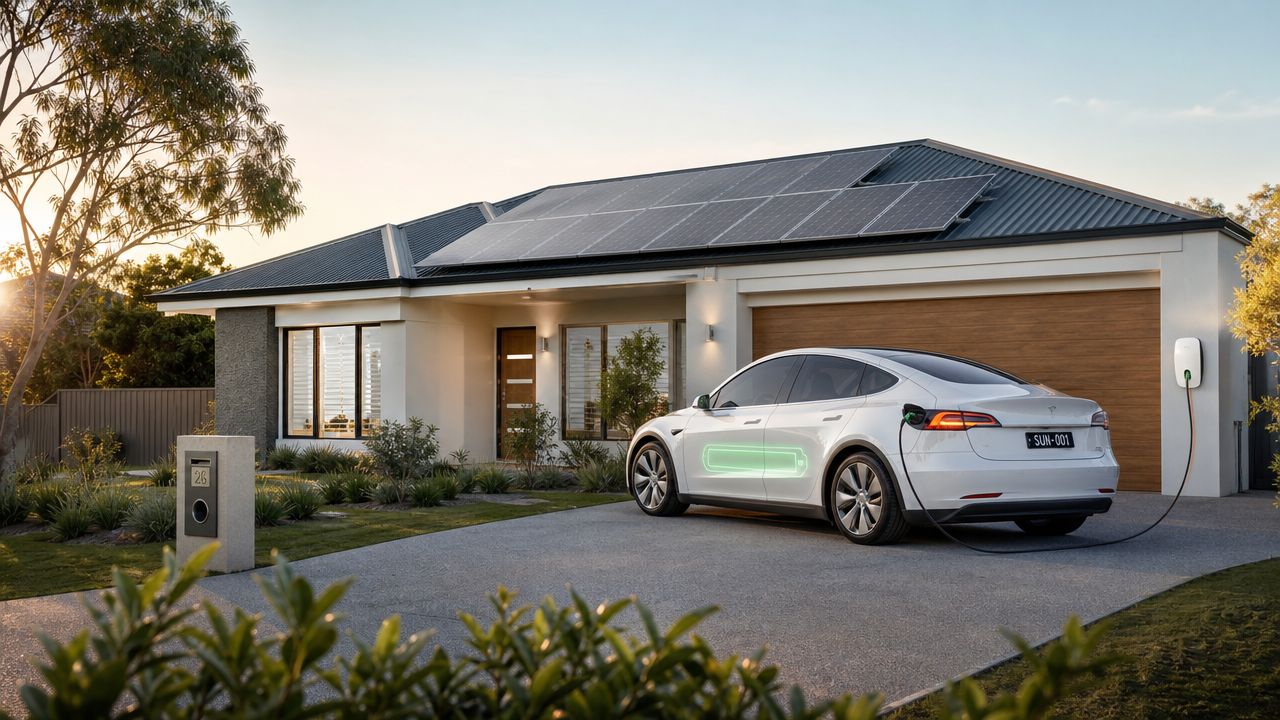
For Australian homeowners with existing solar panels and a home battery, the arrival of an electric vehicle changes the entire energy equation. It’s easy to view an EV as just another large appliance that will increase power consumption. After all, it represents a significant new electrical load.
But that’s only one side of the coin. Your EV is essentially a large battery on wheels. When integrated intelligently with your other assets, it becomes the new cornerstone of your home's energy system. It doesn’t just consume power; it grants you a new level of flexibility and financial control. This guide reframes your electric car not just as transport, but as a key player that can transform your home's finances, especially when connected to a retailer-led Virtual Power Plant (VPP).
Rethinking Your Vehicle's Role
The real breakthrough comes when you move past simple, one-way charging. Instead of being a passive drain on your power, your EV can become an active participant in your home energy strategy. This happens in two key ways:
- Managed Charging: This is about being strategic with when you charge. You can schedule charging to absorb abundant, self-generated solar power during the day or take advantage of low wholesale electricity prices overnight when demand on the grid is low.
- Bidirectional Charging: Using advanced Vehicle-to-Grid (V2G) technology, you can allow your car’s battery to power your home (Vehicle-to-Home or V2H) or even provide services to the grid when demand and wholesale prices are high.
By coordinating these actions, an EV stops being a liability on your electricity bill and starts acting like an asset that generates real value. For a deeper dive into how EVs fit into the broader smart grid, check out these Sheridan Technologies energy insights.
An EV battery is often three to five times larger than a typical home battery. Viewing it as just a car is underutilising one of the most powerful energy assets you own.
High Flow Energy is a technology-enabled electricity retailer. We focus on making your existing assets—your solar, your home battery, and now your EV—work together as one cohesive, performance-driven system. The right intelligence can coordinate these components, turning your driveway into a key part of Australia's energy future and putting you firmly back in control of your energy costs.
Understanding Your Electric Vehicle Options
If you’re an Australian homeowner looking at the world of cars that charge, the terminology can feel overwhelming. It all comes down to a few key types of vehicles. Understanding the practical differences—like battery size, charging needs, and how they can integrate with your home energy system—is the first step to making a commercially intelligent choice.
The most common option is the Battery Electric Vehicle (BEV). These cars are 'all-in' on electricity. They have no petrol engine and run entirely on a large battery, making them the perfect partner for a home energy management system designed for optimisation.
Then you have Plug-in Hybrid Electric Vehicles (PHEVs). These are a bridge between old and new technology. They have a smaller battery for short, electric-only drives and a regular petrol engine for longer trips. They offer flexibility, but the smaller battery capacity means they have less to offer when it comes to sophisticated home energy integration compared to a full BEV.
The Next Frontier: Bidirectional Charging
The truly exciting development for asset owners is the arrival of Vehicle-to-Grid (V2G) capable cars. These vehicles are changing the game, turning the relationship between your car and home into a two-way street for energy.
A standard EV can only pull power from the grid to charge itself—a one-way transaction. A V2G-capable car, on the other hand, can both draw power to charge and push power back out to your home or the grid. That’s where the real financial value lies.
This ability to send power both ways is what unlocks your car’s hidden potential as a mobile battery. To get a better handle on the specific hardware that enables this, see our guide on solar EV chargers and their integration.
The market is also maturing, with more affordable models becoming available. The launch of vehicles like Flex Electric's latest car demonstrates how quickly this technology is becoming more accessible for Australian households.
Ultimately, the key is to identify which EV type best matches your driving habits and your home energy ambitions. Whether it’s a BEV with a large battery for managed charging or a V2G model that allows active grid participation, making the right choice lays the foundation for significant financial optimisation.
The Hidden Cost of Unmanaged EV Charging
That first time you plug in your new EV is a great feeling. But if you just plug it in whenever you get home, you could be incurring serious and unnecessary costs. This is the pitfall of unmanaged charging, and it’s a problem for your household budget and the local energy grid.
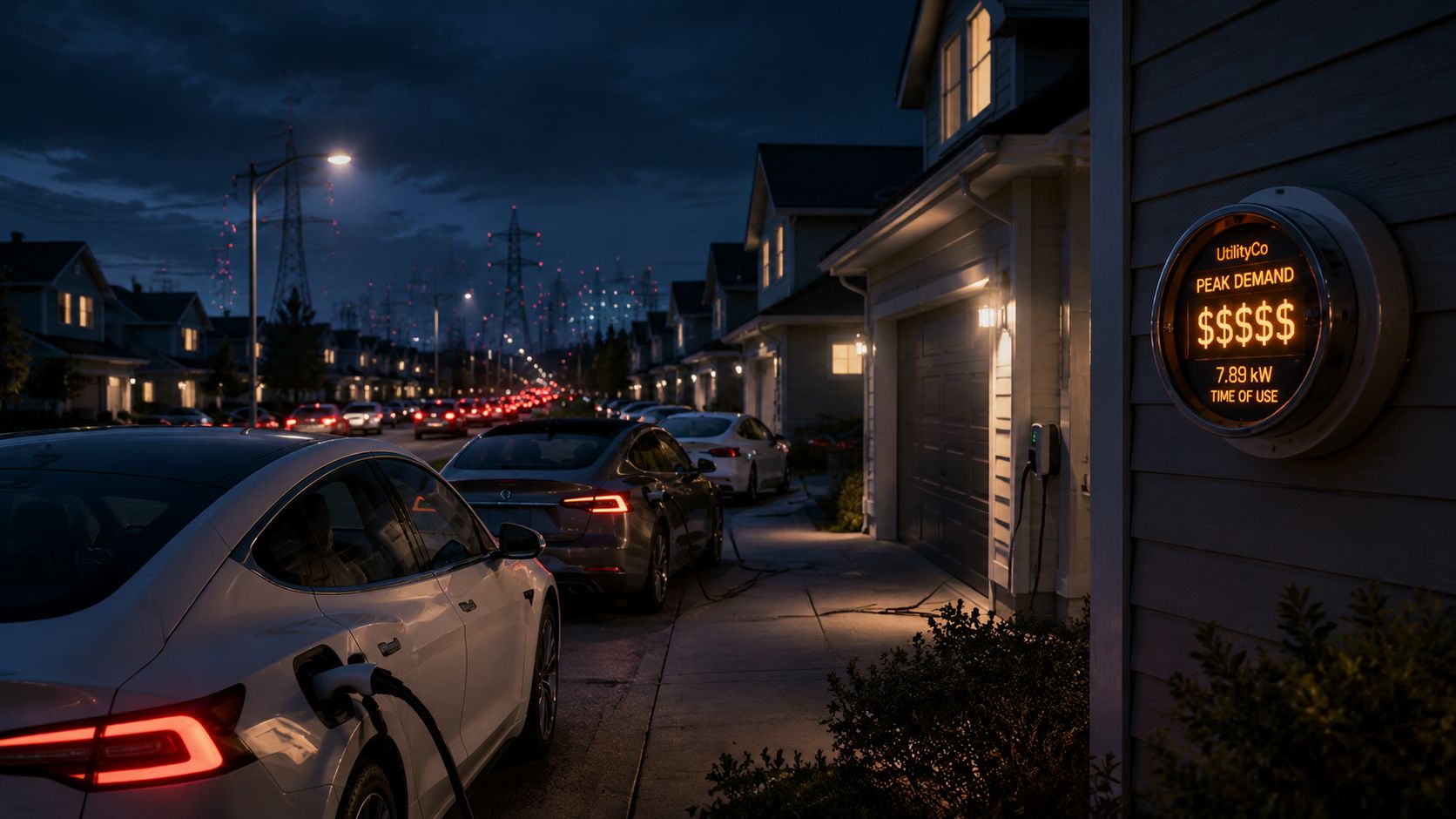
Think of the electricity grid like a major highway. During the middle of the day, traffic is usually light. But come 5 PM, everyone rushes home from work and the road clogs up. In the energy world, this is the evening peak demand period, and just like peak-hour tolls, wholesale electricity prices can skyrocket.
Unmanaged EV charging is like adding thousands of new cars to that 5 PM traffic jam. Most of us get home and plug in our cars between 5 PM and 9 PM—exactly when household demand for power is already at its highest. This puts immense strain on the National Electricity Market (NEM) and can force you to buy electricity at the most expensive time of day.
The Smart Alternative: Managed Charging
There’s a much better way: managed charging. This approach turns a potential grid problem into a direct financial win for you. If unmanaged charging is getting stuck in traffic, managed charging is like using a smart navigation system that automatically finds the cheapest and fastest routes, effortlessly avoiding gridlock and high costs.
This isn't a theoretical problem. The Australian Energy Market Operator (AEMO) has warned that as EV numbers grow, unmanaged charging during evening peaks could create serious grid stability issues. However, they also point out that with smart management, these same EVs can become a powerful tool to help balance the grid, especially by absorbing excess solar energy generated during the day. You can read more on EV charging trends and statistics to see the bigger picture.
This is where a retailer-led Virtual Power Plant (VPP) from High Flow Energy comes in. Our platform automates the process, intelligently scheduling your EV’s charging for the most economically beneficial times.
This means your car will automatically:
- Charge with Solar: Prioritise charging in the middle of the day, using your own free, excess solar power before it’s exported to the grid for a low feed-in tariff.
- Charge Off-Peak: Shift charging to overnight when wholesale electricity prices are at their lowest—sometimes even going negative.
- Coordinate with Your Home Battery: Work in sync with your home battery to maximise the value of your entire home energy system.
By simply shifting when your car draws power, managed charging turns your EV from a grid stressor into a grid supporter. You still wake up to a full battery, but you’ve acquired that energy in a much smarter way, directly lowering your electricity bills.
With a managed approach, you don't have to think about it. The system works quietly in the background, ensuring your car is charged with the cheapest, cleanest energy available—all while making sure it’s ready to go when you need it. This simple shift is the key to unlocking the true financial benefits of owning one of the new generation of cars that charge.
How Vehicle-to-Grid Unlocks Your Car's Full Potential
Managed charging is an excellent first step, but the full power of your EV is unlocked with Vehicle-to-Grid (V2G) technology. This is where your electric car transforms from a vehicle into a dynamic, mobile power asset.
Think of it this way: a standard EV's connection to the grid is a one-way street; it only pulls power in to charge its battery. A V2G-capable car, however, operates on a two-way superhighway. It can both draw power in and push it back out when needed. This bidirectional flow is the game-changer.
This opens up two incredible advantages for you as a homeowner:
- Vehicle-to-Home (V2H): During a grid outage, your V2G-enabled car can function as a large, silent backup power source. It can power essential appliances directly from its battery, providing resilience and convenience.
- Vehicle-to-Grid (V2G): This is where you can see real financial returns. Your car can export its stored energy back to the grid during peak demand events, often earning you a significant credit or allowance. Your parked car effectively becomes a revenue-generating asset.
Making V2G a Reality in Australia
This is not science fiction; V2G is being rolled out across Australia. The Australian Government’s National Electric Vehicle Strategy highlights how vital this technology is for creating a more robust and flexible energy system.
This strategic focus shows that integrating EVs into our grid is a national priority. V2G helps manage demand and provides valuable grid stabilisation services, turning millions of future cars into a powerful, distributed energy resource.
Of course, enabling this requires two key things: a V2G-capable vehicle and a certified bidirectional charger. While not all EVs currently support this, the list of compatible models and chargers available in Australia is growing steadily. The core principles of managing this two-way power flow are similar to other inverter technologies, and you can find expert advice for RV inverter chargers that touches on similar concepts of energy management.
By participating in V2G events, your EV battery does more than just power your journey; it actively supports the national grid, reduces strain during peak times, and can earn you financial allowances in the process.
This technology shifts your car’s large battery from a passive energy store into an active part of your home's energy strategy. When you combine this with an intelligent platform, like the one used in a Virtual Power Plant, your V2G-capable car works in concert with your home battery and solar panels. This coordinated approach ensures you’re always maximising the financial return from all your energy assets while helping build a more resilient electricity network for everyone.
Integrating Your EV with a Home Battery and VPP
This is where all the concepts come together in a practical, value-driven way. We’re talking about creating a seamless ecosystem where your solar panels, home battery, and electric vehicle all work in perfect harmony. For Australian homeowners, this is the blueprint for moving from simply owning these assets to actively optimising them for a tangible financial return.
Think of it as an energy orchestra. Your solar panels are the strings, generating free, clean energy all day. Your home battery is the reliable percussion section, storing that energy for when the sun goes down or for a Virtual Power Plant (VPP) event. And your EV? It's the powerful brass section—a huge, mobile battery that can either charge at the most opportune time or, with the right equipment, dispatch power back to your home or the grid.
How an Intelligent VPP Conducts the Orchestra
The key to making this all work together is an intelligent VPP platform, which acts as the conductor. It coordinates all your energy assets, ensuring they work in concert to maximise your financial outcomes. This is not about you manually checking wholesale energy prices; it's a smart, automated process that operates quietly in the background.
For example, on a sunny day, the system would follow this logical hierarchy:
- Prioritise Solar: Your home’s immediate power needs are met first by your solar panels.
- Charge the Home Battery: Any excess solar power is then used to charge your home battery.
- Charge the EV: Once the home battery is full, all remaining free solar power is directed to charge your car.
This simple hierarchy ensures you’re using every kilowatt-hour of your own generated power before you consider drawing from the grid. This kind of smart coordination is the heart of a modern smart home energy management system.
The visualisation below breaks down how Vehicle-to-Grid (V2G) technology, a crucial part of this setup, creates value by enabling a two-way flow of energy.
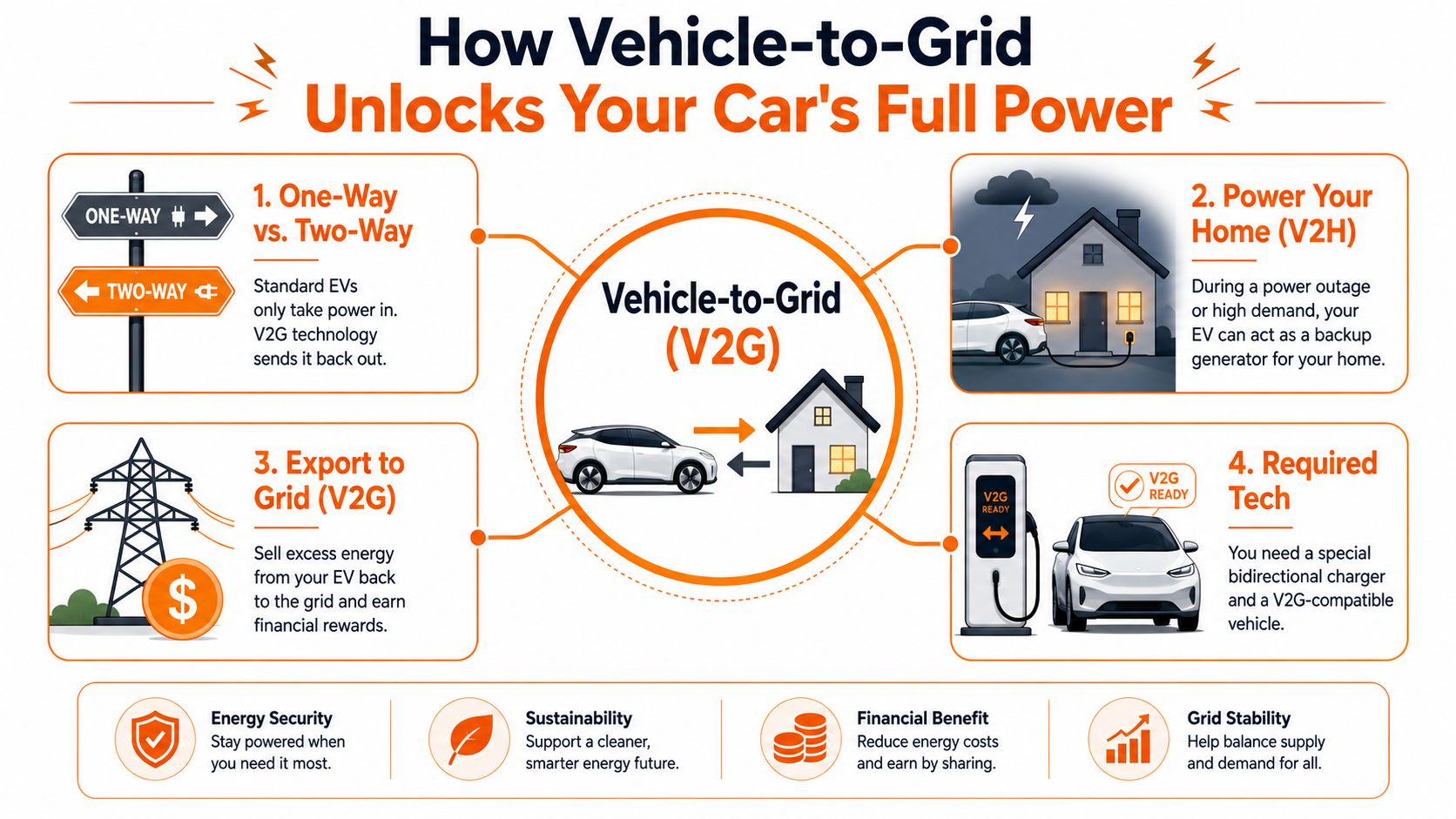
As you can see, with the right technology and retail partner, your EV stops being just a consumer of electricity. It becomes a flexible asset that can power your home and even provide valuable services to the grid.
The rapid expansion of charging infrastructure across Australia is part of a much larger national strategy. For homeowners who already have solar and a battery, this growth is a significant opportunity. Adding an EV increases your household's electricity demand, which in turn makes it even more valuable to charge intelligently overnight or with your own solar.
A critical point: you are always in control. The VPP platform operates within the parameters you set. Your personal needs—like having a fully charged car for the morning commute—are always the top priority, while the system works quietly to optimise your assets.
This integrated approach transforms a collection of individual components into a powerful, coordinated system. It ensures that cars that charge do so in the most economically intelligent way possible, turning your driveway into a source of both savings and grid stability.
Why High Flow Energy Is Your Partner in Optimisation
When you invest in solar and a home battery, you rightly focus on the quality of the hardware and installation. But the real value is realised in the ongoing performance and optimisation, especially once an electric vehicle enters the picture. Most battery owners are underutilising their asset.
High Flow Energy is different. We are not a hardware company. We are a technology-enabled electricity retailer built from the ground up to make the solar and battery system you already own work smarter and harder for you.
Our smart platform coordinates your home battery and manages your EV charging to reduce your bills and enable you to earn from participating in our Bring Your Own Battery (BYOB) VPP.
Turning Assets into Performance
Our entire model is designed for homeowners in Queensland and New South Wales who have invested in energy assets and want to maximise their return. Instead of a standard electricity plan, we provide the technology and market intelligence to turn your solar, battery, and EV into a finely tuned, performance-driven system.
We believe the conversation shouldn't end after installation. It should be about continuous optimisation to maximise your financial returns and support a more stable, renewables-driven grid.
Here’s what that looks like in practice:
- Intelligent Coordination: Our platform analyses wholesale energy prices from the NEM and your solar generation, then automatically schedules your EV to charge at the cheapest times, often using your own solar or off-peak grid power.
- VPP Integration: We seamlessly connect your home battery to our Virtual Power Plant. This creates opportunities for you to earn bill allowances by helping to stabilise the grid when it needs it most, without impacting your personal use.
- Transparent Reporting: You get clear, straightforward data showing exactly how your system is performing and the value it's generating. No guesswork or opaque calculations.
You’ve already made the smart investment in high-quality hardware. The next step is to partner with an electricity retailer that can unlock its true financial potential. We bring the expertise to ensure the cars that charge at your home are doing so in the most intelligent and financially rewarding way possible.
Frequently Asked Questions (FAQ)
Thinking about how your new electric vehicle can work with your home's energy system brings up many questions. Here are straightforward answers to common queries from Australian homeowners looking to get the most out of their cars that charge.
What is the difference between managed charging and V2G?
Managed charging controls when your car takes power from the grid, scheduling it for low-cost times (e.g., midday solar surplus or overnight off-peak). It's a one-way flow of energy into the car. Vehicle-to-Grid (V2G) is a two-way technology that allows your car to both receive power and send power back to your home or the grid.
Will a VPP drain my car battery when I need it?
No. A professionally managed VPP puts you in control. You set the rules, such as "I need my car battery at 90% by 7:00 am on weekdays." High Flow Energy's platform then works within these rules, optimising charging and VPP events around your schedule to ensure your car is always ready when you need it, with your requirements taking priority.
Can any electric car be used in a VPP?
For managed charging, most modern EVs with smart charging capabilities are compatible. This allows a VPP to automatically charge your car when electricity is cheapest, reducing your bills. For full V2G integration (exporting power), you need a specific V2G-capable vehicle and a compatible bidirectional charger. It is essential to check your vehicle's specifications.
Does V2G affect my car's battery warranty?
This is a critical consideration. The automotive industry is still developing clear policies. Some manufacturers have explicitly approved V2G use, while others have not provided guidance. It is essential to review your vehicle's warranty documents or contact the manufacturer directly to understand their position on V2G and its impact on the battery warranty. Protecting your asset's warranty is paramount.
How does a VPP make money from my EV and battery?
A retailer-led VPP doesn't "make money" directly from your assets in a revenue-share model. Instead, by participating in grid support events through the VPP, you can earn bill allowances or credits. High Flow Energy's VPP coordinates your battery (and potentially V2G-enabled EV) to respond to high wholesale prices or grid instability, and we pass the value back to you as a reduction on your electricity bill.
Most battery owners focus on installation quality. Far fewer focus on ongoing performance and optimisation. High Flow Energy is an electricity retailer built around unlocking the full value of your existing solar and battery system.
If you would like to understand whether your battery is underperforming financially, request an eligibility assessment today.