


Virtual Power Plant Companies in Australia: Top 10
Most virtual power plant companies are selling access to a battery you already paid for, yet many owners still aren't paid for its full value. By January 2026, the Australian Competition and Consumer Commission inquiry report found approximately 24% of Australian customers with installed batteries were participating in a Virtual Power Plant. Most batteries charge from rooftop solar, cover part of the evening peak, then sit underutilised while wholesale prices move around them.
A virtual power plant, or VPP, is software that coordinates many home batteries so they can charge, discharge or export together. In the National Electricity Market (NEM), that coordination creates value through demand response, avoided peak imports and responses to wholesale price volatility. A feed-in tariff pays only for exported solar. A retailer-based VPP can also value timing, grid support and avoided retail costs, a concept related to Blue Gas Express peak shaving guide.
Compare every offer below on four stated terms, not marketing language.
- Payment structure: allowance, fixed credits, per-kWh event rewards or wholesale exposure
- Eligibility: battery, inverter, solar size, meter, internet and network area
- State availability: especially New South Wales and Queensland
- Exit terms: lock-in period, exit fee and repayment obligations
Use the comparison table after the list to shortlist, then check caps against your actual evening usage.
1. HighFlow Energy
HighFlow Energy's Bring Your Own Battery VPP suits eligible households in Queensland and New South Wales with rooftop solar, a compatible battery and an internet connection. The battery joins the VPP, which uses spare capacity to support the grid while prioritising household energy use.
How you're paid
The value generated by grid services funds a monthly bill-free electricity allowance. It covers the daily supply charge, electricity use within the allowance, and network and distribution charges on that portion. The allowance resets each month; electricity used above it is charged at the rates in the customer's plan, without penalties.
Residential Anytime BYOB plans offer allowance tiers of 500, 600, 700, 800, 900 and 1,000 across networks including Ausgrid, Endeavour, Energex, Essential and Evo. The allowance structure is the key comparison point: unlike a per-kWh reward, it offsets specified bill components up to a monthly limit.
Customers bring their existing system, connect the battery to the VPP, and receive the allowance. HighFlow's app shows live prices, forecasts and home energy use, and can automatically plan battery charging and discharging. Customers can override the plan manually at any time. See the HighFlow Energy website for current terms.
- Pros: no new hardware, no lock-in contract and no exit fees
- Pros: household energy use comes first, and customers retain control of their battery
- Cons: eligibility depends on location, usable battery capacity, inverter requirements and VPP compatibility
- Cons: VPP participation does not guarantee backup power or a minimum battery charge during an outage
2. Amber Electric SmartShift
Amber takes the opposite approach to capped event rewards. SmartShift optimises your battery continuously against wholesale prices, using forecasts for solar generation, household load and market prices. It can charge when prices are low, discharge for home use, or export when prices spike. For some systems it can also curtail solar to help avoid negative feed-in prices.
That daily responsiveness is the appeal for owners in NSW and South East Queensland who want active battery optimisation, not occasional event payments. You can temporarily override automation in the app, and SmartShift isn't presented as a lock-in term.
The trade-off is exposure. You must join Amber as your retailer and pay its $25 monthly membership fee for wholesale pricing, stated on Amber's solar and battery page. Returns vary with wholesale prices, consumption and system setup, so a good month doesn't predict the next. Some manufacturer scheduling controls may also be unavailable while SmartShift controls the battery.
- Best fit: engaged owners comfortable with variable bills
- Watch out: wholesale upside comes with wholesale downside
3. Origin Energy Origin Loop and Battery Lite
Origin Loop is a retailer-run VPP, and Battery Lite connects eligible customers while letting them keep an eligible Origin electricity plan and its applicable feed-in tariff. It's available in NSW and Queensland, among other states.
The payment maths is easy to test. Origin advertises a $200 sign-up credit and $1 per kWh for battery energy exported during events, capped at 200 kWh per year, on Origin's Battery Lite page. That cap is useful because it stops you annualising a headline rate that can't repeat indefinitely. Origin says it won't access the battery for VPP activity during a blackout, and its app tracks usage, costs and exports.
Battery Lite is advertised without a lock-in contract. You still need an Origin electricity account, a compatible battery and inverter, at least a 5 kW solar system and reliable internet. If you're comparing that structure with a standard retail boost offer, see our guide to the Origin Solar Boost Plan explained.
A capped per-kWh reward is easier to value than an uncapped promise. Multiply the cap by the rate before you compare sign-up credits.
4. AGL Bring Your Own Battery VPP
AGL's BYOB offer pays bill credits when your battery supports the grid during high-demand periods. AGL lists quarterly credits of $20 in NSW and Queensland, plus additional event-based credits, on AGL's BYOB Virtual Power Plant page. Account and app tools show estimated savings and event activity.
That structure suits existing owners who don't want to buy a new battery and prefer a predictable quarterly component. AGL says BYOB participants can leave without penalty, which is a clear exit advantage.
Don't confuse BYOB with AGL's separate discounted battery offer. That supplied-battery deal carries a five-year commitment and possible repayment for early departure. BYOB still requires an AGL electricity account and eligible equipment, and exports during an event can leave you importing more grid electricity later that evening. That's the opportunity cost many comparisons skip.
For background on how retailer fleets operate nationally, read our overview of a virtual power plant in Australia.
- Strength: straightforward quarterly credit you can annualise
- Limitation: event value still depends on dispatch and later imports
5. GloBird Energy ZEROHERO
ZEROHERO isn't only a VPP. It's a battery-oriented electricity plan with an optional VPP add-on for selected systems. The basic plan is described with a daily credit, a stated free grid-charging period and export benefits. Enabling the add-on allows remote optimisation and may provide higher payments during price spikes, according to GloBird's ZEROHERO page.
Keeping the VPP optional matters. You can assess the underlying plan first, then decide whether remote control adds enough value. GloBird says there are no ongoing VPP fees or lock-in contracts, and customers can leave without a VPP exit fee.
The limitation is compatibility and arithmetic. Only selected battery and inverter systems qualify for the add-on, and value depends on when you use energy, export limits and current rates at your address. A free charging window helps most if your battery has spare capacity then and your evening load can use it. Compare the full tariff in our electricity retailer comparison before valuing headline credits.
6. ENGIE Battery Sharing Rewards Network
ENGIE's Battery Sharing Rewards Network pays monthly bill credits, including in months when it does not dispatch your battery. The payment is therefore less dependent on grid events than a reward calculated only per kilowatt-hour. The MyENGIE app shows battery access and participation. Battery dispatch can support services such as frequency control, according to ENGIE's VPP page.
For participants joining after specified dates in 2026, ENGIE states an annual energy-access limit. Check how that limit applies to your battery, alongside the event rules and benefit period, before comparing the credits with other offers.
Eligibility and sign-up credits vary by state. ENGIE says its advertised sign-up credit is unavailable in Queensland and Western Australia. Participation also requires eligible battery and inverter equipment, working solar, an internet connection and minimum system sizes.
- Strength: monthly credits can be paid without battery dispatch.
- Limitation: Queensland customers are not eligible for the advertised sign-up credit.
7. Diamond Energy WATTBANK VPP
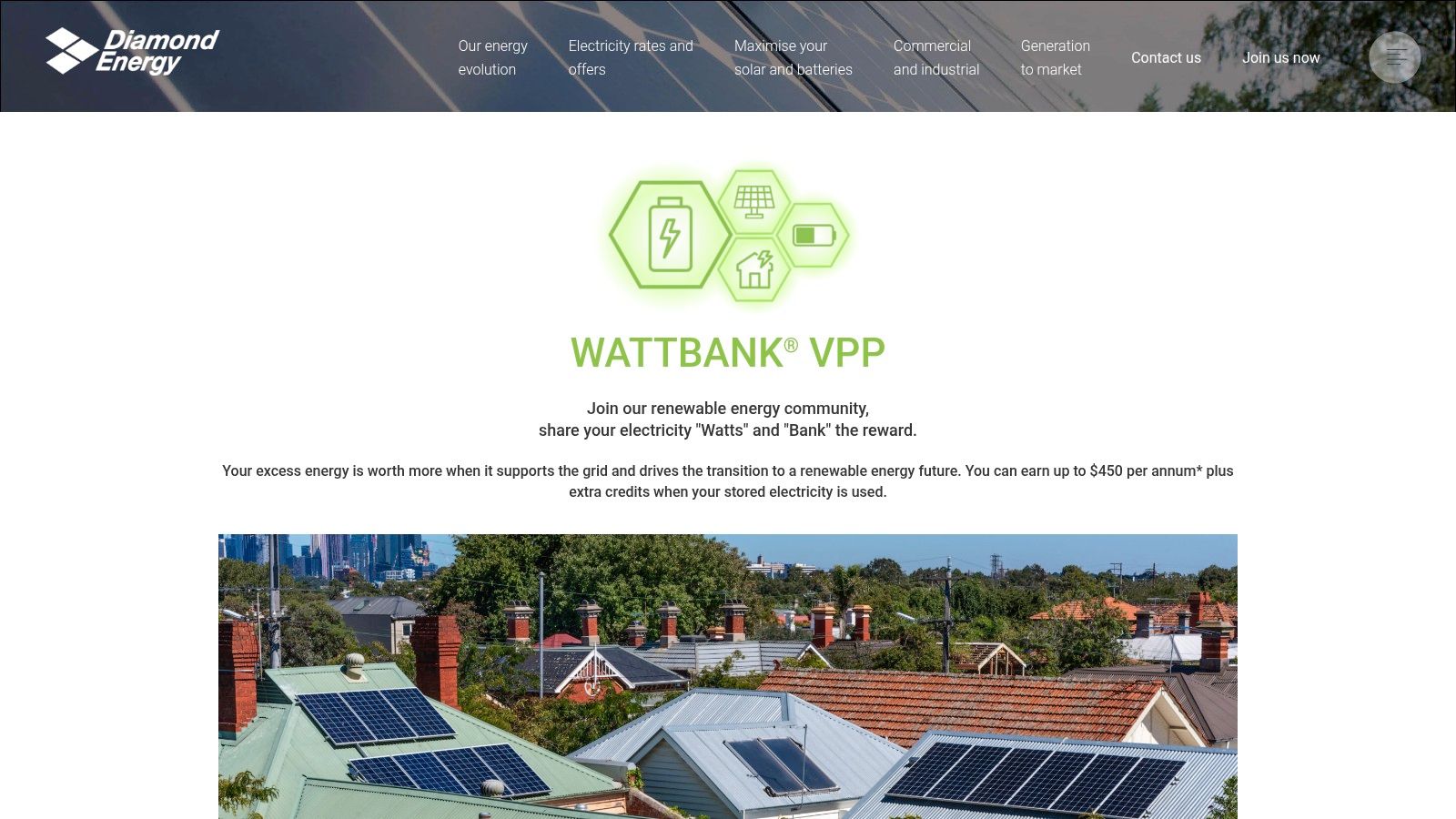
WATTBANK combines a fixed annual credit with a time-based export rate. Diamond advertises an annual VPP credit of $250 to $450, depending on system specifications, and 30 cents per kWh for battery exports from 6 p.m. to 8 a.m., according to Diamond Energy's VPP offer. The offer is for Diamond electricity customers in NSW and Queensland's Energex network area.
Diamond may adjust battery charging, household use, solar exports and grid exports. Customers can cancel WATTBANK at any time without exit fees, and the VPP operates alongside an ongoing market electricity offer.
Joining has upfront requirements and costs. Diamond lists a $68 establishment fee on its WATTBANK VPP page. The system must include compatible equipment, at least 5 kWh of usable battery capacity, 5 kW of solar, a smart meter and broadband. Queensland eligibility is limited to the Energex network area.
Practical rule: subtract the establishment fee from the first-year credit when comparing the offer's value. The credit and export rate should also be weighed against the equipment requirements and cancellation terms.
8. ShineHub Virtual Power Plant
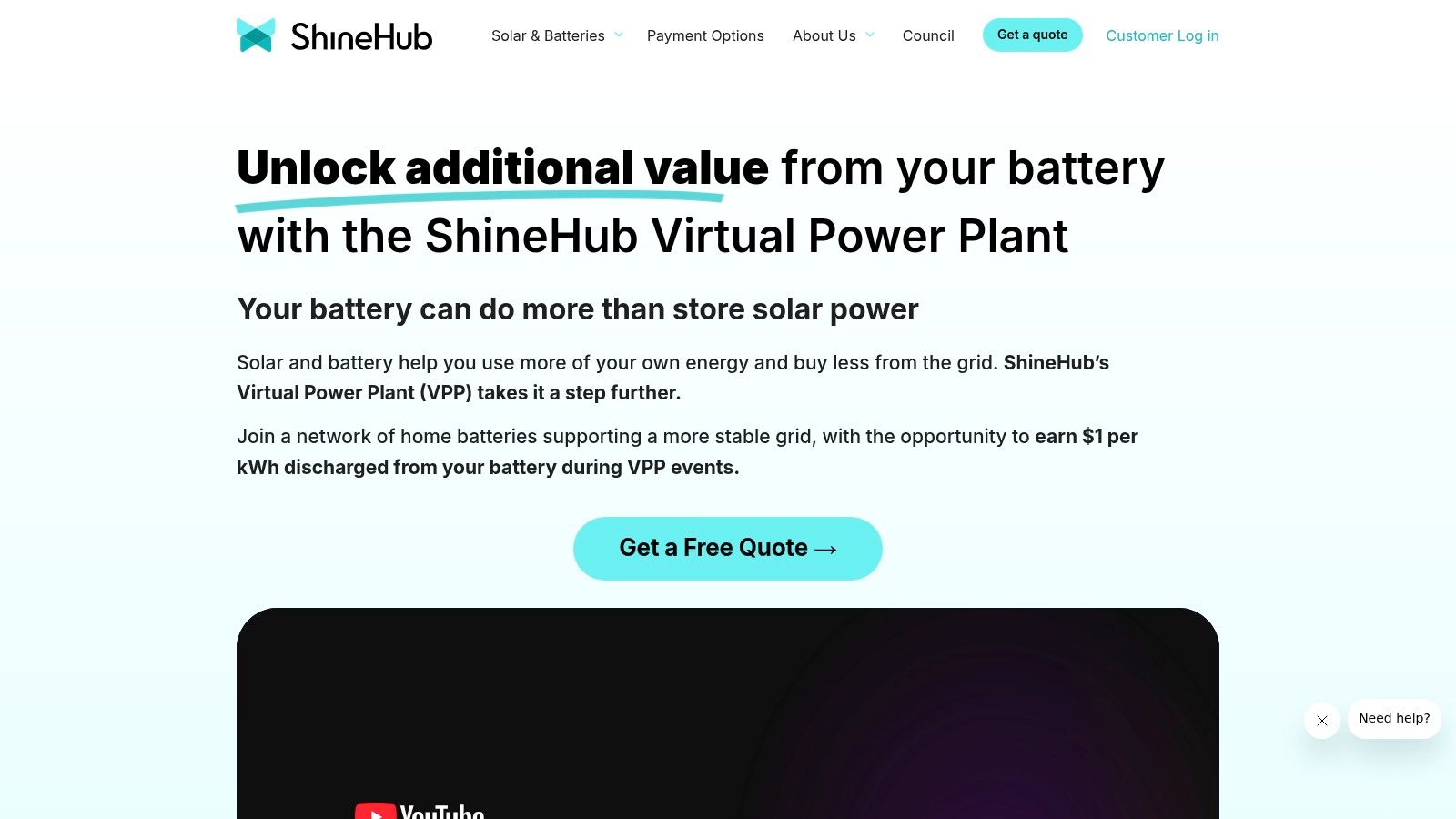
ShineHub sits in a different category because it combines solar, battery and VPP services through one provider. That bundling may simplify coordination if you're buying a new system. It's less clearly a bring-your-existing-battery offer, so confirm eligibility for an installed system before assuming you can join.
ShineHub provides NSW-focused VPP incentive information and advertises a $1 per kWh credit for eligible Hinen systems, according to ShineHub's Virtual Power Plant page. The brand condition is the key detail. That rate doesn't apply universally across battery brands, and it shouldn't be compared directly with an uncapped general export rate without checking event rules and limits.
Bundling also creates a comparison risk. Installation quotes, energy plans and VPP agreements need separate assessment, because a discount in one contract can be recovered in another. Ask for each price and term in writing.
- Best fit: households considering a new bundled installation
- Check first: whether your existing brand qualifies at all
9. Plico VPP
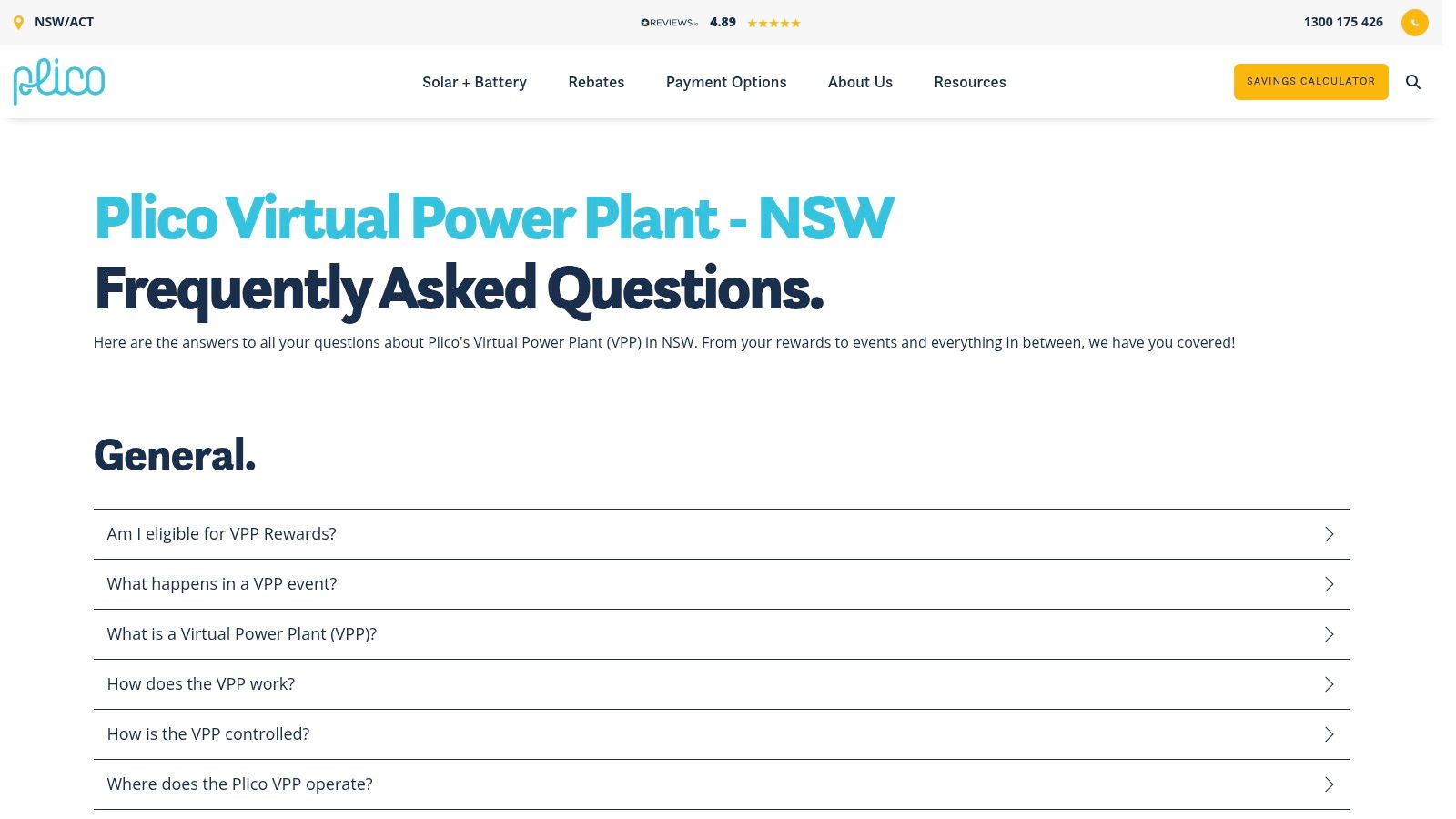
Plico is an NSW option in this list, not a Queensland one. Its NSW program links dispatch to wholesale price thresholds and states 50 cents per kWh for eligible energy sent to the grid, in Plico's NSW VPP FAQ. Events aren't guaranteed, so annual value depends on how often prices cross the threshold while your battery has charge to spare.
Plico states household use is prioritised and discharge respects the configured depth-of-discharge limit. Its FAQ lists AlphaESS, Sigenergy and Redback systems, and some existing owners may join as VPP Only members without buying a new Plico system.
Two conditions narrow the audience. NSW event rewards require a qualifying electricity plan, and the FAQ names Alinta Energy SunShare. Some agreements may include a minimum term or opt-out fee, unlike the no-penalty exit terms elsewhere in this list. Read your specific agreement, not the general FAQ summary.
10. EnergyAustralia Battery Ease
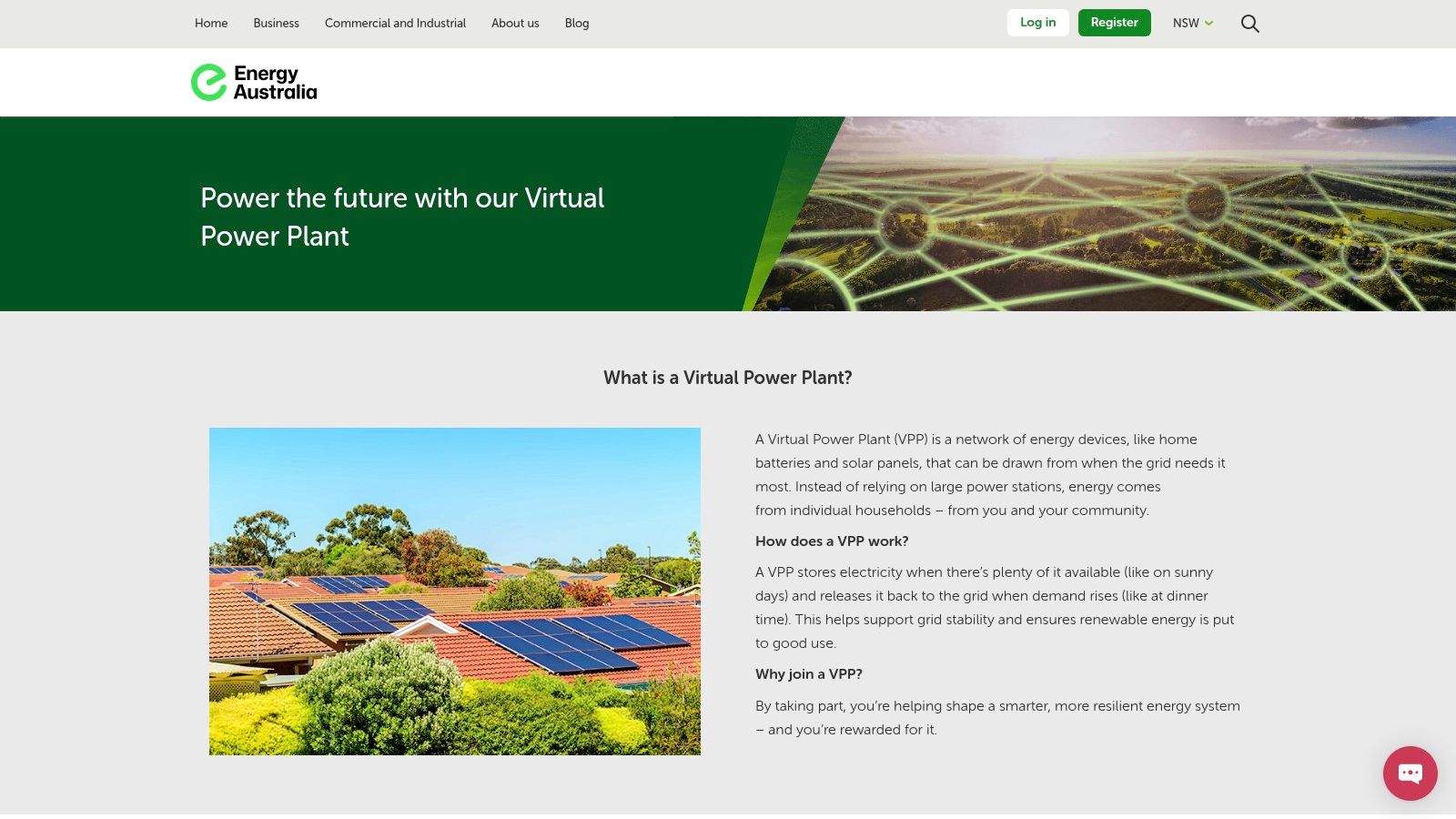
Battery Ease is a VPP-linked electricity plan for eligible residential customers in NSW. It isn't currently described as a Queensland option. EnergyAustralia says it optimises charging and discharging using forecasts, prices and household usage, and may support the grid during high-demand or system events, on EnergyAustralia's virtual power plant page.
Its monthly bill credits are paid for participation even when the battery isn't accessed in a given month. That predictability may suit owners who don't want to schedule a battery manually or chase event income. NSW participants may also be eligible for a separate government incentive, subject to scheme rules.
You still need the relevant EnergyAustralia plan and an eligible battery. Rates and feed-in tariffs can change, so value the whole plan, including usage and supply charges, rather than isolating the VPP credit. A stable credit can be outweighed by a weaker underlying tariff.
Virtual power plant companies in Australia at a glance
| Availability | How you are paid | Key eligibility requirements | Contract and exit terms | Best for |
|---|---|---|---|---|
| HighFlow Energy, Queensland and New South Wales | Monthly bill-free electricity allowance covering daily supply charges, usage within the allowance, and network and distribution charges on that usage. Extra usage is charged at standard rates. | Compatible rooftop solar and home battery, with an internet connection; eligible customers must live in Queensland or New South Wales. | No lock-in contract or exit fee; you retain control of your battery. | Homeowners with a compatible battery seeking a monthly allowance without new hardware or a fixed term |
| Amber Electric, SmartShift, NSW and South East Queensland | Returns vary with wholesale prices and household usage; $25 monthly membership fee | Battery owners; must join Amber as the electricity retailer | SmartShift has no lock-in term; some manufacturer scheduling controls may be unavailable while it operates | Battery owners wanting automated, wholesale-price-based optimisation |
| Origin Energy, Origin Loop / Battery Lite, NSW, Queensland and other states | Advertised $200 sign-up credit and $1/kWh for event exports, capped at 200 kWh per year | Origin electricity account and eligible plan; compatible battery and inverter, at least 5 kW solar and reliable internet | Battery Lite is advertised without a lock-in contract | Eligible Origin customers seeking a capped, clearly stated event-export reward |
| AGL, Bring Your Own Battery VPP, NSW and Queensland | $20 quarterly credits plus event-based credits | AGL electricity account and eligible battery and inverter | AGL says participants can leave without penalty | Existing battery owners comfortable having AGL as their retailer |
| GloBird Energy, ZEROHERO, availability not stated | Daily credit, free grid-charging period and export benefits; optional VPP may add price-spike payments | Selected battery and inverter systems; address and equipment eligibility apply | GloBird says there are no ongoing VPP fees or lock-in contracts | Battery owners seeking plan benefits with an optional VPP add-on |
| ENGIE, Battery Sharing Rewards Network, availability and terms vary by state | Monthly bill credits; an upfront sign-up credit is available in some states, but not Queensland or Western Australia | Eligible battery and inverter, working solar PV, internet and applicable minimum system sizes | Review the applicable agreement for battery-access and benefit-period conditions before joining | Eligible households seeking monthly credits, including in months without dispatch |
| Diamond Energy, WATTBANK VPP, NSW and Queensland's Energex network area | Annual VPP credit of $250–$450 depending on system; 30¢/kWh for overnight exports from 6 p.m. to 8 a.m. | Compatible equipment, at least 5 kWh usable battery capacity, 5 kW solar, smart meter and broadband | $68 establishment fee; WATTBANK can be cancelled at any time without an exit fee | Eligible customers wanting published annual credits and overnight export rewards |
| ShineHub, Virtual Power Plant, NSW-focused incentive information | Advertised $1/kWh credit for eligible Hinen systems | Confirm system and battery compatibility; the advertised credit is product-specific | Check the applicable contract for exit conditions | Customers considering a bundled solar-and-battery installation |
| Plico, VPP, NSW | NSW event reward of 50¢/kWh for eligible energy sent to the grid | Qualifying system; NSW event rewards require a qualifying electricity plan, with Alinta Energy SunShare named in the FAQ | Some agreements may include a minimum term or opt-out fee | Eligible battery owners seeking event-based rewards with stated discharge protections |
| EnergyAustralia, Battery Ease, NSW only | Monthly participation bill credits, including months without battery access | Eligible NSW residential customer with a qualifying battery; must join the relevant EnergyAustralia plan | Plan terms apply; check the applicable agreement for VPP exit conditions | NSW customers seeking regular credits and automated battery optimisation |
How to Choose a VPP and Check Your Eligibility
The offer that pays the most on paper is often the one you cannot join, or cannot leave. In New South Wales and Queensland, retailer VPPs and aggregator VPPs differ on three commercial terms: how you are paid, which batteries qualify, and whether exit carries a fee.
Confirm eligibility before modelling rewards. Check your state, network area, battery and inverter model, minimum usable capacity, solar size, smart meter and internet connection. HighFlow Energy's Bring Your Own Battery VPP is limited to residential customers in Queensland and New South Wales who already have compatible solar, a compatible home battery and an internet connection for the battery. Eligible batteries must meet minimum usable capacity, inverter requirements and VPP compatibility standards. Other providers set their own floors, brand lists and plan requirements, so a battery that qualifies for one offer can fail another.
Then match the payment structure to your imports, not to the headline rate. An allowance suits households whose grid imports sit mainly inside the included amount. HighFlow funds a monthly bill-free electricity allowance from VPP value. It covers daily supply charges, electricity usage within the allowance, and network and distribution charges on that allowance. The allowance resets each month. Usage above it is charged at the standard rates in the energy plan, with no penalty. A per-kWh event rate suits a larger battery that still has spare evening charge after the home is served. Fixed monthly credits suit owners who want a predictable credit even in quiet months. Wholesale automation suits households willing to accept price swings. Caps, eligible brands and retailer lock-in can shrink a high per-kWh figure, so a capped event rate is not automatically worth more than a smaller allowance.
The Australian Energy Market Operator and Australian Renewable Energy Agency demonstration report recorded eight VPP portfolios with a combined registered capacity of 31 megawatts. That shows home batteries can be aggregated into a grid resource. It does not tell you what one household will earn.
International products such as Flick's place in NZ energy belong to a different retail market. Australian contract terms decide payment, battery control and exit. Ask each provider, in writing, for reserve settings, override rights, access limits, warranty treatment, data sharing and the exit process. HighFlow may share personal information with distributors, metering providers, market bodies, retail partners, technology providers and other parties where required. It may remotely charge or discharge a battery for market participation, which can change how much energy is stored later that day. Household use is prioritised, and only spare capacity supports the grid. Participation does not guarantee a minimum charge or backup power during a network outage. In a bring-your-own-battery model the battery stays yours. A supplied-battery contract can be different, so read who owns the asset. The Australian Energy Regulator's retail protections still apply to the underlying electricity sale.
Key Takeaways and FAQs
- Key takeaway: compare caps, retailer requirements and exit fees before headline rates
- Key takeaway: remote access can change how much stored energy is left later that day
- Do I keep my battery? In a BYOB model you retain ownership, stay connected to the grid and can override the battery plan
- Will a VPP power my home in a blackout? Only if your hardware and contract specifically provide backup. HighFlow participation does not
- Can I leave? Some offers state no exit fee. Others may include a minimum term or an opt-out fee. HighFlow states no lock-in contract and no exit fees
- Is $1 per kWh always best? No. Caps and brand limits can cut the annual value below a smaller, predictable allowance or credit
- What does HighFlow Energy offer? A Queensland and NSW BYOB VPP that uses spare battery capacity to fund a monthly bill-free allowance, with household use first and app-based override
Request an eligibility assessment with your battery model, inverter, network area and a recent bill so the allowance is judged against your usage.
Check whether your existing solar and battery system is earning what it should in Queensland or New South Wales, and see how HighFlow Energy's monthly bill-free allowance, household-first dispatch and no lock-in terms compare with credits or per-kWh rewards. Visit HighFlow Energy to request an eligibility assessment and review whether your battery is compatible before you commit.