


Direct Solar Power: Unlock Your Solar’s True Value in AU
Your solar system is probably doing exactly what it was designed to do, and still falling short financially.
That’s the frustration many battery owners in Queensland and New South Wales run into. The panels generate well during the middle of the day. Your home uses some of that energy. The battery stores some. Then the rest often goes out to the grid on terms that don’t reflect its real value, especially when export limits or low feed-in tariffs get in the way.
That’s where direct solar power becomes useful as a strategy, not just a technical phrase. Instead of treating your rooftop system as a passive generator, direct solar power is about using each unit of solar energy where it creates the most value at that moment. Sometimes that means running your home. Sometimes it means charging your battery. Sometimes it means supporting the grid through a Virtual Power Plant, or VPP, when the market values that energy more highly.
For battery owners, that changes the conversation. The question stops being “How much solar did I export?” and becomes “How effectively did my system work across the day?”
Introduction The Untapped Potential of Your Rooftop Solar
At 1 pm on a clear weekday in Queensland or NSW, your roof can be doing its best work while your finances are not.
The panels are producing strongly. The house may only be using a small share of that power because no one is home. The battery charges, then reaches its limit. After that, extra solar often flows to the grid for a modest feed-in tariff, even though that same stored energy could be worth more later in the day or during a high-value grid event.
That gap is the untapped potential in many home solar systems. The hardware is working. The strategy is often underdeveloped.
Why the old solar logic feels incomplete
For years, rooftop solar followed a simple pattern. Use what you can in the home, store some in the battery, and export the remainder. It is a sensible starting point, but it treats surplus solar as something to clear rather than something to direct.
A battery changes that equation. It gives you timing, not just generation. And timing is where value often sits in the electricity market.
For a homeowner, the main question is broader than daily production. It is whether each kilowatt-hour is being used at the moment it is worth the most. That could mean avoiding grid imports in the evening. It could mean holding energy in reserve for a grid support event. It could mean letting a coordinated system decide that your battery should respond when wholesale prices or network needs create a better opportunity than standard export.
Direct solar power, in a modern household, is solar that is directed with purpose, not simply sent outward by default.
The strategic shift
A Virtual Power Plant adds that coordination layer. A useful comparison is a fleet manager for thousands of small energy assets. Your battery remains in your home, serving your needs first, but it can also be scheduled alongside many others to respond to conditions on the grid.
That changes a battery from a passive backup device into an active financial asset. Instead of relying mainly on bill savings and low-value exports, a homeowner may also gain from market participation when conditions suit. For battery owners in Queensland and NSW, that is often the difference between owning solar equipment and running a smarter home energy strategy.
Defining Direct Solar Power Beyond Simple Export
For a grid-connected home, direct solar power is less about the panels themselves and more about the decisions made after those panels start producing.
It means solar energy is directed to the best available use in that moment. Sometimes that use is your fridge, air conditioner, or pool pump. Sometimes it is your battery. Sometimes it is the grid, but only when export serves a purpose beyond getting rid of surplus. That distinction is what turns solar from a passive bill reducer into an asset that can earn more from timing and coordination, especially inside a virtual power plant strategy for Australian homes.
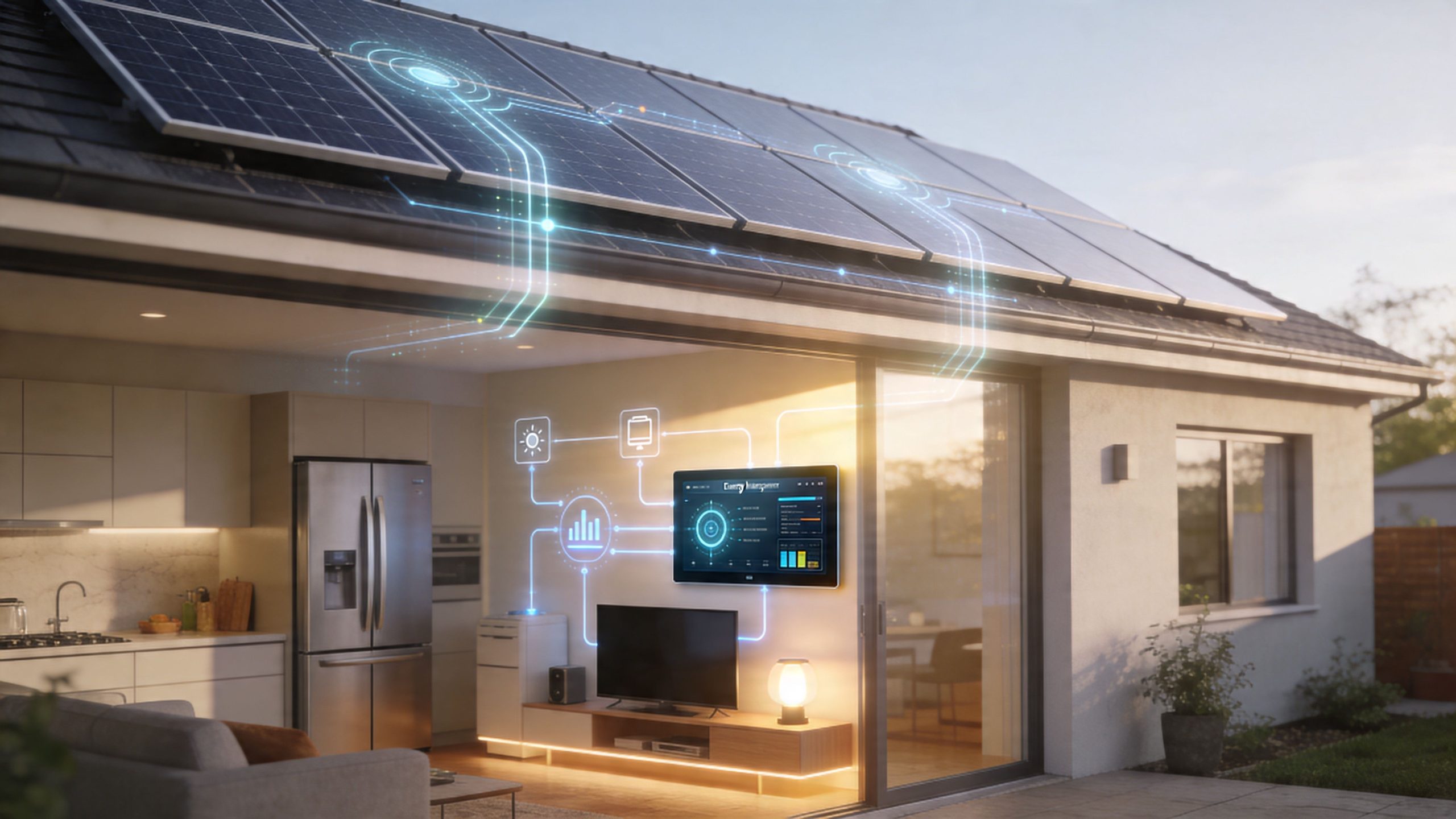
How the routing works in practice
A useful comparison is a busy intersection with changing priorities across the day.
At noon, your panels may be producing more than your home can use. A basic solar setup lets the extra flow out to the grid for a low feed-in tariff. A smarter setup checks the alternatives first. Can that energy cover household demand now? Should it charge the battery for the evening peak? Is there a higher-value grid event later that makes holding energy more profitable than exporting immediately?
That practical order usually looks like this:
- Run the home first to reduce electricity bought from the grid.
- Charge the battery selectively so stored solar is available when power is expensive or when a VPP event occurs.
- Export with intent when the system identifies a worthwhile market or network opportunity.
This is the key shift. Direct solar power is not just about where energy goes. It is about when it goes there, and what that timing is worth.
What direct solar power includes, and what it does not
The term can sound narrower than it is, so it helps to draw clear boundaries.
- It includes self-use, but goes beyond simple self-consumption.
- It includes battery charging, because storing midday solar can raise the value of that energy later in the day.
- It can include controlled export, where solar or battery energy is sent out at times that suit market prices or grid support needs.
- It is not a special panel type. In most homes, it is an operating method built on top of ordinary solar, an inverter, and often a battery.
- It is not blind export. If you send leftover solar to the grid at any available moment, you are not directing it strategically.
That is why many households also look for ways to divert your excess solar into useful loads before accepting a low export payment.
Why Australian homeowners pay attention to this
Australia already has a large base of rooftop solar, as noted earlier in the article. For a homeowner in Queensland or NSW, the national scale matters less than the household economics.
A kilowatt-hour used at midday is not always worth the same as a kilowatt-hour held for the evening peak. Nor is it worth the same as a kilowatt-hour dispatched through a coordinated VPP event. The energy is identical. The value is not.
That is the commercial logic behind direct solar power. It helps you choose the highest-value path for each unit of generation, rather than letting the default setting decide for you.
Practical rule: Solar becomes more valuable when your system can choose the right destination at the right time.
How a VPP Manages Your Direct Solar Power Flow
A VPP-managed home energy system works a bit like an autopilot with priorities. It doesn’t just push energy around. It makes decisions based on timing, battery status, home demand, and grid conditions.
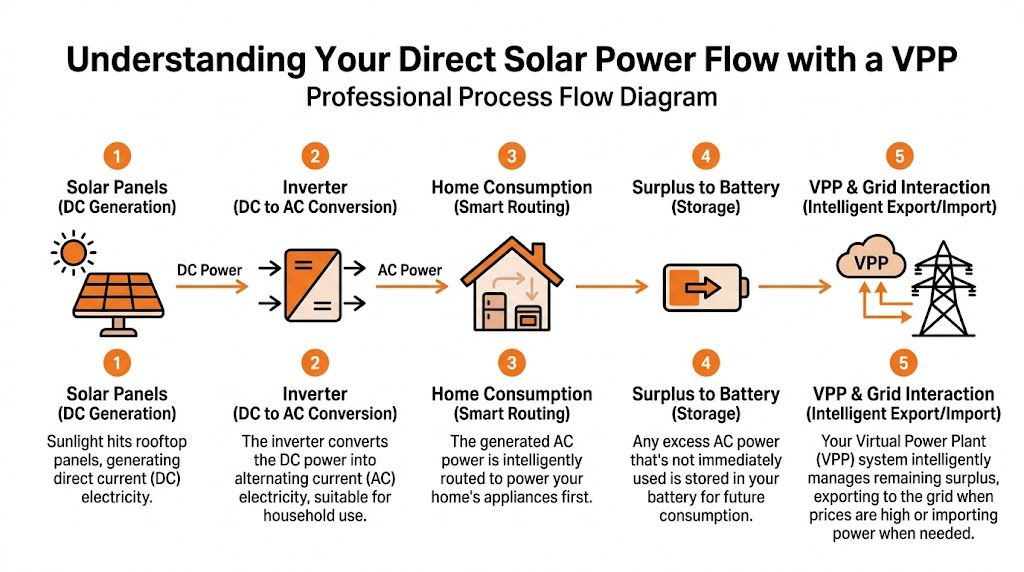
From rooftop generation to usable power
Solar panels produce direct current, or DC. Your home runs on alternating current, or AC. The inverter sits in the middle and performs the conversion so the energy can be used by appliances, battery systems, and the grid.
In VPP-ready setups, the inverter does much more than basic conversion. VPP-integrated inverters use MPPT technology with efficiencies over 95% to convert DC into 230V AC, and under strong solar conditions VPPs can dispatch that direct solar power in under 2 seconds to support the grid during frequency deviations, according to Victron technical specifications.
The decision order inside a smart system
A properly managed system doesn’t start by asking what the grid wants. It starts with your house.
A practical dispatch order looks like this:
- Household demand first: Your appliances, air conditioning, pool pump, and other loads are supplied before spare capacity is offered elsewhere.
- Battery position next: The battery may charge, but not always to the same target at all times. A VPP may hold space in the battery if it expects a higher-value event later.
- Grid support last, but strategically: Only spare solar or spare battery capacity is used for market or grid services.
That middle step is where many people get confused. They assume the “best” battery is one that sits at full charge as often as possible. That’s not always commercially true. A battery that’s intelligently positioned can do more valuable work over a day than one that fills early and waits.
Why export timing matters more than export volume
Sending power to the grid isn’t automatically a bad outcome. The issue is whether that export happens passively or strategically.
If you’ve ever looked at ways to divert your excess solar into a controllable household load such as hot water, you’ve already encountered the same core principle. Surplus energy becomes more valuable when you direct it with intent instead of letting it spill out by default.
A VPP applies that same logic at market scale. It can coordinate many batteries and solar systems together, then respond when the grid is stressed or when energy has greater trading value.
For a broader explanation of that grid role, this overview of Virtual Power Plants in Australia gives useful context on how aggregated household assets support the electricity system.
The key change is control. Solar stops being a one-way daytime export stream and becomes a flexible resource.
What the homeowner actually experiences
Most of this happens in the background. You don’t need to sit there deciding every half hour whether the battery should charge, discharge, or hold.
What you notice is simpler:
- your home still uses its own energy first
- the battery doesn’t just idle without purpose
- the system has a better chance of earning value when the grid needs support
- the solar asset works across more parts of the day, not only around lunchtime
That’s the operational difference between owning components and running an optimised energy system.
Comparing Direct Solar Power with Traditional Models
Many households still judge their setup using old categories. Solar either offsets your daytime usage, or it exports excess power, or a battery covers the evening peak. Those categories are useful, but they don’t show how much value may be left on the table.
Solar Energy Model Comparison
| Metric | Solar Export Only (No Battery) | Standard Self-Consumption (Basic Battery) | Direct Solar & VPP (e.g., High Flow) |
|---|---|---|---|
| Financial return | Relies heavily on feed-in tariff outcomes and daytime export value | Improves household self-use, but value is mostly limited to your own load shifting | Adds potential grid services value alongside home use and storage strategy |
| Grid impact | Passive exporter during solar hours | Limited grid interaction beyond normal import and export | Can support the grid in coordinated demand events and dispatch windows |
| Asset utilisation | Solar works, but surplus may be undervalued | Battery helps, though it may be underused if it only cycles around the home’s schedule | Solar and battery are both used as flexible assets, not just backup tools |
| Bill reduction potential | Can reduce bills, but often depends on daytime self-use | Usually better than export-only setups because evening demand can be covered | Can create additional bill offsets through retailer-led VPP participation, beyond standard FiTs |
| Control of energy flow | Minimal | Household-focused, but often static | Dynamic and responsive to both home priorities and market conditions |
| Best fit | Homes without batteries or low evening usage | Homes wanting backup and self-consumption | Owners who want stronger returns from an existing battery |
Where the direct solar power model stands apart
The difference isn’t that one model is “good” and another is “bad”. It’s that each one captures a different share of the asset’s potential.
A solar-only export model treats your system as a generator. A standard battery model treats it as a household support tool. A direct solar power and VPP model treats it as both a household asset and a market-responsive asset.
That distinction matters when comparing retailer structures. For example, looking at a plan like the Origin Solar Boost Plan review helps show why tariff structures alone don’t tell the full story. The retail framework around the battery often matters just as much as the hardware itself.
A simple commercial test
Ask one question. Is your battery mostly saving you money inside your house, or is it also working for you when the wider grid places a premium on flexibility?
If it’s only doing the first job, there may still be unused value in the system.
The Financial Impact for Homeowners in Queensland and NSW
A Queensland or NSW household with solar often produces its cheapest energy in the middle of the day, then buys back expensive energy in the evening. That gap is where direct solar power starts to matter financially.
Electricity is not priced evenly across the day in the National Electricity Market. Midday solar can be abundant and less valuable. Early evening, especially on hot or high-demand days, can be a very different commercial period. A battery connected to a VPP can respond to those price and demand swings instead of sitting in a fixed export pattern.
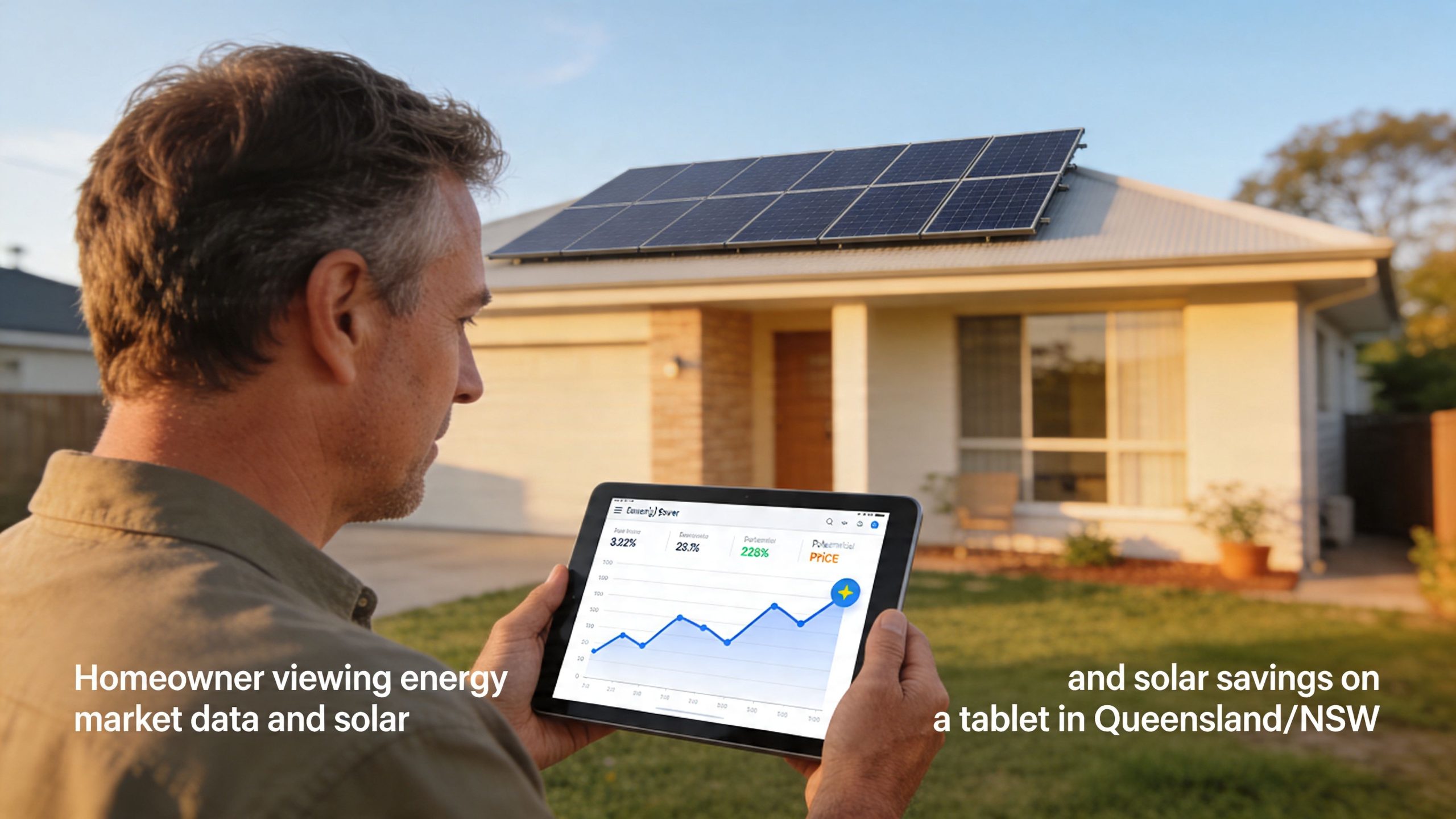
Why market timing changes the numbers
Feed-in tariffs usually pay a flat or predictable rate for exported solar. The grid does not always value that energy the same way.
A VPP works more like a traffic controller for thousands of batteries. It looks for moments when stored energy is more useful to the grid, then dispatches participating batteries in a coordinated way. For a homeowner, that means the same battery can do more than reduce evening grid purchases. It can also help create income or credits when market conditions reward fast, flexible support.
That is the strategic shift. Your system stops behaving like a passive exporter and starts acting like an asset that can respond to price signals.
How that translates into a household outcome
For a homeowner, the mechanics are simpler than the market language suggests. Your battery has a household role and a market role.
The household role is familiar. It stores solar from the day and reduces the electricity you need to buy later. The market role is where extra value can appear. If the battery has spare capacity and your settings allow participation, a VPP may use part of that stored energy during high-value periods or grid support events.
That distinction matters in QLD and NSW because many homes already face the same pattern. Solar exports are often worth less in the middle of the day than the electricity imported after sunset. Households that compare standard tariffs with off-peak electricity plans and timing strategies usually find that timing drives more of the bill than expected.
A better way to assess battery returns
A simple payback calculation can miss the point if it only counts self-consumption savings.
A stronger test is to ask:
- How often does the battery avoid expensive evening imports?
- How much spare capacity is available for paid grid support or VPP dispatch?
- Does the operating plan protect backup needs while still using high-value market windows?
- Are low feed-in tariff periods being bypassed by storing first and exporting more selectively?
That last question is often the turning point. Direct solar power is not only about sending solar to the grid. It is about deciding whether your energy should be used at home, stored for later, or dispatched through a VPP when the market is willing to pay more for flexibility.
Why QLD and NSW are strong candidates
Queensland and NSW are well suited to this model because both states have large numbers of solar homes and regular periods where the gap between midday and evening value becomes obvious.
In practical terms, that creates a larger pool of households that can benefit from coordination. A single battery is small from the grid's perspective. Thousands of batteries responding together can behave more like a dispatchable power plant. That is the core VPP idea. Many small devices, operated in sync, can earn value in places where one household alone could not easily participate.
For homeowners, the commercial takeaway is straightforward. A battery can protect against high retail prices inside the home and also create an external revenue opportunity when it is enrolled in the right program.
Operational discipline still matters. System performance depends on battery settings, tariff structure, export limits, and hardware condition. Homeowners reviewing maintenance and asset checks may find the Solar Panel Drone Inspection Workflow Guide useful as part of a broader system performance review.
A battery that only covers backup and self-consumption can still be worthwhile. A battery that also participates intelligently in market events has a stronger path to better overall returns.
How to Optimise Your System with the HighFlow App
A VPP only feels trustworthy if the homeowner can see what’s happening.
That’s why app design matters. If the battery is participating in a wider market program, you should be able to understand the logic, check the plan, and change preferences when household priorities shift.
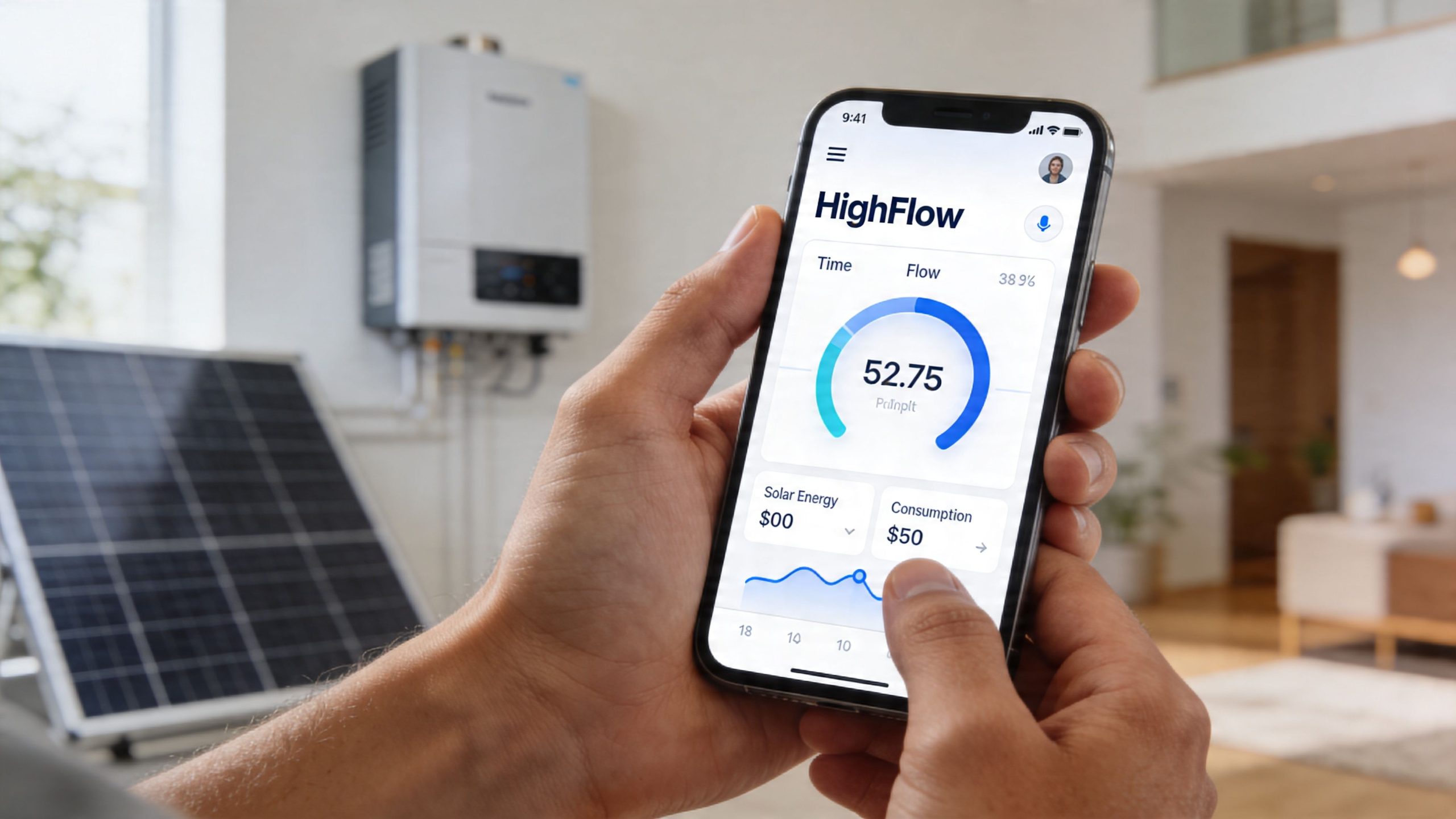
Start with your operating preference
Most households don’t want to manage every dispatch decision. They do want to choose the rulebook.
A useful app experience usually lets you set a preference such as:
- Maximise bill performance: prioritises commercial participation when spare capacity exists
- Hold stronger backup readiness: keeps more battery reserve for outage confidence or evening use
- Balanced mode: blends household resilience with market participation
Those settings matter because battery optimisation isn’t one-size-fits-all. A household with medical equipment, for example, may want a different reserve setting from a household focused mainly on bill reduction.
Look for visibility, not just automation
Automation is only helpful when it’s transparent. A good app should show:
- Forecasts: expected solar generation and likely battery position
- Live status: whether the battery is charging, discharging, or being held
- Usage logic: what was used by the home, what was stored, and what was made available externally
- Override controls: the ability to step in when your plans change
If your system has performance issues, the app won’t solve hardware faults on its own. In those cases, inspection matters. For readers who want a practical look at how operators examine array condition and visual defects, this Solar Panel Drone Inspection Workflow Guide is a useful reference.
Why manual override matters
Automation should assist the homeowner, not replace them.
You might have guests coming over, a storm forecast, or prefer to keep extra reserve for peace of mind. The app should let you override the plan without friction. That reinforces an important principle in any well-run VPP. Your home remains the priority, and software should adapt to your household, not the other way around.
Good optimisation feels less like surrendering control and more like setting smart defaults.
What “optimised” really means
Optimised doesn’t mean permanently exporting more. It means making better decisions with the same hardware.
Sometimes the best move is to self-consume. Sometimes it’s to charge the battery. Sometimes it’s to wait. Sometimes it’s to dispatch. The app’s role is to make those decisions visible and manageable so the technology stays understandable.
Common Misconceptions About VPPs and Grid Support
People often hesitate around VPPs for understandable reasons. They’ve already invested in solar and a battery, and they don’t want someone else taking over an asset that sits on their house.
Will a VPP drain my battery when I need it
That’s the biggest concern, and it’s usually based on a false trade-off. In a properly structured VPP, the household remains the first priority. The system works with spare capacity, not energy you need for immediate use.
That’s also why battery reserve settings matter. A homeowner should be able to maintain a minimum level that suits their comfort and usage pattern.
If my roof isn’t perfect, does the model still work
Yes, often better than people assume. A common concern is that tilt angle or minor shading makes VPP participation barely worthwhile. Real-world data suggests the impact can be smaller than expected. A 10-degree deviation from the optimal angle typically causes less than a 5% drop in VPP revenue, according to the cited discussion of panel angle and VPP outcomes.
That doesn’t mean roof design is irrelevant. It means many households dismiss themselves too early.
Am I giving up control of my battery
You shouldn’t be. A sensible retailer-led VPP gives you visibility, preference settings, and manual override options. If those aren’t present, that’s a warning sign.
Is this just another version of solar export
No. Standard export is mostly passive. VPP participation is coordinated. The difference is not merely where the energy goes. The difference is whether someone is timing and managing that energy to capture more value.
What about contracts and warranties
These questions need a careful, provider-specific answer. Homeowners should always check retail terms, battery compatibility, and operating conditions before joining any program. The important principle is transparency. If a provider can’t explain how your system will operate, when it will dispatch, and what control you retain, that’s not a small issue. It’s the main issue.
Key Takeaways
- Direct solar power is best understood as smart energy routing, not just simple grid export.
- Your home comes first. A well-managed system prioritises household demand before using spare capacity for broader grid participation.
- A VPP changes the economics by allowing solar and battery assets to participate in higher-value grid services, not just standard feed-in arrangements.
- Battery value is often underused when the system only performs basic self-consumption and evening load shifting.
- Market timing matters in Queensland and NSW because battery flexibility becomes more valuable when grid conditions tighten.
- Visibility matters as much as automation. A useful app should show forecasts, status, preferences, and manual override options.
- Suboptimal panel angles don’t automatically rule you out. Many systems still perform effectively in a VPP setting.
- The strategic goal is simple. Use the same hardware more intelligently so each unit of solar energy works harder financially.
Most battery owners focus on installation quality. Far fewer focus on ongoing performance and optimisation. HighFlow Energy is an electricity retailer built around realizing more value from an existing solar and battery system through a BYOB Virtual Power Plant model.
If you want to understand whether your battery is underperforming financially, check your eligibility, review how your current electricity setup is working, and assess whether your system could be doing more than basic self-consumption.