

Energy Australia Smart Meter NSW: A 2026 Homeowner’s Guide
If you've already paid for rooftop solar and a battery, the frustrating part isn't generation. It's underperformance. Many NSW homeowners can see power flowing through their home, but they still can't clearly tell when the battery is charging, what gets exported, whether the tariff suits the home, or whether the battery could be earning more through coordinated grid participation.
That’s where the energy australia smart meter nsw question becomes practical rather than administrative. For a battery owner, the meter is not just a compliance box. It’s the data and control layer that turns a battery from a passive household asset into something that can be measured properly, optimised properly, and potentially integrated into a Virtual Power Plant.
Your Guide to the EnergyAustralia Smart Meter Rollout in NSW
For most homeowners, the trigger is simple. You open the app for your solar inverter or battery and you can see some activity, but not enough to make hard decisions. Bills still feel harder to decode than they should. Export performance is unclear. Time-of-use exposure may be creeping in. You know the system works, but you’re not convinced it’s working as hard as it could.
That’s why the EnergyAustralia smart meter rollout in NSW matters. A smart meter gives the retailer and the household a much more detailed record of electricity use and export. For battery owners, that matters because better data is what allows better tariff matching, cleaner billing, stronger export visibility, and participation in more advanced energy programs.
The broader rollout is not a minor market upgrade. The Australian Energy Market Commission has recommended accelerated deployment to reach 100% smart meter coverage across National Electricity Market regions, including NSW, by 2030, with net benefits valued at $507 million. The same AEMC update says uptake outside Victoria had been historically slow, reaching only around 30% by the time of the final report, despite being just 17.4% in 2020 across the NEM excluding Victoria. It also notes the rollout is important for a grid supporting over 3 million rooftop solar installations nationally by 2024 (AEMC smart meter rollout update).
What battery owners should care about
A smart meter doesn’t create value on its own. It enables visibility.
That distinction matters. If your battery is already installed, the next gains usually come from operational decisions:
- Tariff alignment: Whether the home’s tariff structure matches when you import and export.
- Battery timing: Whether charging and discharging happen when they create the most value.
- Export measurement: Whether your export data is granular enough to evaluate battery and solar performance.
- Retail coordination: Whether your retailer can support the type of metering and data access needed for advanced optimisation.
Practical rule: If you can’t measure imports, exports, and battery timing with enough detail, you can’t optimise returns with confidence.
For NSW households with solar and storage, that makes the smart meter less about the meter itself and more about what it enables next.
What a Smart Meter Does and Why the Rollout is Happening Now
A traditional accumulation meter tells you one thing well. How much electricity passed through over a long billing period. That was good enough when homes were simple consumers of electricity.
It’s not good enough when a home can import from the grid, export solar, charge a battery, discharge a battery, and respond differently across the day depending on tariff periods and household behaviour.
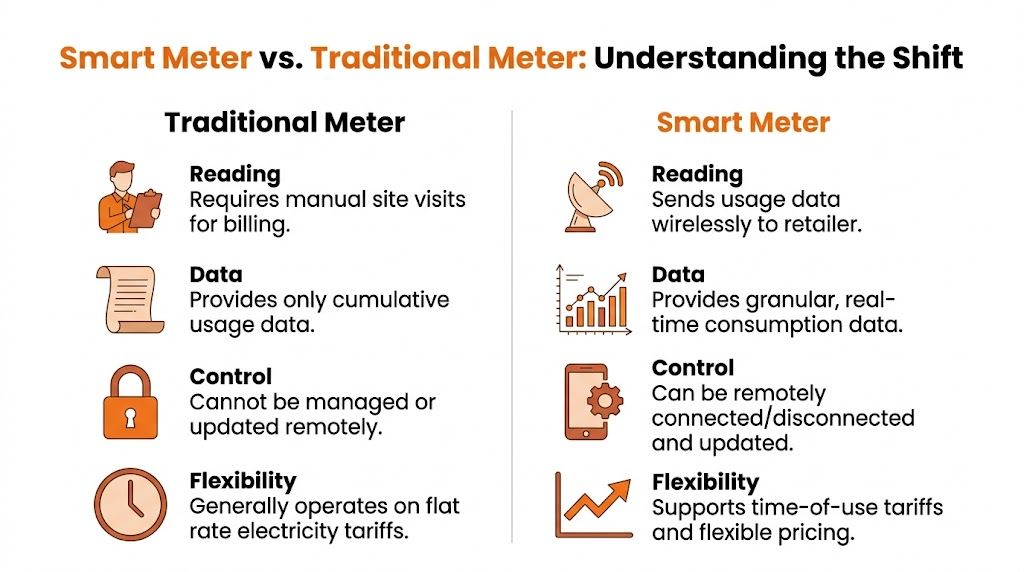
Traditional meter versus smart meter
A useful way to think about it is this. A traditional meter is like getting a quarterly paper bank statement. A smart meter is closer to digital banking. You can see what happened in smaller intervals, and the retailer can work with current data rather than delayed manual reads.
| Meter type | What it mainly does | What it struggles with |
|---|---|---|
| Traditional meter | Records cumulative use for billing | Fine-grained visibility, remote reads, flexible pricing support |
| Smart meter | Records interval data and transmits it remotely | Still depends on good setup, tariff choices, and retailer processes |
That change matters because energy use is becoming more dynamic inside the home. The same logic behind broader connected-home systems applies here. As smart tech boosts comfort, security, and energy efficiency, electricity metering has also shifted from static hardware to connected infrastructure that supports better decisions.
Why NSW is moving now
The rollout is happening because the grid itself has changed. Rooftop solar has increased midday exports. Evening peaks still matter. More homes are adding batteries, electric vehicles, and controllable loads. Network operators and retailers need better visibility to manage those patterns safely and efficiently.
For homeowners, the practical effect is straightforward:
- Billing becomes more accurate
- Usage can be assigned to tariff periods
- Solar export data becomes more useful
- Remote reads reduce reliance on manual processes
- Battery coordination becomes possible at a finer level
If you're trying to understand tariff timing, off-peak electricity options in NSW are much easier to evaluate when a smart meter is recording interval data instead of giving you a single cumulative figure.
A smart meter is not just a better billing device. It is the operating system for a modern electricity account.
What doesn’t change
A smart meter doesn’t fix a poor tariff. It doesn’t correct weak battery settings by itself. It doesn’t guarantee lower bills. If the home keeps importing heavily at expensive times, or the battery isn’t configured well, detailed data reveals the problem more clearly.
That’s still useful. Better visibility is usually the first step to better returns.
Key Features of Your EnergyAustralia Smart Meter
The specific detail that matters most for battery owners in NSW is interval resolution. EnergyAustralia’s smart meters can record and transmit usage data in 5-minute intervals, sent via a mobile network. According to EnergyAustralia’s smart meter flyer, that higher-resolution data virtually eliminates billing errors from estimates and gives AI-driven VPP platforms the granularity needed to optimise charging and discharging against market conditions (EnergyAustralia smart meter digital flyer).
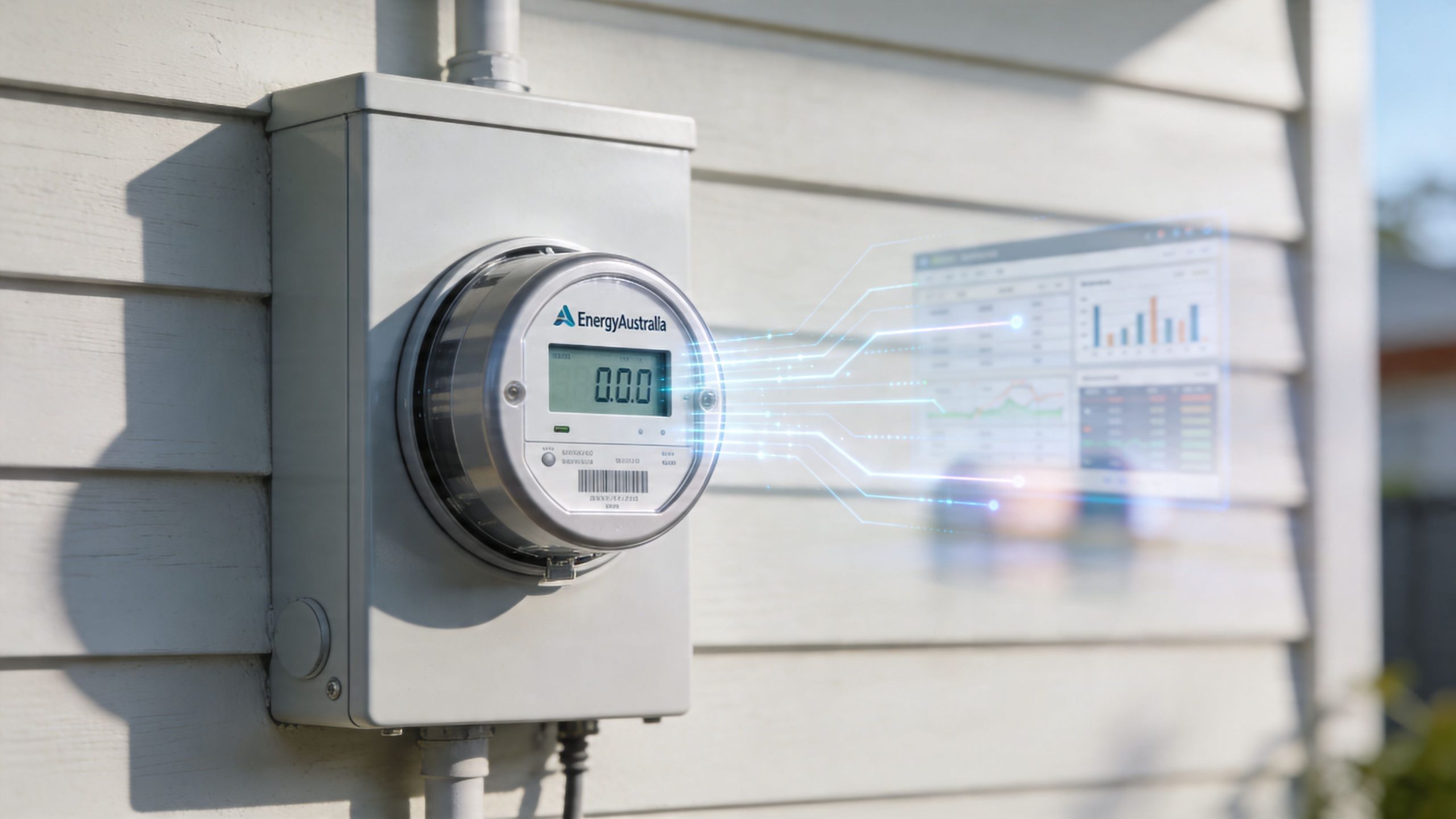
Why 5-minute data matters in practice
For a standard household, interval data sounds technical. For a battery owner, it’s commercial.
Shorter intervals mean the meter can capture fast changes in household demand, solar output, and battery behaviour more accurately. That matters in homes where conditions change quickly across the day. Cloud cover shifts solar production. Cooking loads spike in the evening. Air conditioning starts hard. Battery charging windows can be narrow.
With coarse data, those events blur together. With finer data, they can be acted on.
- Export visibility improves: You can better identify when solar production is spilling into the grid.
- Import timing becomes clearer: Short demand spikes are easier to spot.
- Battery dispatch can be more precise: Charge and discharge decisions don’t rely on broad averages.
- Estimated bills largely disappear: Remote interval reads reduce the usual causes of estimate-based billing.
Features that matter more than brochures suggest
The meter itself is only one piece, but these functions are useful:
- Remote data transmission: The meter sends data back without waiting for a manual read.
- Access to usage information: EnergyAustralia states customers can view interval data online, with access after installation and the ability to request historical data.
- Compatibility with flexible pricing: Smart metering supports time-based pricing structures that a basic meter can’t support properly.
- Better operating data for battery households: The meter becomes an independent record of what the site imported and exported.
A lot of households rely too heavily on inverter apps. Those apps are useful, but they don’t replace the retailer-side metering record used for settlement, billing, and tariff application. If you’re already tracking household performance, home energy monitoring makes more sense when smart meter data and battery behaviour can be reviewed together rather than in isolation.
Operator insight: For battery owners, the most valuable feature is rarely the display on the meter. It’s the quality of the interval data sitting behind it.
What works and what doesn’t
What works well is using smart meter data to validate whether the battery is reducing costly imports and whether solar exports are happening when expected.
What doesn’t work is assuming the meter alone will improve outcomes. It gives you better raw material. You still need the right tariff, battery settings, and operating model.
The Smart Meter Installation Process in NSW
Most homeowners want to know three things. Will this cost me anything, how disruptive is it, and what do I need to do?
For a standard replacement arranged through the rollout, NSW customers are generally notified in advance for a simple meter swap, and the NSW government information cited in the verified material says customers are notified at least four business days before installation for a simple, no-cost swap. That’s the normal pathway for straightforward sites.
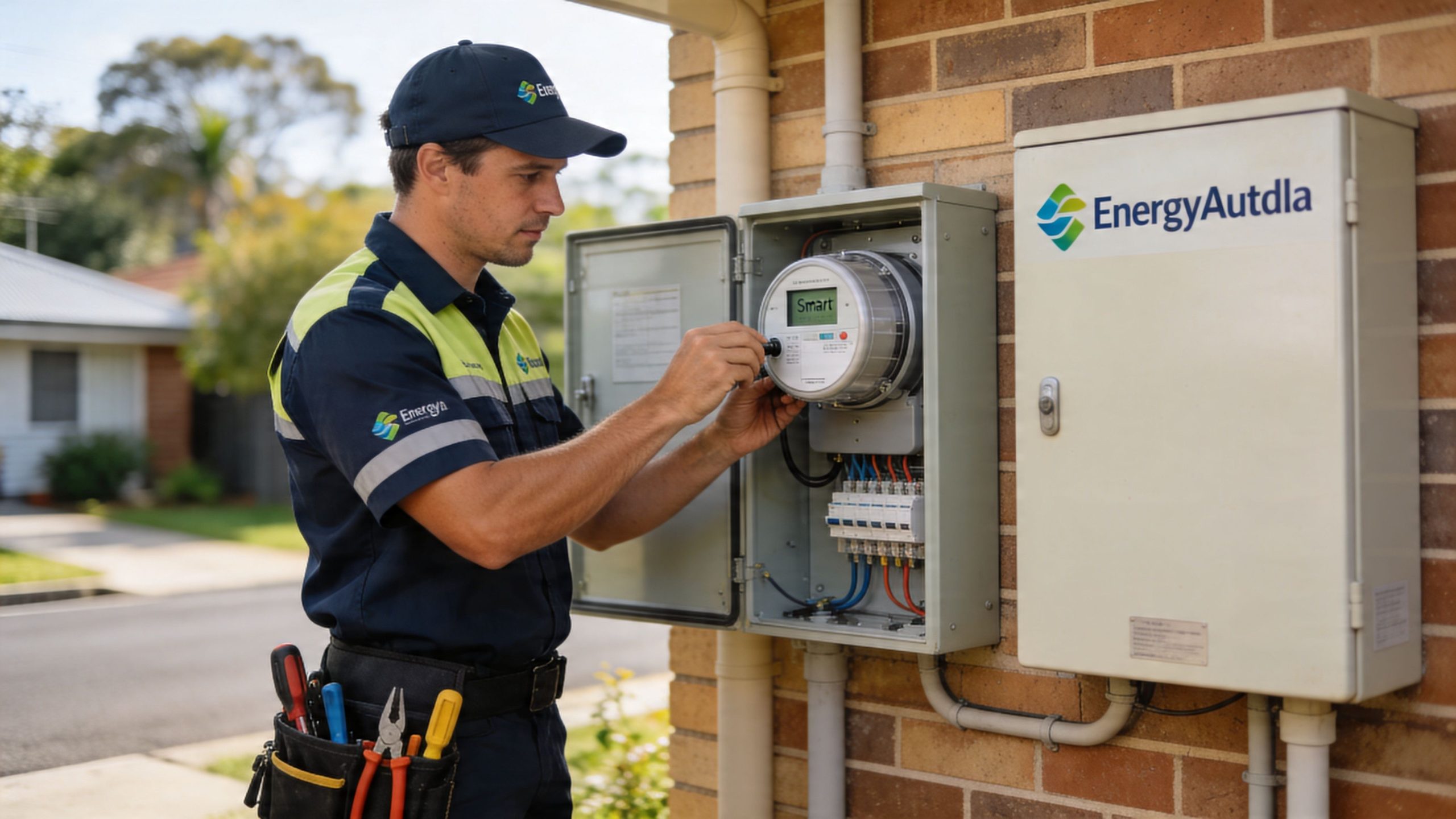
What usually happens before installation
The sequence is usually administrative before it becomes technical:
- You receive notice from the retailer or metering provider. That notice should outline the planned replacement.
- The site is checked for access and suitability. If the meter board has issues, those may need separate electrical work.
- An installation date is arranged. Straightforward jobs are simpler than switchboard upgrades or defect remediation.
If you have solar and a battery, it’s worth confirming that the installer and retailer have your current site details correct. Metering errors often begin with basic account mismatch issues, not hardware problems.
What happens on the day
A standard installation usually involves a short interruption to power while the old meter is removed and the new one is commissioned. The technician installs the meter, checks operation, and confirms the site can communicate correctly.
That doesn’t mean every installation is identical. The difficult jobs are the ones with poor meter board condition, access restrictions, unresolved defects, or unclear solar and battery configuration. Those are the cases where timelines drift.
Later in the process, compliance matters just as much as the physical swap:
The 2026 compliance change
From 1 July 2026, NSW requires all compliance certificates for new smart meter installations to be submitted through the BCNSW eCert portal, which the NSW Government says streamlines safety checks under the Gas and Electricity (Consumer Safety) Act 2017 and helps ensure the meter is activated correctly, avoiding data transmission issues that could disrupt VPP participation (NSW smart meter compliance requirements).
For homeowners, the practical implication is simple. Activation is not just about hardware on the wall. It depends on the paperwork being completed properly.
Best homeowner checks after installation
- Check your account details: Make sure the meter change appears correctly against the right property.
- Review data flow: Confirm interval data starts appearing in your retailer portal or app.
- Watch for export records: Solar households should verify export data appears as expected.
- Keep installation communications: If there’s a dispute, your notices and job references matter.
If the meter is installed but not activated correctly, the problem won’t look like a hardware failure. It will look like missing data, billing confusion, or delayed tariff changes.
How Smart Meters Unlock Value from Solar Batteries and VPPs
A battery without smart metering can still store solar and reduce evening imports. That’s useful, but it’s limited. The battery mostly acts as a private household tool.
With smart metering, the battery becomes visible to the wider retail and grid framework. That’s the point where real optimisation starts.
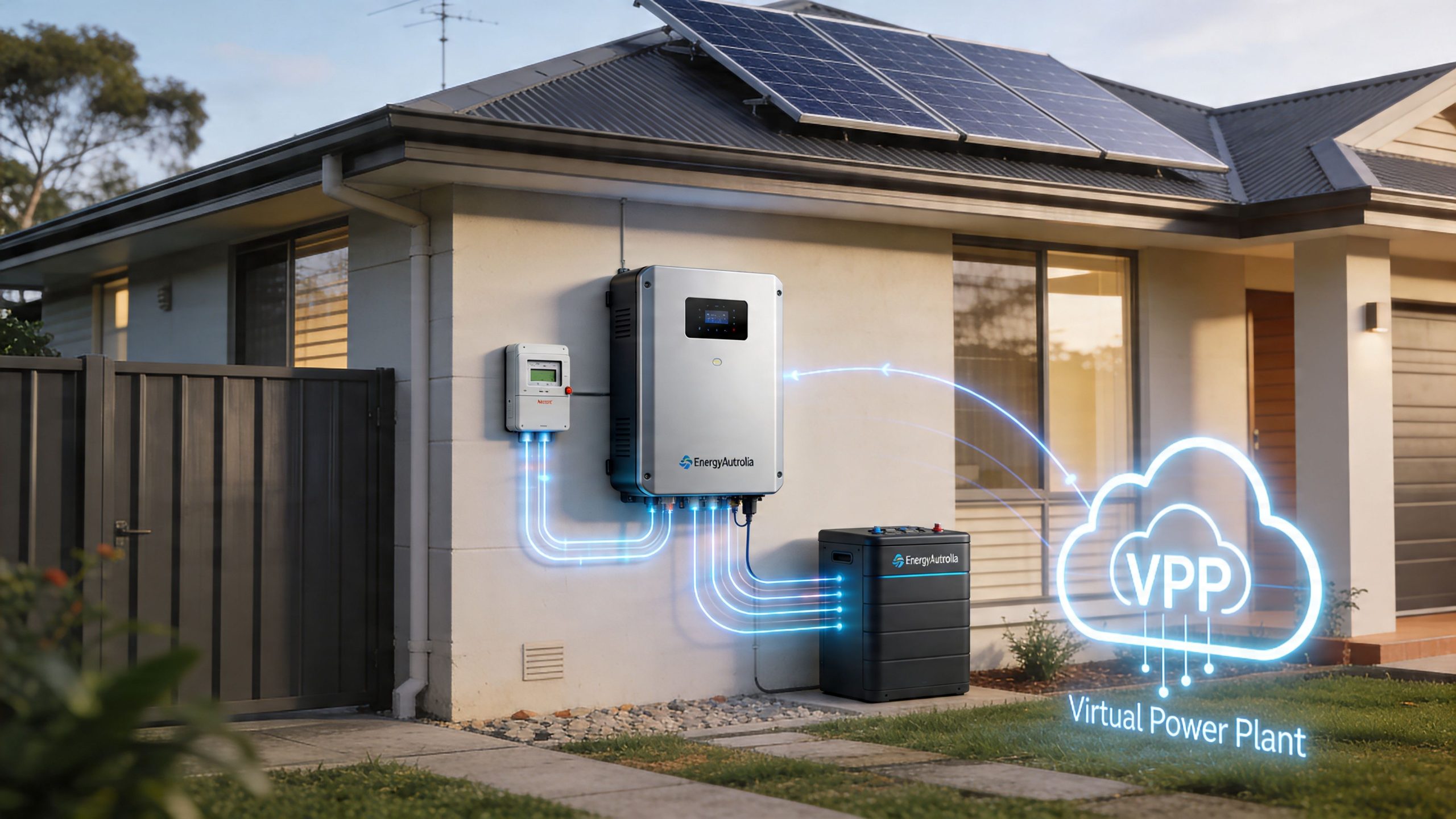
The meter is the data bridge
Battery value depends on measurement. A retailer or VPP operator needs trusted interval data to understand what the site imported, what it exported, and when those flows occurred. Without that, the battery can’t be coordinated with confidence around tariff periods, export opportunities, or demand events.
Many general smart meter articles stop prematurely. They explain the meter. They don’t explain the commercial chain it enables.
That chain looks like this:
| Asset or function | What it contributes | Why the meter matters |
|---|---|---|
| Solar | Generates energy during the day | Meter records exports and import offsets |
| Battery | Stores and releases energy | Meter helps verify timing and grid interaction |
| Retail tariff | Prices energy differently across time | Meter allocates usage to the correct interval |
| VPP participation | Coordinates spare battery capacity | Meter provides the interval data needed for settlement and control logic |
Where the upside actually comes from
The smart meter itself doesn't pay you. The value comes from what can be done once interval data exists.
First, you get a clearer picture of self-consumption versus export. That helps identify whether your battery is soaking up excess solar or sitting underused while exports leave the site.
Second, interval data supports more intelligent response to tariff structures. If the household is exposed to time-based pricing, the battery can be managed around those periods rather than treated as a blunt backup tool.
Third, VPP participation depends on reliable metering. A battery can only support coordinated grid services properly if imports, exports, and timing are recorded accurately enough to settle what happened.
For households trying to improve overall performance, practical household habits still matter. Basic consumption discipline still helps, and resources on how to reduce electricity bills can be useful for trimming avoidable load before you start looking for advanced optimisation.
Why this matters in NSW specifically
Distributor smart meter data in NSW is already being used in pilot projects. EnergyAustralia notes that data from distributors such as Ausgrid has helped identify safety hazards, improve network visibility, and increase hosting capacity for solar. It also highlights that this supports cheaper renewable integration and is important for effective VPP operation, with more than one in three NSW households having rooftop solar in the verified data set (EnergyAustralia Power of Choice FAQ).
That network-side benefit matters at household level too. Better hosting capacity and better visibility reduce the friction between your home system and the local grid.
If you want a deeper view of how coordinated batteries support the market, this overview of virtual power plants driving Australia’s renewable energy revolution is a useful companion.
Commercial reality: A battery creates the most value when it serves the home first and the grid second. Smart metering is what lets those two jobs be separated and measured properly.
Key Takeaways for NSW Battery Owners
- The rollout is market-wide, not optional in the long run. Smart meter deployment in NSW sits within the broader push for full coverage across NEM regions by 2030, as noted earlier.
- For most standard swaps, the meter change is typically simple. The process is usually straightforward for homes without switchboard defects or access issues.
- The meter is an enabler, not a savings product. It doesn't lower your bill by itself. It improves measurement, billing accuracy, and operational visibility.
- Battery owners benefit more than average households. Interval metering is particularly useful when the home has solar, export flows, and a battery that can charge or discharge at different times of day.
- EnergyAustralia’s 5-minute interval capability is commercially useful. Finer data supports better analysis of imports, exports, and battery timing.
- Installation quality still matters. Meter activation, compliance paperwork, and correct account setup all affect whether data appears properly after installation.
- Tariffs still need scrutiny. A smart meter can expose you to more flexible pricing. That can be useful or unhelpful depending on how the home uses energy.
- VPP participation depends on good metering. Without interval data, a battery is harder to coordinate as a grid-facing asset.
For most NSW battery owners, the right question isn’t “Do I need a smart meter?” It’s “What value can I gain once I have one?”
Common Questions About NSW Smart Meters
Can I refuse a smart meter in NSW after June 2025
That’s one of the most important consumer questions, and it’s also one of the areas where communications can be patchy. The Australian Energy Regulator material referenced in the verified data highlights concern about the period after June 2025, when refusals are no longer an option, and notes that NSW processes for customers moved to time-of-use tariffs remain unclear in many retailer communications (AER consumer rights and smart meters).
The practical takeaway is that refusal becomes much less relevant than preparation. Battery owners should focus on tariff consequences, data visibility, and post-install account setup.
Will a smart meter automatically increase my bill
No. But it can change how your usage is priced if you move onto a time-based tariff structure.
That’s why smart meters trigger anxiety. The meter is often blamed for bill increases when the underlying issue is tariff design plus household behaviour. If a home imports heavily during expensive periods and doesn’t adapt, costs can rise. If the battery and major loads are managed well, the same flexibility can be useful.
If I have a battery, should I be worried about time-of-use tariffs
You should be attentive, not fearful. A battery gives you more ways to respond to time-based pricing than a home without storage.
A significant risk is operating blind. If you don’t know when your home imports, when your battery discharges, or when your solar exports peak, you can’t judge whether the tariff helps or hurts.
Is the smart meter data private
Retailers and metering providers are still operating inside regulated frameworks, but homeowners should treat energy data the same way they treat any other household data stream. Read the privacy terms, understand app permissions, and know who can access your interval data.
The practical issue for most households isn’t dramatic data misuse. It’s not understanding who holds the operational record and where to go when data in the battery app, inverter app, and retailer portal doesn’t match.
Can the retailer control my power remotely
Smart meters can support remote functions. Whether and how those functions are used depends on the meter setup, retailer processes, and regulatory controls.
That capability is useful when it avoids manual site visits and speeds up account actions. It becomes less useful when customer communication is poor. The technology is not the main problem. The process around it often is.
What if installation is delayed or the data doesn’t appear
Start with the basics:
- Check the account details
- Confirm the meter number changed correctly
- Ask whether activation is complete
- Verify whether solar export channels are configured properly
- Keep records of all installation notices and service requests
If a battery owner intends to participate in an advanced energy program, missing interval data is not a minor issue. It affects visibility, tariff review, and any service that relies on accurate import and export records.
Does a smart meter make my battery VPP-ready on its own
No. It makes VPP participation possible, not automatic.
A compatible battery, correct communications setup, suitable retailer arrangements, and operational coordination still matter. The meter is foundational, but it is one layer in a larger stack.
Unlock Your Battery's True Value with High Flow Energy
Most battery owners focus on installation quality. Far fewer focus on ongoing performance and optimisation. That’s where a lot of the missed value sits.
A smart meter helps because it gives your home the interval data needed for accurate measurement, tariff visibility, and coordinated battery operation. But hardware alone doesn’t maximise returns. Gains come from how your battery is managed over time, how your retailer structure works, and whether your system is participating in the right programs without compromising household priority.
High Flow Energy is an electricity retailer built around maximizing the full value of your existing solar and battery system.
If you’d like to understand whether your battery is underperforming financially, request an eligibility assessment with HighFlow Energy. It’s a practical way to review how your current setup is performing, whether your smart meter data is being used properly, and whether your existing battery could be delivering more value from the assets you already own.