

Solar Power To Charge Car Battery: Your Guide For Australia
If you own rooftop solar, a home battery and an EV in Queensland or New South Wales, there’s a good chance you’ve had the same frustrating experience. Your roof is generating energy during the day, your battery is sitting there as a valuable asset, yet your car still ends up charging from the grid at night.
That’s the gap most guides ignore. They explain panels and chargers, but they don’t deal properly with the actual household question: how do you use solar power to charge car battery capacity in a way that works with your home, your battery settings and your wider energy strategy?
For Australian households, this isn’t just about running the car on sunshine. It’s about using existing energy assets more intelligently. The EV is now another major electrical load. If you manage it badly, it pushes you back onto imported power. If you manage it well, it can soak up daytime solar, reduce wasted exports and improve the value you get from your solar and battery system.
That matters even more if you’re already in, or considering, a Bring Your Own Battery virtual power plant. Once you add VPP participation into the mix, EV charging becomes less about simple self-consumption and more about priority management. You want the car charged. You also want the battery available for your home. And if your system can support grid services at the right moments, you want to capture that value too.
The practical answer isn’t “charge whenever the car is plugged in”. It’s to build a controlled charging strategy around your solar production profile, battery behaviour and household priorities. That’s where a lot of financial value is either captured or lost.
Introduction The Untapped Potential of Your Solar System
Many EV owners start with a simple assumption. If the house has solar, the car should be cheap to charge.
In practice, that only happens when generation, storage and charging are aligned. Otherwise, the EV becomes another evening load that lands on imported electricity just when household demand is already climbing.
For households in NSW and QLD, the opportunity is real. A typical home solar system can do far more than offset daytime appliance use. It can also support regular EV charging if you approach the system as a coordinated energy asset rather than a set of separate devices.
The first mindset shift is this. Your rooftop solar isn’t only there to lower a daytime bill. It can become your transport fuel source, your home battery input and, if managed properly, a contributor to broader energy market value. Most homes don’t have a hardware problem. They have an orchestration problem.
Practical rule: The cheapest EV charging usually comes from surplus solar that would otherwise be exported, curtailed or poorly timed against household demand.
That makes charging strategy just as important as charger hardware. A fast charger on its own won’t create low-cost charging if the energy is arriving from the grid. A well-timed slower charge can be more valuable if it absorbs solar that would otherwise leave the house at low value.
Battery owners often underuse what they already have. The battery can buffer solar production. The charger can follow solar output. The EV can become a controllable load instead of a blunt one. And if you’re participating in a VPP, significant gains come from making sure EV charging doesn’t accidentally undermine the value of your broader energy setup.
How to Use Solar Power to Charge a Car Battery The Core Setups
There are several ways to use solar power to charge a car battery at home. Most Australian households will fall into one of three setups. The best option depends on what equipment you already have and how much control you want over charging times.
Standard AC charging from rooftop solar
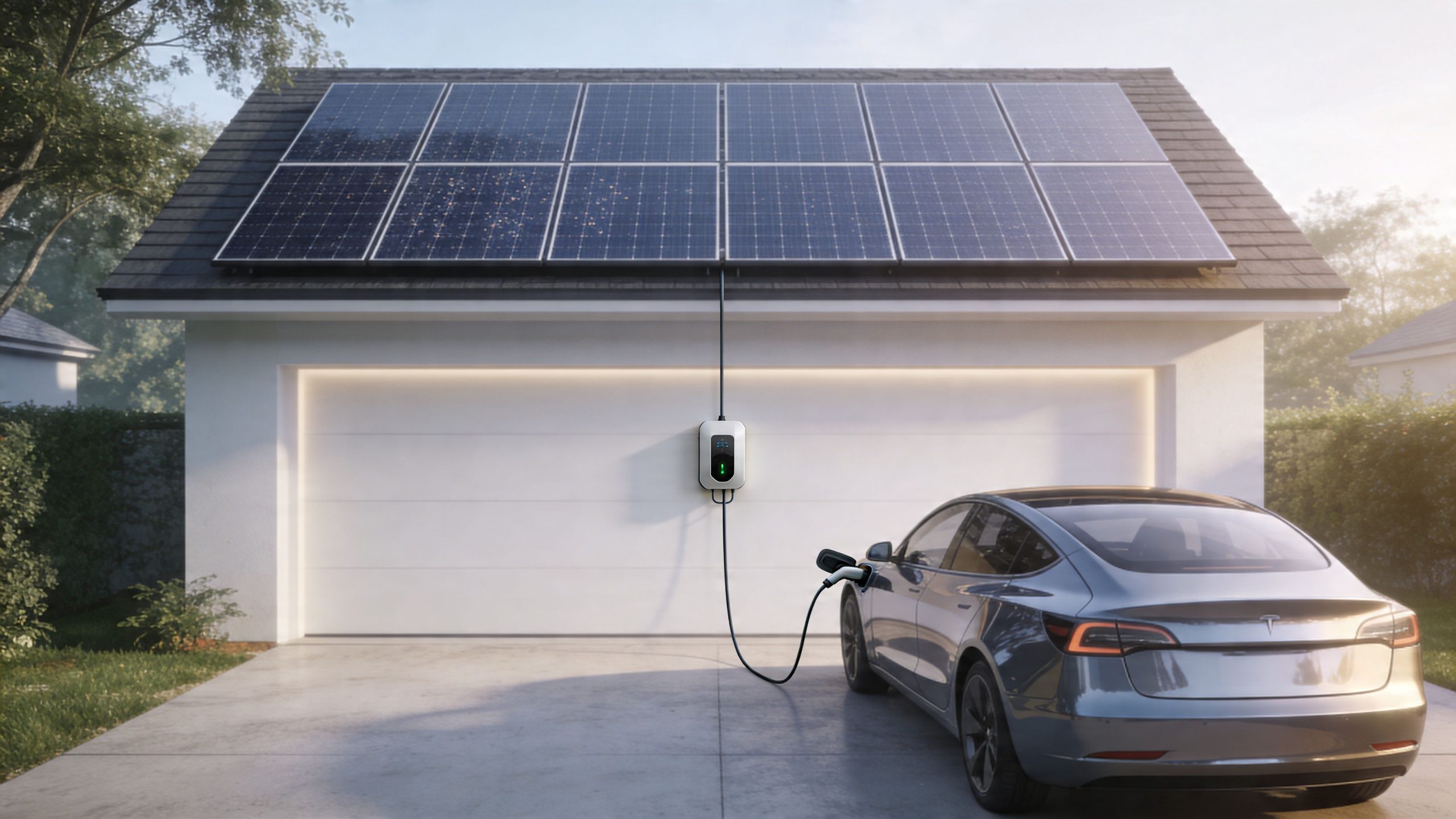
This is the most common arrangement. Solar panels generate DC electricity. Your home inverter converts that into AC power for the house. The EV charger then draws from the home’s AC supply.
That means the EV doesn’t receive power “straight from the panels” in a literal sense. It receives electricity that has already moved through the home energy system.
In Australian conditions, a standard 6.5kW rooftop solar system can charge a typical EV battery of around 65kWh from 20% to 80% on a prolonged sunny day, and QLD and NSW typically receive 4.5 to 6 peak sun hours daily. For a daily 100km trip, an EV may need only 2kWh to 6kWh, which is often well within the output of a household solar system, according to Sunburn Solar’s guide to solar EV charging facts.
For most homeowners, this setup works well if the car is home during the middle of the day. If it isn’t, you need storage or scheduled charging logic.
Solar plus home battery as a buffer
The battery changes the economics and the practicality.
Instead of relying on the EV being home during solar production hours, you store surplus solar first and use it later. This method is practical because many drivers do not charge their vehicles at noon; instead, they plug in after work.
A home battery acts as an energy buffer between solar generation and transport demand. It smooths timing mismatches and lets you decide whether stored energy should go to evening household loads, EV charging or, in some arrangements, export.
If your battery is AC-coupled, the energy path differs from a DC-coupled system, and that affects how charging behaviour should be configured. High Flow Energy has a useful explanation of AC-coupled battery setups if you want to understand how your existing system handles energy flows.
Dedicated DC pathways and portable options
Some advanced systems reduce conversion steps by keeping more of the energy flow on the DC side before final charging. These can improve control and efficiency, but they’re less common in standard residential retrofits.
Portable solar charging gear also exists, but it suits niche use cases better than mainstream home EV charging. If you’re comparing portable systems for travel, camping or off-grid support, this round-up of best RV solar kits is a practical reference point. It’s not a substitute for a proper home EV charging design, but it shows how panel, battery and charging components are packaged in smaller mobile systems.
What works and what doesn’t
A quick comparison helps.
| Setup | What works well | Main limitation |
|---|---|---|
| Solar plus standard EV charger | Simple for daytime charging | Weak alignment if the car is away during solar hours |
| Solar plus battery plus charger | Better timing flexibility and stronger self-use | Needs thoughtful battery priority settings |
| Dedicated DC or specialised charging architecture | More technical control in some cases | More complexity, less common for existing homes |
A good EV charging setup doesn’t just move energy into the car. It decides when that energy should move, and what opportunity cost comes with that decision.
Correctly Sizing Your System for EV Charging
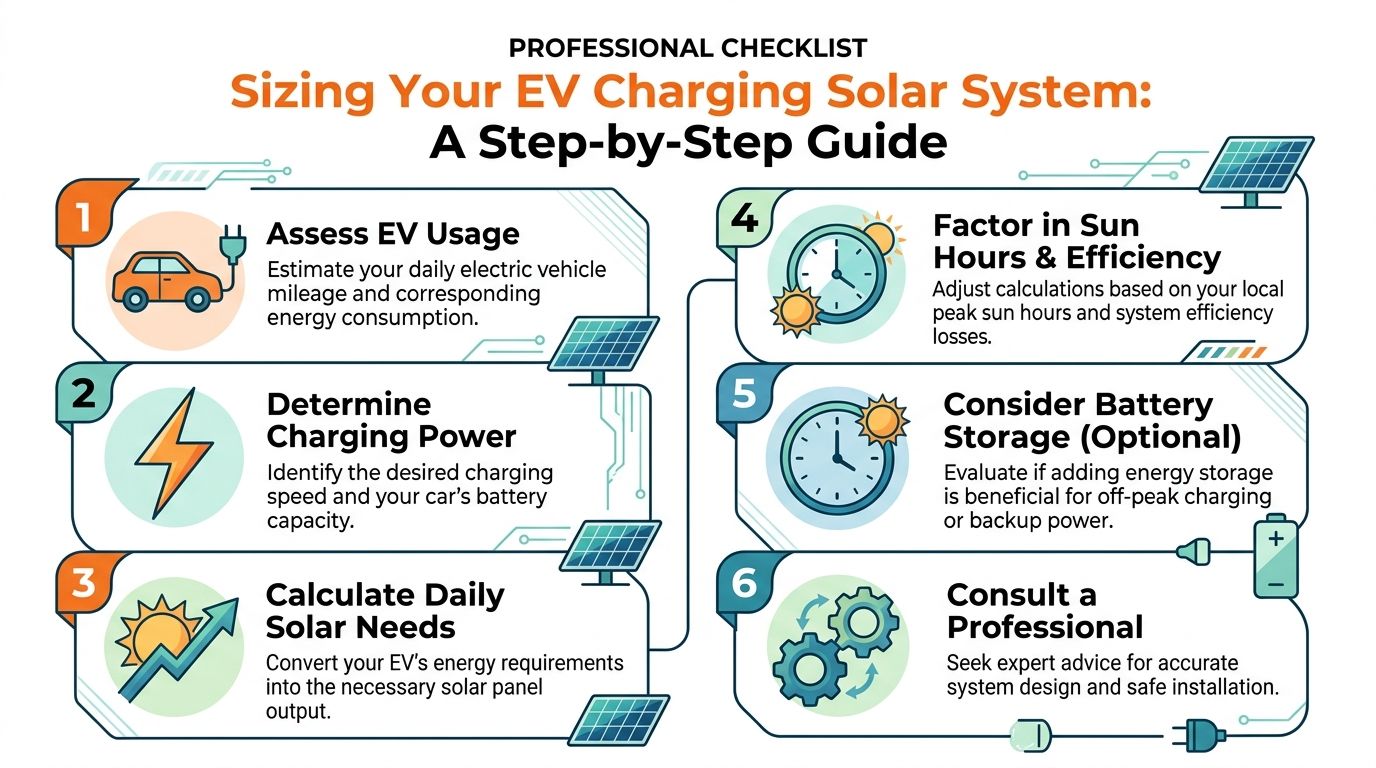
Most sizing mistakes come from starting with charger speed instead of daily energy need. The better method is to work backwards from kilometres driven, then test whether your solar surplus and battery behaviour can support that load.
Start with the car, not the charger
Your EV’s efficiency is usually expressed in kWh per 100km. That figure matters more than the badge on the front of the vehicle.
A practical sizing process looks like this:
Estimate daily driving distance
Use your real weekly pattern, not your ideal one.Convert distance into energy demand
If your vehicle uses more energy per 100km, your charging requirement rises quickly.Check when the car is parked at home
Midday availability changes everything.Review solar surplus, not gross generation
Household loads already consume part of your production.Decide whether the battery should support EV charging regularly or only occasionally
That choice affects cycling behaviour and available household backup.
In Australian field conditions, solar charging systems achieve around 75% to 80% efficiency, according to EcoFlow’s article on solar charger sizing for car batteries. That means nameplate output and real delivered energy aren’t the same thing. Losses through conversion, temperature, charging control and timing all matter.
Use your monitoring data properly
Many homeowners open their solar app and look only at total daily generation. That number is useful, but it won’t tell you whether you can sustainably absorb EV charging without creating new imports.
Look instead for these patterns:
- Midday export periods
These are your first candidates for direct EV charging. - Battery charge timing
If the battery fills early, later solar may be available for the car. - Evening battery depletion
If the house empties the battery before night ends, adding EV charging may shift you back to grid use. - Seasonal dips
Winter output changes charging strategy, especially in southern parts of NSW.
7kW versus 22kW at home
A bigger charger isn’t automatically a better charger.
For many homes, a 7kW charger is the more sensible choice because it can follow household solar and battery capacity without pulling too aggressively. A 22kW charger can be useful in the right electrical setup, but it can also outrun your available solar and turn expensive imported power into faster charging.
Charging speed should match energy availability. If the charger can draw much more than the house can produce or store, the grid quietly fills the gap.
There’s also a battery health angle. The same EcoFlow source notes that adaptive charging algorithms can reduce internal resistance spikes by over 60% compared with standard methods in Australian conditions. In hot climates, that matters because charging strategy affects long-term battery wear.
A practical sizing view
| Question | Why it matters | Good planning response |
|---|---|---|
| How far do you drive most days? | Determines base energy need | Use typical travel, not occasional road trips |
| When is the car at home? | Affects direct solar charging potential | Prioritise daytime charging if possible |
| How much surplus solar do you export? | Reveals unused generation | Divert surplus before adding hardware |
| How often does your home battery finish full? | Indicates spare charging capacity | Use that stored energy strategically |
| What charge rate can your home support comfortably? | Prevents avoidable imports | Match charger settings to available supply |
The core sizing goal isn’t maximum charging power. It’s useful charging power that fits your home’s real generation and storage profile.
The VPP Advantage for Smart EV Charging
A standard solar and battery setup can charge an EV. That part is straightforward. The harder question is whether it’s doing so in the best financial order.
Once you’ve got rooftop solar, battery storage and an EV, every kilowatt-hour has competing uses. It can run the house, charge the car, sit in the battery for the evening, or be dispatched elsewhere when conditions make that more valuable.

Why a dumb setup leaves value on the table
In a conventional home setup, the energy flow is mostly reactive. Solar generates. The home consumes. The battery charges or discharges according to default logic. The EV charges whenever the plug is connected or a basic timer starts.
That works, but it often misses the bigger value stack.
If your system exports too early, your car may need grid charging later. If the EV starts charging without considering battery state, household evening needs can get squeezed. If the battery is held too conservatively, spare solar can leave the site at the wrong time.
A retailer-based VPP is useful because it treats the home battery as an actively managed asset rather than a passive add-on.
The export priority problem
One of the least discussed issues for battery owners in NSW and QLD is export priority. In some VPP arrangements, valuable excess solar is automatically diverted to the grid before personal charging needs are properly handled.
The issue is more than theoretical. A widely cited Australian discussion of solar EV charging notes that up to 30% to 40% of available solar can be automatically sent to the grid, starving EV chargers, especially where VPP logic gives exports priority over personal use. That’s why app-based scheduling and user overrides matter for battery owners who want both grid participation and practical EV charging outcomes, as discussed in this EV.com article on whether charging an EV from solar is viable.
That’s the key conflict savvy owners need to solve. You don’t want an all-or-nothing system. You want one that can make trade-offs intelligently.
The best VPP setup doesn’t force a choice between grid value and personal use. It manages timing so the household keeps priority while spare capacity still works harder.
What intelligent orchestration looks like
A stronger setup usually includes:
User-defined charging windows
Your EV can be given a preferred charging window rather than an always-on setting.Battery reserve thresholds
The home battery keeps enough stored energy for household use before supporting other outcomes.Solar forecast awareness
Charging decisions improve when tomorrow’s production outlook is considered.Market-aware export logic
Energy isn’t exported blindly. It’s used where it creates the strongest outcome.
For readers wanting a broader background on how these systems support the grid, this overview of Virtual Power Plants driving Australia’s renewable energy revolution is a useful primer.
A short visual explanation helps make that system logic easier to picture.
Where the real value comes from
The point of VPP participation isn’t solely to export more. It’s to use your battery with more commercial discipline.
That means asking better questions:
- Should the battery hold energy for the evening peak at home?
- Should the EV absorb surplus solar this afternoon?
- Should part of the stored energy be available for grid support if the household and vehicle are already covered?
- Should export happen now, or is it smarter to keep flexibility?
These are operational questions, not installation questions. And they’re exactly where financially mature battery ownership separates itself from basic self-consumption.
Practical Tips for Daily Optimisation
Once the hardware is in place, day-to-day performance comes down to settings, habits and automation. Small operational changes can materially improve how much solar your EV uses.
Use solar soaking, not convenience charging
A lot of households still charge the car by routine rather than by energy conditions. They get home, plug in, and let the charger run.
That’s convenient, but it often pushes charging into the least helpful window. If your car is home during the day, use “solar soaking” instead. That means the charger tracks surplus generation and ramps up or down to absorb available solar.
Good charger control should do three things:
- Follow surplus generation rather than draw a fixed high load
- Pause or slow charging if household demand rises suddenly
- Resume intelligently when solar output recovers
This turns the EV into a flexible load rather than a blunt one.
Set reserve limits that protect the home battery
The home battery shouldn’t be treated as an infinite overnight fuel tank for the car. If EV charging repeatedly drains it too much, you can compromise household resilience and increase unnecessary cycling.
A better approach is to set operating boundaries:
- Keep a household reserve for evening and early morning use
- Allow EV charging from battery only above a chosen threshold
- Avoid aggressive fast charging from storage unless there’s a clear reason
- Use app controls to override when travel needs are exceptional
Software matters more than raw battery size. The battery must know when to support the car and when to protect the house.
Operational tip: If your battery and charger settings are fighting each other, the system will usually default to convenience instead of value.
Let automation handle forecast and timing decisions
The strongest setups are usually the ones people don’t have to babysit every day.
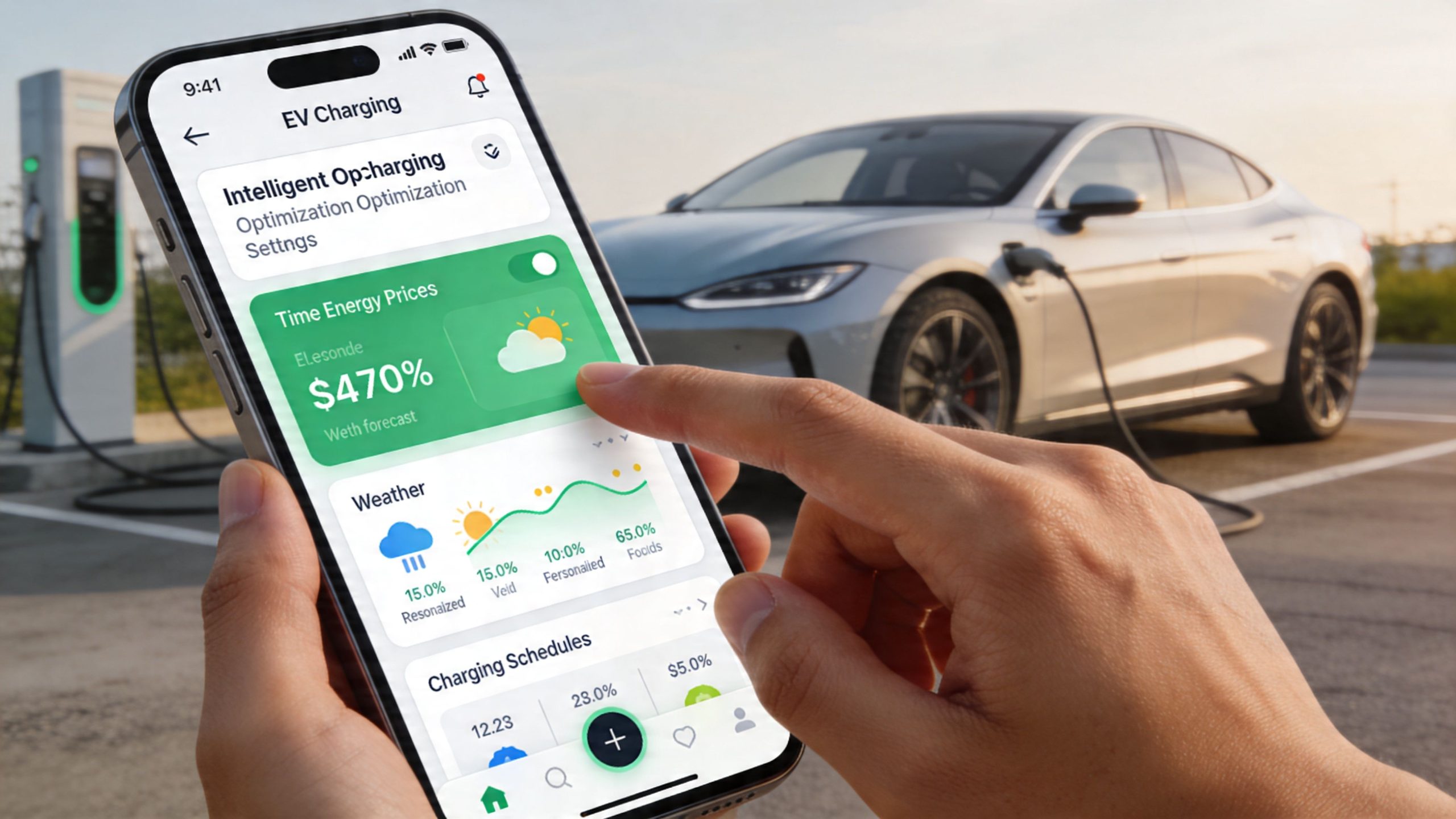
A well-designed app-based charging strategy can account for tomorrow’s weather, expected home load, current battery state and preferred EV departure time. That’s much better than setting a fixed timer and hoping the system behaves sensibly.
Useful automation choices include:
| Setting | Why it helps |
|---|---|
| Departure-based charging | Ensures the car is ready without charging too early |
| Solar-priority mode | Absorbs daytime generation before relying on imports |
| Battery reserve rules | Preserves household energy security |
| Manual override | Lets you break the schedule when plans change |
Think ahead to Vehicle-to-Home
The EV isn’t only a load anymore. In some cases, it can also become a storage asset for the house.
In Australia, Vehicle-to-Home (V2H) is emerging as a practical direction for 2026, and QLD trials showed that V2H from solar-charged EVs offset 20% of evening peak demand. The same source notes that integrating this with a VPP could add $300 to $500 per year to a homeowner’s bill allowances, turning the EV from an energy user into a more active asset, according to Enphase’s discussion of charging EVs with solar panels.
That doesn’t mean every EV owner should rush into bi-directional charging today. Compatibility, warranty settings and charger standards still matter. But it does change the strategic picture. The car may soon sit inside the home energy stack, not outside it.
Daily habits that usually work best
- Plug in when parked, but don’t always start charging immediately
- Use charger modes that respond to solar availability
- Review app data weekly, not just when bills arrive
- Set a practical target state of charge rather than always aiming for full
- Treat urgent overnight charging as an exception, not the default
The households that get the best result from solar EV charging usually aren’t the ones with the most hardware. They’re the ones with the clearest operating rules.
Installation Safety and Financial Considerations
Charging an EV from solar sounds simple at a high level, but the safe and financially sensible version depends on proper design boundaries. This isn’t an area for improvised wiring, oversized assumptions or charger settings copied from overseas forums.
What hardware needs to already be in place
High-performing solar EV charging at home usually depends on four components working together:
- Rooftop solar PV
- A compatible inverter arrangement
- A home battery if you want flexibility beyond daylight hours
- A compliant EV charger with controllable settings
That doesn’t mean everyone needs new hardware. Many households already have the key assets. The bigger issue is whether those assets are configured to work as one system.
If roof work is part of your planning, it’s worth understanding sequencing before any electrical decisions are made. A practical example is this solar panel roof replacement guide, which shows why roofing access and panel removal timing should be planned properly. It’s not Australia-specific advice, but the project logic is still useful.
Safety and compliance matter
Australian homeowners should only use licensed electricians and appropriately qualified solar and battery professionals for charger integration, switchboard work and system changes. That’s particularly important where batteries, EV chargers and export-capable systems interact.
For regulatory background and market context, the Australian Energy Regulator and AEMO are the right starting points. They won’t tell you how to optimise your charger settings, but they are the authoritative bodies for market rules, consumer framework information and broader electricity system operation in the NEM.
The financial question isn’t just payback
A lot of solar EV discussions reduce the decision to one narrow question: is it cheaper than grid charging?
That matters, but it isn’t the full commercial picture for a battery owner. The better question is whether your existing system is being used in its highest-value order.
Australian VPP trials have shown that pairing solar and a home battery with a VPP yields 25% more value for EV charging than a non-VPP solar setup, supported by 85% to 92% round-trip efficiency and AI-optimised discharge that avoids export caps and unnecessary degradation, according to this peer-reviewed article hosted by PMC.
That changes the comparison.
| Approach | Typical weakness | Strategic upside |
|---|---|---|
| Solar only | Charging depends heavily on car-at-home timing | Simple daytime self-use |
| Solar plus battery | Value can still be lost through poor discharge priorities | Better flexibility for evening charging |
| Solar plus battery plus VPP logic | Needs good control settings and transparency | Stronger coordination across home use, EV charging and grid participation |
If you already own the solar and battery, the biggest remaining lever is often software, operating logic and retailer structure, not more hardware.
For many households, that’s the hidden financial layer. They’ve already paid for the asset. Now the task is to run it intelligently.
Key Takeaways
- Solar power to charge car battery demand works best when charging is timed to solar surplus, not just when the car is plugged in.
- A home battery acts as a buffer, allowing solar generated during the day to support EV charging later when needed.
- System sizing starts with daily driving energy needs, not charger size.
- Bigger chargers aren’t automatically better if they exceed the home’s practical solar and storage capacity.
- Real-world efficiency matters, so delivered charging energy will be lower than headline system output.
- Export priority can create a hidden conflict for VPP participants if solar is sent to the grid before EV charging needs are handled properly.
- A retailer-based VPP can improve battery value by coordinating household demand, EV charging and grid participation more intelligently.
- Automation matters more than manual habit once you have solar, storage and an EV under one roof.
- Battery health should stay central when setting charge rates and reserve levels.
- Vehicle-to-Home is becoming strategically relevant because the EV may increasingly act as a household energy asset, not just a transport load.
Frequently Asked Questions
Can solar panels charge an electric car directly?
Yes, but in most homes the energy flows through your inverter and home electrical system before reaching the charger. In practice, direct daytime charging works best when the car is parked at home during solar production hours.
Is a home battery necessary for solar EV charging?
No, but it changes what’s possible. Without a battery, you’re mostly limited to charging when the sun is producing. With storage, you can shift some solar energy into the evening and overnight period.
Should I get the fastest home charger available?
Not necessarily. The right charger is the one your electrical setup, solar profile and battery strategy can support efficiently. A charger that draws more power than your system can supply will rely on the grid more often.
Will EV charging interfere with my battery’s role in the house?
It can if priorities aren’t set properly. If the charger is allowed to pull aggressively from storage, it may reduce the energy available for evening household demand. Good settings prevent that conflict.
Can I still charge my EV if I’m participating in a VPP?
Yes, but control logic matters. Some arrangements can prioritise export too aggressively, while better-managed systems allow household and EV needs to stay in front of spare-capacity dispatch.
Does joining a VPP mean I lose control of my battery?
It shouldn’t. A well-structured VPP keeps customer energy needs first and uses spare capacity only when conditions allow. Transparency and override capability matter.
Is Vehicle-to-Home ready for everyone now?
Not yet. It depends on vehicle compatibility, charger compatibility and the broader system design. It’s a growing area, but households should check standards, warranty implications and hardware support before planning around it.
Why Choose High Flow Energy for Your EV Charging Strategy
Most battery owners focus on installation quality. Far fewer focus on ongoing performance and optimisation. High Flow Energy is an electricity retailer built around realizing the full value of your existing solar and battery system.
For EV owners, that matters. The challenge isn’t just charging the car from solar. It’s doing it without wasting surplus generation, undermining battery value or giving away control of your energy priorities. High Flow Energy is designed for households that want their battery to work harder, more transparently and with stronger financial discipline.
Check Your System's Performance
If you already have solar and a compatible battery, the question isn’t whether your system works. It’s whether it’s performing financially as well as it should. Review your current setup, charging behaviour and battery usage through High Flow’s home energy monitoring tools.
If you’d like to understand whether your battery is underperforming financially, request an eligibility assessment with HighFlow Energy.