

What is a smart meter for electricity? A 2026 AU Guide
If you own solar and a battery in Queensland or New South Wales, you’ve already made the big capital decision. The question now is whether that system is performing like an asset, or just sitting there reducing bills in a fairly basic way.
That’s where people start asking what is a smart meter for electricity, and why retailers, distributors, and Virtual Power Plants care so much about it. The short answer is simple. A smart meter is the device that turns your home from a passive electricity customer into an active participant in the market.
For a battery owner, that matters. Your meter doesn’t just help with billing. It records when you import power, when you export solar, and when your home battery interacts with the grid. In NSW and QLD, that data is often the difference between a battery that only provides backup and self-consumption, and a battery that can also support VPP participation and improve the financial return on your original investment.
Introduction: Is Your Home Battery Working as Hard as It Could?
A lot of homeowners assume their battery is doing everything it can once it’s installed. In practice, many batteries are only doing part of the job. They store excess solar, cover some evening usage, and reduce grid imports. That’s useful, but it may still leave value on the table.
The missing piece is often visibility and control. If your system can’t accurately record imports and exports in short intervals, your retailer or VPP operator can’t optimise around real market conditions, tariff windows, or grid support opportunities. That limits what your battery can do financially.
For a financially savvy homeowner, the smart meter is less like a utility box and more like market infrastructure. It’s the device that creates a trusted data record of how energy moves in and out of your property. Without that record, advanced tariff access and VPP participation become much harder.
Here’s where people usually get confused:
- Billing confusion: Many people think a smart meter only means “no more manual reads”.
- Solar confusion: Some assume their solar inverter already does everything the meter does.
- Battery confusion: Others believe the battery app alone is enough for market participation.
- VPP confusion: Many don’t realise a VPP needs metered interval data, not just battery data, to settle activity properly.
A battery can store energy, but a smart meter proves when energy moved, in which direction, and in what interval. That’s what makes market participation possible.
If your goal is to get more value from your battery, the smart meter deserves far more attention than it usually gets.
What is a Smart Meter for Electricity?
Your battery may be charging at midday, discharging through the evening peak, and exporting when your VPP calls on it. If the meter at the switchboard cannot record those movements in short time intervals, much of that activity is hard to bill, settle, or optimise properly. That is why a smart meter matters.
A smart meter is a digital electricity meter that measures how much power your home imports from the grid and exports back to it, then sends that information to your retailer or network remotely. The key difference is not just that it is digital. It records energy data in time intervals, often every 15 or 30 minutes, so your electricity use is tied to when it happened, not just how much happened over a quarter.
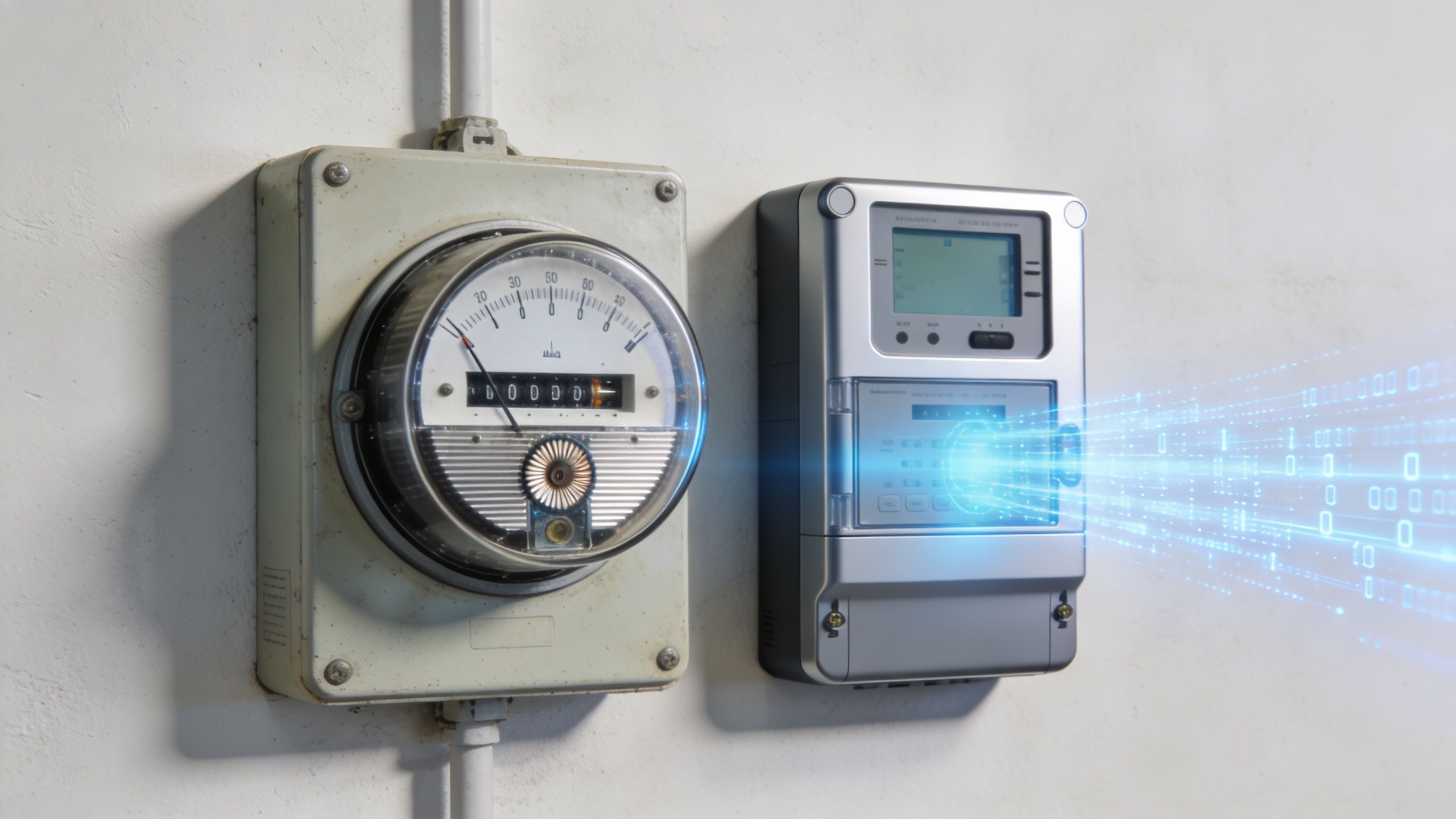
A traditional accumulation meter works like an old car odometer. It gives you one running total. A smart meter works more like a trip log with timestamps. It shows the pattern of the day, including when your solar covered household load, when your battery charged, when you drew from the grid, and when you exported excess energy.
For a solar and battery owner in NSW or QLD, that detail has direct financial value. Time of use tariffs, export pricing, demand events, and VPP payments all depend on timing. If your meter only shows a total, your system can still store and move energy, but the market has a much weaker record of what happened and when.
What a smart meter actually does
At a practical level, a smart meter can:
- Record interval data: It logs imports and exports across the day instead of only showing a cumulative figure.
- Send readings automatically: Your retailer usually does not need a manual meter read.
- Improve billing accuracy: Bills can be based on actual interval data rather than estimates.
- Support modern tariffs: Time of use pricing and other tariff structures rely on interval metering.
- Support grid and VPP operations: Meter data helps retailers, networks, and VPP operators verify energy flows and respond to events.
One point often causes confusion. Your inverter and battery app can show useful performance data, but they do not replace the meter data used for billing and market settlement. The app tells you how your equipment behaved. The smart meter records the trusted site level energy flow that retailers and VPP operators rely on.
If you are not sure what type of meter is installed at your property, compare it with this guide on how to read your electricity meter.
Practical rule: If the value of your battery depends on when energy is imported, stored, used, or exported, a smart meter gives the market record that makes those outcomes count.
Smart Meters vs Traditional Meters A Clear Comparison
Most confusion disappears once you compare the two meter types side by side.
| Feature | Traditional Meter | Smart Meter |
|---|---|---|
| How usage is recorded | Cumulative total only | Interval data across the day |
| Meter reading method | Manual or estimated reads | Automatic remote reads |
| Import and export visibility | Limited | Detailed tracking of both directions |
| Tariff support | Usually basic flat tariffs | Supports time-of-use and dynamic structures |
| Outage detection | Often depends on customer reporting | Can support remote detection and response |
| Suitability for VPPs | Poor | Strong, because interval data can be used operationally |
| Solar and battery insight | Minimal | Much better visibility into system behaviour |
Why the difference matters
A traditional meter can tell your retailer how much electricity passed through over a billing period. It can’t show the shape of your day. That matters because modern electricity pricing is heavily tied to timing.
For example, a battery owner may want to charge under lower-priced conditions, use stored energy during more expensive periods, and export spare capacity when the grid needs support. A traditional meter can’t support that logic well because it lacks interval detail.
A smart meter also improves visibility for exported solar. If you’ve invested in rooftop solar and storage, you want accurate import and export records, not a rough total that hides when value was created.
For battery owners, the key distinction is market readiness
If you’re only interested in basic household consumption, an older meter may feel adequate. If you want to manage electricity like an investment, it usually isn’t.
The modern energy system values responsiveness, timing, and data integrity. Smart meters provide all three.
- Timing matters because tariffs and market events don’t happen evenly across the day.
- Data integrity matters because billing, credits, and VPP operations rely on trusted interval data.
- Responsiveness matters because remote communications support a more flexible grid.
How Smart Meters Enable Solar and Battery Optimisation
Your battery can be full at 2 pm, your solar can be exporting at a low feed-in rate, and your evening peak bill can still be higher than expected. For many NSW and QLD homeowners, that gap comes down to timing. A smart meter records the timing that determines whether your system is saving money, missing value, or earning through a VPP.
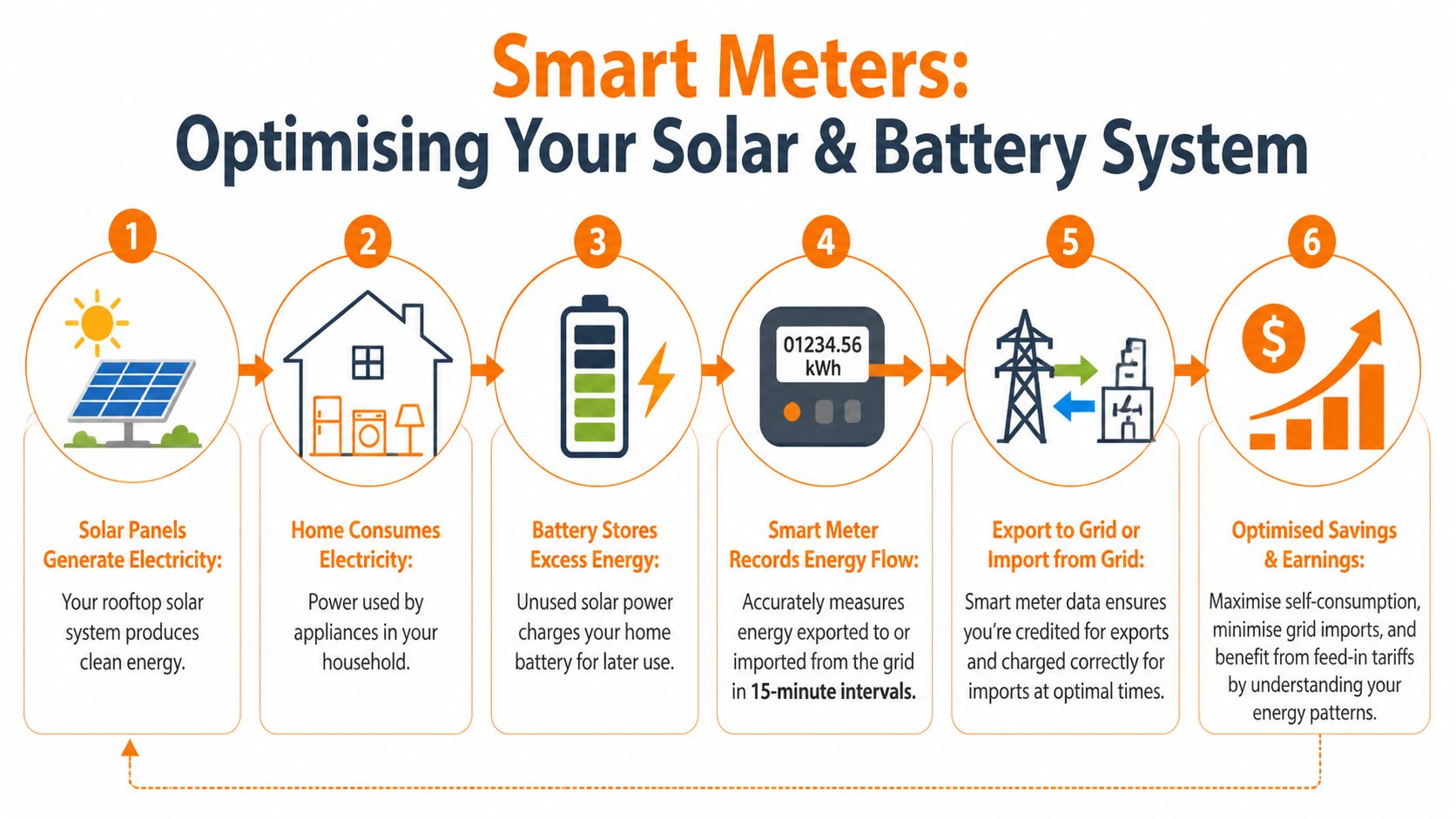
A simple way to view it is this. Your solar panels and battery do the physical work inside the home. The smart meter records what crosses the property boundary. That boundary record is the one retailers, networks, and VPP operators use when bills, credits, and export activity need to be measured properly.
Interval data turns a battery from storage into a timed asset
A battery creates the most value when it responds at the right time, not just when it stores energy. That is why interval data matters.
With short-interval meter data, an energy platform can see patterns such as:
- when solar output was higher than household demand
- when the battery was likely charging or discharging
- when the home imported power during expensive periods
- when export to the grid was more valuable than holding energy back
Monthly totals cannot show that pattern. They are like getting a bank statement without transaction times. You would know the total spent, but you would not know which decisions helped or hurt your cash flow.
If you want more visibility into those patterns at home, it helps to review home energy monitoring options alongside your meter data.
What optimisation looks like in a NSW or QLD home
Take a common setup. You have rooftop solar, a battery, and a household that uses more electricity in the morning and evening than in the middle of the day. During sunny hours, solar covers the home first and any surplus charges the battery. Later, after sunset, the battery can supply the house when grid electricity is more expensive.
The smart meter helps your retailer or VPP platform line those moments up with tariff periods and export conditions. That matters financially. A battery owner is usually trying to do three things at once. Reduce grid imports, avoid buying power at high prices, and make sensible use of any spare battery capacity.
Without accurate interval metering, those decisions become blunt. With it, they can be scheduled with much better precision.
Later in the day, video can help make this easier to visualise:
Why this matters for BYOB VPP participation
This becomes even more important in a Bring Your Own Battery VPP. In that model, you keep the battery you already own, and the operator uses spare capacity at selected times, subject to the program rules.
For that arrangement to work, the meter has to do more than support billing. It has to provide trusted interval data at the grid connection point so imports and exports can be measured consistently. Battery app data is useful for the homeowner, but VPP participation and payment logic usually depend on the meter record at the property boundary.
That is the point many battery owners miss.
A smart meter is part of the revenue pathway. It helps determine whether your system can be coordinated for tariff optimisation, export events, and VPP activity in a way the market can recognise and settle. For a homeowner in NSW or QLD who has already invested in solar and storage, that can directly affect the return you get from the system you own.
The Role of Smart Meters in Australian Virtual Power Plants
At 6 pm on a hot summer evening in NSW or QLD, your battery can do more than cover your own peak usage. It may also be able to discharge a small amount to support the grid through a Virtual Power Plant, or VPP. Whether that happens, and whether you get credited correctly, depends on what the meter records at the property boundary.
A VPP is a coordinated group of home batteries and solar systems that are managed together so they can act like one flexible energy resource. For a homeowner, the practical point is simple. A VPP turns spare battery capacity into something that may earn value, reduce bill pressure, or both. The smart meter is the data link that makes that possible in a form retailers, networks, and market systems can use.
Why VPPs rely on the meter at the switchboard
Your battery app shows what the battery is doing internally. Your smart meter shows what your home is doing at the grid connection point. That distinction matters.
The app might tell you the battery discharged 4 kWh. The meter record shows how much electricity your home imported from the grid and how much it exported during each interval. VPP programs and billing systems generally rely on that meter record because it is the recognised reference for settlement, credits, and event measurement.
For a financially focused solar and battery owner, this is the key idea. The meter is part of the cashflow chain.
If the VPP operator wants to dispatch your battery during a high-value period, it needs trusted interval data to confirm what happened. Without that, there is no reliable basis for allocating credits, checking performance, or separating normal household consumption from VPP activity.
What the smart meter changes for battery economics
A home battery has several jobs. It can store excess solar, reduce evening imports, and help protect you from higher time-of-use rates. In a VPP, it gets one more role. It can provide controlled, measured support to the grid when market conditions make that worthwhile.
Smart meter data helps make those decisions more precise in ways that affect return on investment:
- It verifies imports and exports by interval. That matters for event settlement and tariff outcomes.
- It helps coordinate battery dispatch with household load. Your home’s needs still come first, but spare capacity can be used more intelligently.
- It supports accurate credits and program payments. If a VPP event occurs, the meter record is usually what counts.
- It gives retailers and VPP operators a common reference point. That reduces disputes about what the battery did versus what the site exchanged with the grid.
For NSW and QLD households with solar and storage, that can change how you judge battery performance. The battery is no longer only a self-consumption tool. It can also become a market-facing asset, provided the metering setup supports that use.
Why this matters more in NSW and QLD
These states have large numbers of solar homes, rising peak demand pressure, and growing interest in battery programs. That creates more situations where flexible battery capacity has value beyond the home. A VPP can use small contributions from many households to reduce strain during peak periods or respond to short-term grid needs.
That does not mean every VPP offer will improve your returns. Program rules, control terms, tariff structure, battery cycling, and payment design all matter. But none of those commercial details work cleanly without the meter doing its job first.
If you want a broader explanation of how these programs fit into the energy system, this guide to Virtual Power Plants in Australia’s renewable energy system gives useful background.
The practical takeaway is straightforward. In a VPP, the smart meter is not just there to send a bill reading. It is the measurement layer that helps turn spare battery capacity into recognised, bill-reducing or revenue-producing activity.
Installation and Compatibility in Queensland and NSW
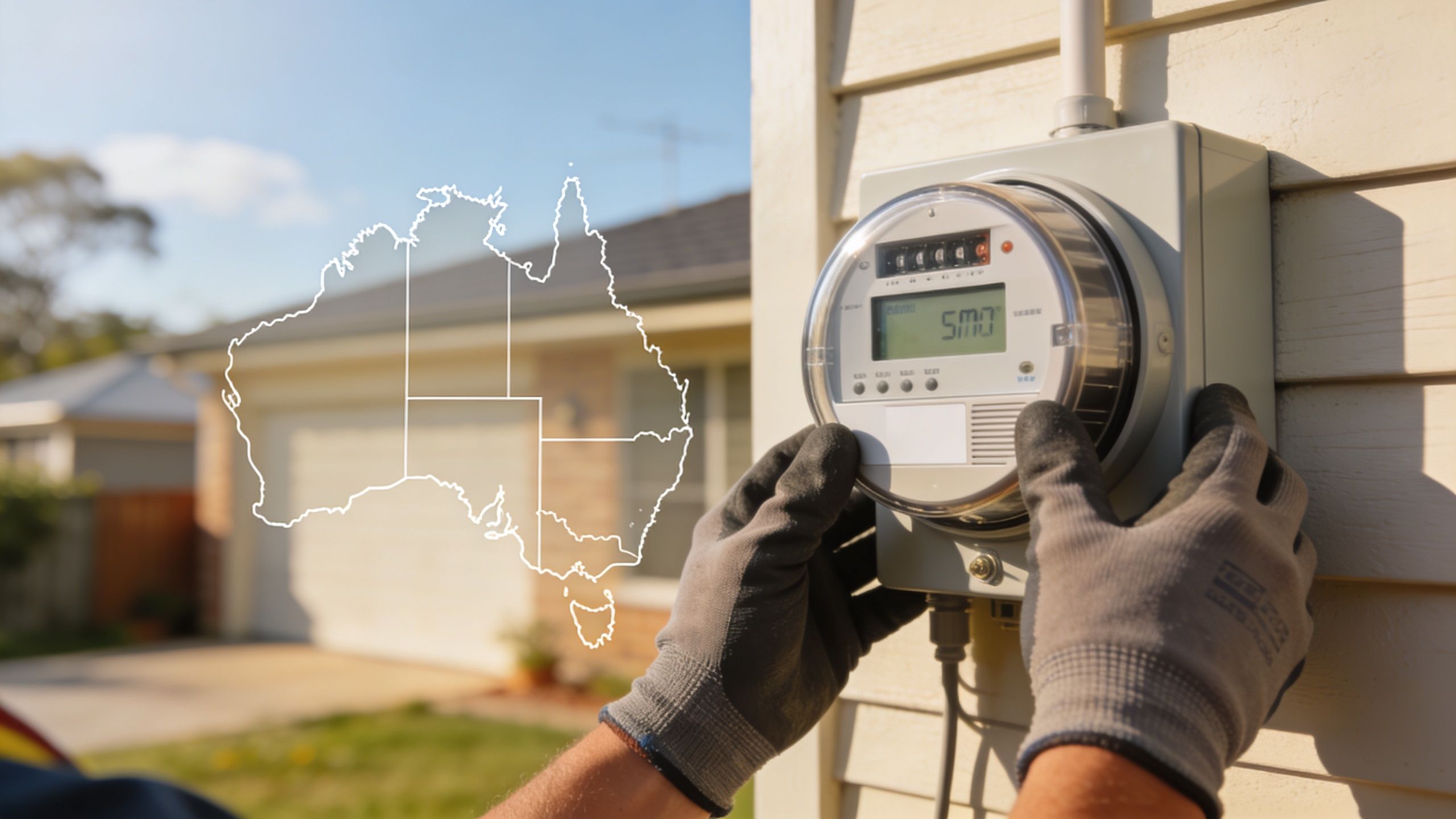
A common NSW or QLD scenario looks like this. You already have solar. You have added a battery, or you are comparing VPP offers. Then the retailer or installer asks a basic question that affects the economics of the whole setup. What meter is on the wall today?
What compatibility looks like
For a solar and battery household, meter compatibility is really a data question. Your battery might be capable of shifting energy, exporting at the right time, or joining a VPP event. But the market only works from measurements it can accept. If the meter cannot record imports and exports in intervals and send that information back to the retailer or metering provider, your system can still operate physically while underperforming financially.
That is the point many homeowners miss. A digital display does not automatically mean the meter is suitable for modern tariffs, battery coordination, or VPP settlement.
The practical checks are usually these:
- Interval data: Can the meter record usage and exports in time blocks rather than one running total?
- Remote communications: Can the meter send data without a manual read?
- Import and export measurement: Can it separately capture electricity taken from the grid and sent back to it?
- Retailer and program acceptance: Is the meter approved for the tariff, retailer system, or VPP platform you want to join?
Those four checks matter more to your return than the model number alone. A useful way to view the meter is as the cash register for your battery activity. The battery does the work. The meter records the transactions that decide what appears on your bill and whether a VPP operator can verify performance.
How installation usually happens
In Queensland and New South Wales, a meter exchange is usually arranged through your electricity retailer or as part of a solar or battery upgrade. A licensed metering technician installs it. Homeowners do not buy a meter independently and connect it themselves.
Timing matters here. If you wait until after the battery is installed to ask about metering, you can end up with delays in tariff changes, export setup, or VPP onboarding. That does not mean every upgrade needs a new meter. It means you should confirm the metering pathway before you assume your system can earn or save what the proposal suggests.
Ask these questions in writing:
- Is my current meter a communicating smart meter or only a digital meter?
- Can it support interval reads for both grid imports and solar exports?
- Will it work with my battery brand and the tariff or VPP I want?
- If a replacement is needed, who arranges it, what is the lead time, and are there any charges?
One more point matters in NSW and QLD. Compatibility is partly technical and partly administrative. A meter can be technically capable but still not be configured, enrolled, or accepted in the way a retailer or VPP requires. For a battery owner focused on payback, that distinction matters because the lost value usually shows up through missed tariff access, slower onboarding, or fewer opportunities to use stored energy when prices are highest.
If you are comparing VPP offers, ask a narrower question than “Do I have a smart meter?” Ask whether your meter is communicating, interval-based, export-capable, and already accepted for that specific program.
That question gets you closer to the issue. Whether your meter allows your battery to participate fully in the parts of the market that improve bill savings and VPP revenue.
Addressing Costs, Privacy, and Common Concerns
A smart meter question often shows up late in the process. You have already paid for solar and a battery, you are comparing VPP offers in NSW or QLD, and then a practical concern appears. Will this cost more, what data leaves the home, and does the wireless signal create a safety issue?
Those are fair questions because the meter affects returns. If a smart meter is required for a time-of-use tariff, export measurement, or VPP participation, it becomes part of the economics of the battery system rather than a minor admin detail.
Cost concerns
The first mistake is to treat the meter as a stand-alone gadget purchase. In practice, the cost depends on why the meter is being installed or replaced, who arranges it, and how your retailer structures the metering service.
For a battery owner, the better question is not only "What does the meter cost?" It is "What value does proper metering make possible?" A meter that supports interval data, import and export measurement, and retailer or VPP requirements can affect whether you get access to the tariff or program that improves battery payback.
Ask for these points in writing before you sign:
- whether there is an upfront meter charge
- whether metering fees are bundled into daily supply or retail charges
- whether a tariff change or VPP enrolment triggers extra costs
- whether a replacement meter is needed, or your current one only needs reconfiguration
That keeps the discussion commercial, not vague.
Privacy concerns
A smart meter records energy data. It does not read your emails, inspect your devices, or monitor activity on your home network. The practical issue is who can use the meter data, for what purpose, and under what consent.
For a household with solar and a battery, that matters because interval data has real financial value. It shows when you import from the grid, when you export solar, and when your battery is likely displacing peak-priced electricity. In a VPP, the same data can also support settlement, verification, and program coordination.
A simple way to assess privacy is to separate data use into three buckets:
- Core metering use: billing, settlement, and network operations
- Retail and tariff use: time-based pricing, export accounting, and plan administration
- Program use: VPP participation, where you agree to specific terms around data access and, in some cases, battery dispatch
Read the consent terms carefully. If a VPP can control battery charging or discharging in certain periods, that should be stated clearly in the agreement, along with any limits, override options, and payment rules.
Health and safety concerns
Wireless communication is one of the most common concerns. Australian regulators assess electromagnetic energy exposure, and the Australian Radiation Protection and Nuclear Safety Agency publishes public guidance on exposure limits and compliance at ARPANSA.
The practical takeaway is simple. Smart meters use low-power communications within Australian regulatory settings. For most homeowners, the bigger risk is not RF exposure. It is agreeing to a battery or VPP arrangement without understanding the commercial terms.
Other concerns homeowners often raise
Will the meter let someone control my battery without my knowledge?
Control should come through the retailer or VPP contract, not by surprise. If a program includes remote dispatch, the contract should explain when it can happen, how often, and what priority your household load keeps.
Will I lose access to my own stored energy?
A well-structured program should preserve household supply first, then use spare battery capacity according to the agreed rules. If that priority is unclear, ask for the operating logic in plain English.
Can a smart meter help in an outage?
It can help networks detect problems and respond faster because the meter can communicate status information remotely. That does not mean every battery system will supply backup power during an outage. Backup depends on the battery and inverter design, not the meter alone.
For NSW and QLD battery owners, the right mindset is straightforward. Treat metering as part of asset performance, contract review, and risk management. A smart meter can improve the value of your solar and battery system, but only if the costs, permissions, and operating rules are clear before you join a tariff or VPP.
Key Takeaways for Solar and Battery Owners
- A smart meter is more than a billing device. It records interval-based energy flows that matter for tariffs, exports, and battery strategy.
- Battery value depends on data quality. If your meter can’t capture imports and exports properly, your optimisation options narrow.
- VPP participation usually depends on smart metering. Trusted interval data is central to coordinating distributed batteries.
- For NSW and QLD households, compatibility matters. A meter may be digital without being suitable for advanced retail or VPP use.
- Privacy and safety concerns should be assessed factually. Australian settings include privacy controls and safety certification.
- A good setup protects household priority. Your battery should still serve your home first, with spare capacity used selectively.
- The meter is part of your asset performance stack. Treat it as infrastructure, not an afterthought.
How High Flow Energy Maximises Your Smart Meter's Potential
Most battery owners focus on installation quality. Far fewer focus on ongoing performance and optimisation.
A retailer-based VPP model uses smart meter data to understand when your home imports, exports, and can offer spare battery capacity to the grid. That matters because a battery’s financial performance depends on timing, coordination, and the ability to verify energy flows accurately.
HighFlow Energy is an Australian electricity retailer built for homeowners who already have solar and a compatible battery. It doesn’t sell panels or batteries. Its model uses existing battery infrastructure, smart meter data, and VPP coordination to help households in NSW and QLD extract more value from systems they already own.
For homeowners, the practical appeal is simple. Instead of treating the battery as a static appliance, the retailer treats it as an energy asset that can be optimised while keeping household needs first.
Frequently Asked Questions
Do I need a smart meter if I already have solar?
Usually, yes if you want more advanced visibility, accurate export tracking, modern tariffs, or VPP participation. Solar alone doesn’t replace the need for interval metering at the grid connection point.
Is a digital meter always a smart meter?
Not always. Some digital meters display readings electronically but don’t provide the communication and interval-data functions needed for advanced retail or VPP use.
Can a smart meter help me reduce electricity bills?
It can help create the conditions for better billing accuracy, tariff access, and battery optimisation. The meter itself doesn’t save money on its own. The value comes from how the data is used.
Will a smart meter work with any battery brand?
Compatibility depends on the meter, the retailer, the battery, and the VPP or tariff structure. The right question isn’t “is it a battery?” but “is the whole system compatible?”
Are smart meters mandatory for VPPs?
For practical purposes, VPP participation generally relies on interval metering and communication capability. Without that, it’s difficult to coordinate and verify battery activity properly.
Can I still use my battery normally if I join a VPP?
A properly structured program should prioritise household needs first, then use spare capacity when available and commercially sensible.
Do smart meters only matter for time-of-use tariffs?
No. They also matter for solar export measurement, battery coordination, outage detection, remote meter reads, and VPP participation.
Check if Your System is Underperforming
If you’ve invested in solar and a battery, it makes sense to assess the whole performance chain, not just the hardware on the wall. Your panels, battery settings, tariff structure, and smart meter all affect outcomes. Physical upkeep still matters too. If you’re reviewing broader system performance, this guide to maximising solar panel efficiency is a useful companion to the metering and optimisation side.
A strong system isn’t just installed well. It’s measured well and operated well.
Most battery owners focus on installation quality. Far fewer focus on ongoing performance and optimisation. High Flow Energy is an electricity retailer built around realizing the full value of your existing solar and battery system.
If you would like to understand whether your battery is underperforming financially, request an eligibility assessment today from HighFlow Energy.
SEO title: What Is a Smart Meter for Electricity in Australia
Meta description: Learn what a smart meter for electricity is, how it works, and why it matters for solar, batteries, and VPPs in NSW and QLD.
Suggested URL slug: /what-is-a-smart-meter-for-electricity-australia
Featured image concept: A side-by-side visual of an old accumulation meter and a modern smart meter on an Australian home, showing the shift from simple billing to interval data and solar export tracking.
Image alt text: Modern smart meter installed beside an older electricity meter on an Australian home
Internal linking suggestions:
- How to read your electricity meter
- Home energy monitoring options
- Virtual Power Plants driving Australia’s renewable energy revolution
External authority references:
- Statista smart meter rollout data for Australia
- US EIA summary including Australian smart meter and solar household figures
- Technical smart meter specification reference
- IBM overview covering Australian smart meter privacy and safety points
LinkedIn-ready excerpt:
If you own solar and a battery, your smart meter is doing far more than recording usage for a bill. It provides the interval data that supports accurate export tracking, tariff access, and Virtual Power Plant participation. For NSW and QLD homeowners, understanding the role of the meter is a practical step towards getting more financial value from an existing battery investment.
AI summary snippet:
A smart meter is a digital electricity meter that records energy use and exports in short intervals and sends that data automatically to the energy provider. For solar and battery owners in NSW and QLD, it’s the key infrastructure that enables accurate billing, better tariff access, and participation in Virtual Power Plants. The main practical value is that it turns a battery from a basic storage device into a more optimisable energy asset.