


Energy Saving at Home: 8 Strategies for Queensland and NSW
You've paid for rooftop solar and a battery, watched the app show strong midday generation, and still opened a bill that didn't drop as far as you expected. That's common in Queensland and New South Wales, and it usually isn't a fault with the panels. It's a mismatch between when your home uses energy, how much it needs in the first place, and how your tariff, export limit and battery settings value each kilowatt hour.
Effective energy saving at home starts before you chase a better feed-in tariff. Reduce the load, move flexible use into solar hours, then make the battery work against your actual prices in the National Electricity Market, or NEM. The order matters because a smaller, better timed load is cheaper to cover with stored solar, and it leaves more spare capacity for evening peaks.
The eight measures below are ranked by where the saving comes from. Some cut building load, some cut water heating, some shift timing, and the last two deal with solar self-consumption and battery value. Each one includes the trade-off, because a measure that saves energy on paper can still disappoint if your tariff, climate zone or household routine works against it.
1. Heating and Cooling Efficiency
Start here because temperature control drives the biggest swings in most bills. The Australian Government household energy guidance states heating and cooling account for around 40% of average household energy consumption, and that share can reach 50% depending on climate zone. In Queensland that mostly means cooling. In much of NSW it means cooling in summer and genuine heating demand in winter.
A reverse-cycle air conditioner moves heat rather than creating it with a resistance element, so it typically delivers more heating or cooling per unit of electricity. Size still matters. An oversized unit short cycles and dehumidifies poorly, while an undersized unit runs flat out on the hottest afternoons when your battery is also under pressure.
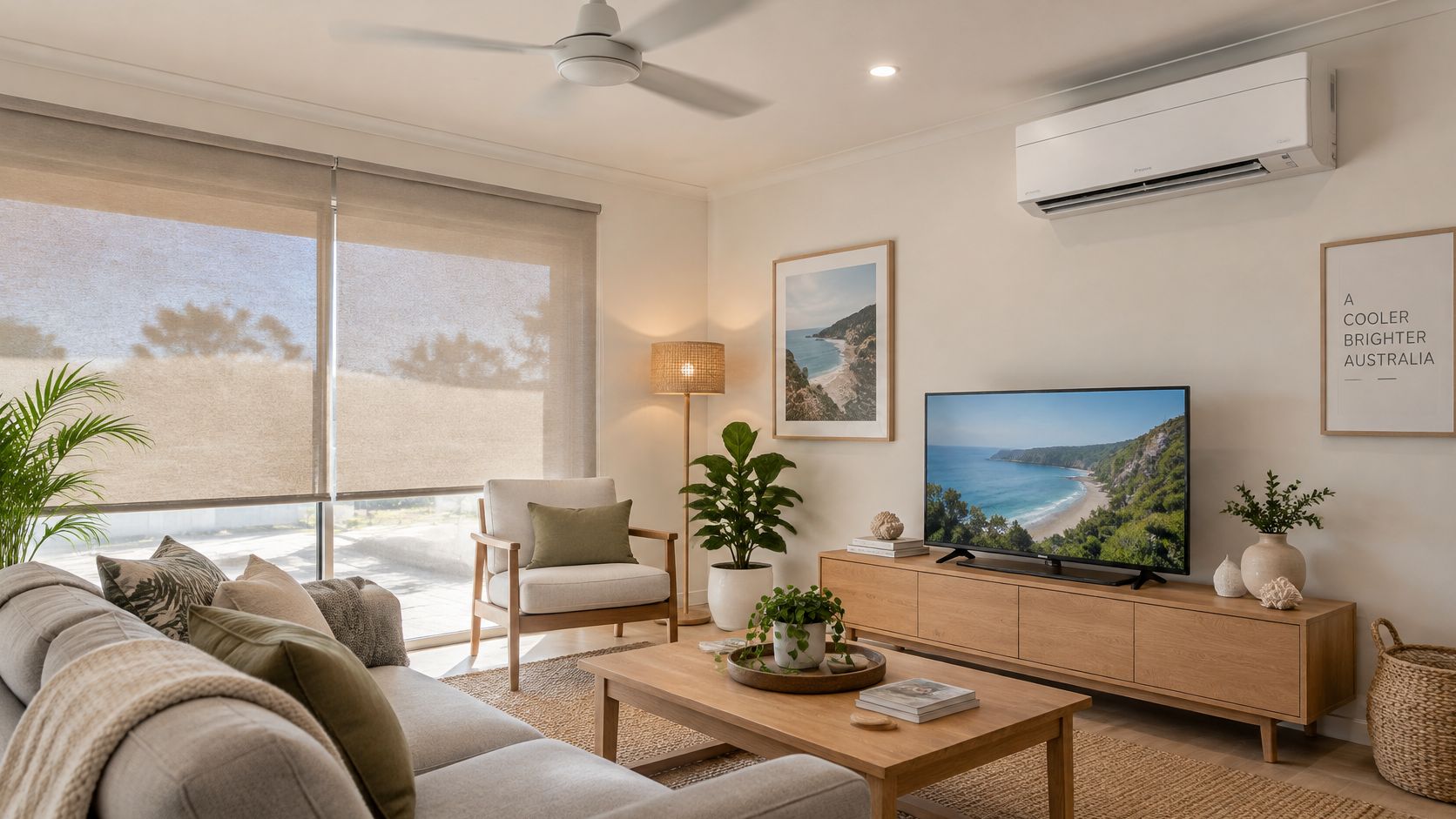
Settings That Change the Result
Set cooling to 24 to 26 degrees Celsius in summer and heating to 18 to 20 degrees Celsius in winter, where comfort allows. Many Queensland households sit near the top of that cooling range and use ceiling fans to lift perceived comfort. Households in cooler southern NSW commonly heat near 18 to 20 degrees Celsius rather than pushing for t-shirt temperatures indoors.
- Zone the space: Close doors and blinds on conditioned rooms, and don't cool empty bedrooms during the day.
- Clean the filters: Wash or vacuum filters regularly and book a service before summer, because restricted airflow makes the unit work harder.
- Check the label: Compare the Energy Rating and estimated annual consumption before replacing a unit, and review energy-efficient ducted air conditioning choices against split systems for your floor plan.
Poor building performance makes even a good unit waste energy, which is why understanding how insulation reduces HVAC strain helps you judge whether the problem is equipment or the house itself.
2. Heat Pump Hot Water Systems and Usage Timing
Hot water is a quieter load than air conditioning, but it's there every day. A heat pump hot water system extracts heat from ambient air and transfers it to the tank, so it uses substantially less electricity than a traditional resistance element for the same hot water output. The saving depends on correct sizing, placement with adequate airflow, and when you tell it to run.
South East Queensland suits heat pumps well because warmer ambient air improves efficiency for much of the year. In cooler parts of NSW, performance can dip on cold mornings, so a unit that's fine in Brisbane may need a closer look in the Southern Highlands or Blue Mountains. Don't buy on headline efficiency alone. Ask how the model performs at lower temperatures.
Timing Is Where Solar Owners Win or Lose
If your system reheats at 6am after morning showers, it's drawing from the battery or the grid before solar ramps up. Schedule the main heating cycle for late morning or early afternoon and that same energy often comes from panels that would otherwise export for a low feed-in value.
Practical rule: Treat the hot water tank as a thermal battery. Heat water when solar is abundant, then draw on that stored heat in the evening.
That approach only works if the tank is large enough for peak household demand. A family that runs out by 7pm will trigger a boost cycle at peak prices and wipe out the benefit.
- Set temperature carefully: Use a level that meets household needs and hygiene requirements while limiting standing losses.
- Confirm sizing first: Match tank capacity to baths, showers and laundry patterns, not just the number of bedrooms.
- Use licensed installers: Ask a licensed plumber to confirm compliance with Australian Standards and local rules.
3. Building Fabric Insulation Draught Sealing and Shading
Your roof, walls, windows and gaps decide how hard every other system has to work. Ceiling insulation, draught sealing and external shading reduce heat gain in summer and heat loss in winter, and they keep working without anyone remembering to change a habit. That's their strength compared with behaviour-only measures.
CSIRO modelling summarised by CSIRO's energy transition savings analysis found household energy-efficiency measures could save the average Australian household approximately $500 per year. Treat that as modelling, not a promise for your home, but it shows why fabric measures rank ahead of small appliance tweaks.
Older Queensland homes often gain most from roof insulation and shading west-facing glass that cops afternoon sun. Homes in Sydney and the Blue Mountains more often need draught sealing around doors, exhaust fans and old window frames to stop winter heat leaking out.
Spend in the Right Order
Do ceiling insulation and draught sealing before expensive glazing. You'll usually get a larger comfort gain per dollar, and you can verify the result by how long rooms hold temperature after the air conditioner cycles off. The Covenant Aire Solutions air sealing guide is useful for identifying common leakage points before you get quotes.
- Shade outside first: External blinds, awnings or eaves stop heat before it hits glass on west and north faces.
- Check existing insulation: Compressed, displaced or patchy batts don't perform to their rated value.
- Verify compliance: Confirm installation meets relevant building code requirements and get scheme paperwork where applicable.
4. Efficient Lighting and Appliance Selection
Lighting and appliances don't spike like air conditioning, but several of them run for long hours. A fridge runs all day. Downlights run every evening. That duration turns modest wattage differences into material annual consumption, and it eats into the battery capacity you'd rather reserve for cooking and cooling.
Australia's longer trend supports focusing here. The Australian Bureau of Statistics environmental issues release reported that in 2014, 20% of Australian households used solar energy and 49% used reverse-cycle air conditioning as their main cooling system. As solar spread, efficient appliances became more valuable because lower baseline demand lets a given solar and battery system cover a larger share of the home.
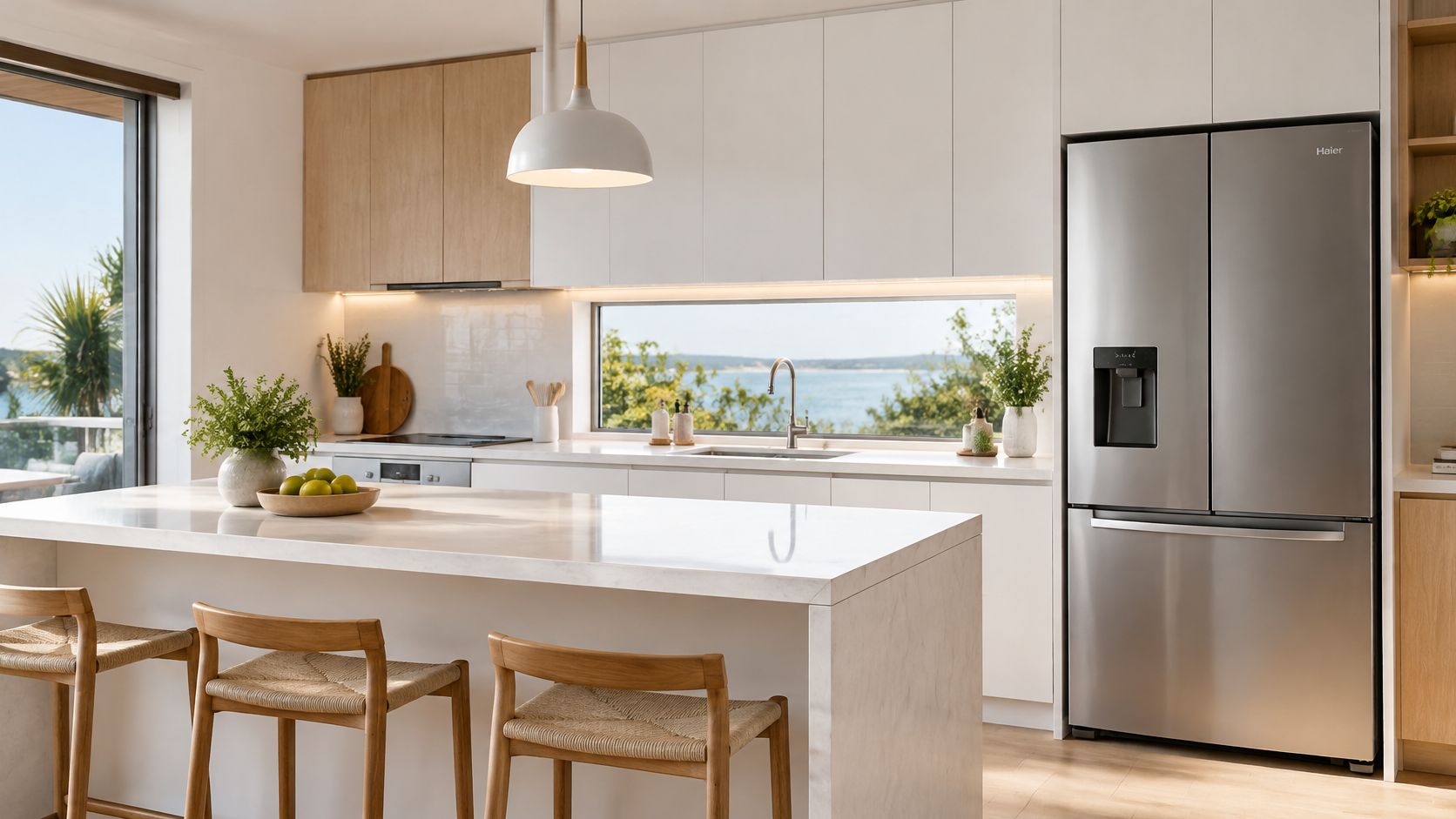
Replace halogen downlights with LED equivalents in living areas and kitchens first. You cut lighting electricity and reduce extra heat the air conditioner must remove. Bedrooms used for an hour a night can wait.
Buy on Annual Consumption
Star ratings help, but the estimated annual energy consumption on the Energy Rating label is the number to compare between models of similar size. A cheaper fridge or dryer can cost more over its life if it runs often. Before replacing a dryer, check how much electricity a dryer uses and weigh a heat pump model against how often you'll use it.
Run dishwashers and washing machines during solar generation where safety and routine allow, use cold wash settings where suitable, and recycle old appliances through approved channels rather than moving an inefficient second fridge to the garage.
5. Standby Power and Phantom Load Reduction
Standby power is the electricity a device draws while it appears off or idle. Televisions, set-top boxes, gaming consoles, soundbars, chargers and older network gear are typical sources. Each load is small. Across a house, all night, every night, it becomes a permanent drain on your battery.
This matters more for battery owners than for other households. A constant overnight load doesn't just add consumption, it can pull the battery to its minimum state of charge before morning. You then import grid electricity for breakfast loads even though the battery looked comfortably charged at bedtime.
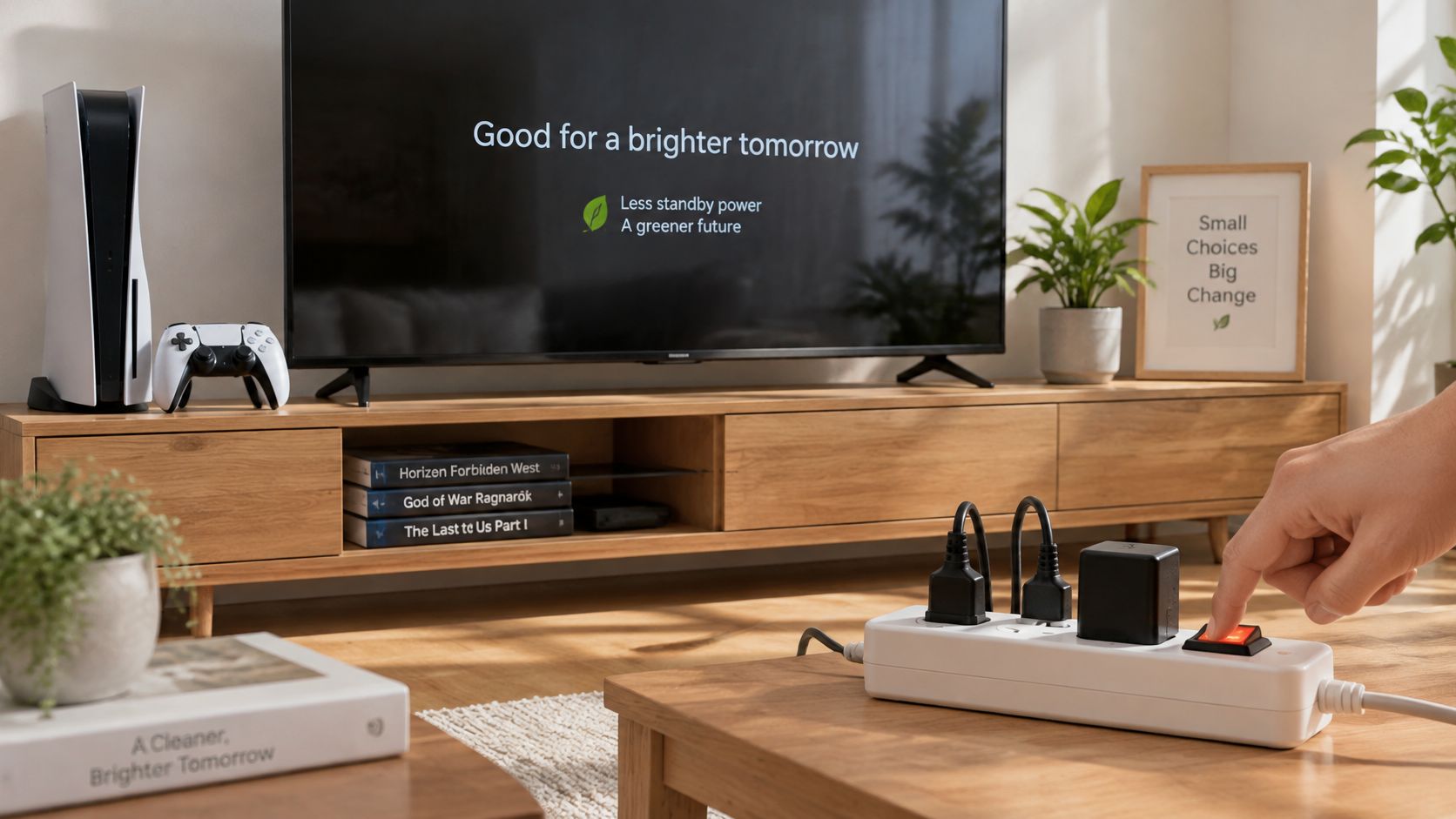
Measure before you act. Put a plug-in energy monitor on the entertainment unit for a week, then test the home office and any second fridge. Households often find the second fridge is the problem, not the phone chargers they've been unplugging.
Don't chase every tiny standby load. Find the devices that draw continuously, group them on a switched board, and leave essential equipment alone.
- Group entertainment gear: Use one switched power board for the television, console and set-top box.
- Turn off at the wall: Switch off home office peripherals that don't need overnight power.
- Keep essentials on: Leave routers, security systems, medical devices and fridge circuits connected.
- Disable always-on features: Turn off quick-start and illuminated standby modes on new appliances where you don't need them.
The saving is modest compared with heating, cooling and hot water, so rank it accordingly. It's a tidy-up measure, not a substitute for fixing the big loads.
6. Time-of-Use Tariffs and Load Shifting
A kilowatt hour doesn't cost the same at every hour. Many NEM plans use time-of-use pricing, with higher rates during evening peaks and lower rates overnight or in the middle of the day. Load shifting means moving flexible use, including dishwashers, washing machines, pool pumps and EV charging, away from expensive periods. You use similar energy, but you pay less for it or cover it with solar.
The trade-off is tariff fit. A time-of-use plan rewards a household that can move load, and it punishes a household that cooks, cools and charges between 5pm and 9pm without battery cover. Check when off-peak electricity applies on your specific plan rather than assuming off-peak always means overnight.
The Australian Government's household guide to reducing energy bills supports using stored solar at night or when electricity is expensive, but your interval data decides whether that strategy beats a flatter tariff. Review at least 12 months if you can, because a tariff that suits summer cooling may fail in winter.
A Worked Household Pattern
Say a NSW household runs the pool pump from 10am to 2pm, delays the dishwasher to midday, and charges an EV after the evening peak on controlled settings. The home hasn't become dramatically more efficient. It has stopped buying its most flexible energy at the highest price and left the battery for loads that can't move.
Compare daily supply charges, usage blocks, demand components where they apply, feed-in rates and network tariffs together. A low usage rate with a high daily charge can lose for a low-consumption solar home.
7. Rooftop Solar Self-Consumption and Export Management
Self-consumption is the share of your solar generation you use on site. It usually matters more than maximising exports because the retail rate you avoid paying is typically higher than the feed-in tariff you receive. Every solar kilowatt hour used by the heat pump, pool pump or washing machine at midday is one you don't buy back in the evening.
Scale explains the midday pressure on networks. CSIRO's ocean of electricity report states that by June 2025 Australia had 4.2 million rooftop solar systems with combined capacity of 26.8 gigawatts. Generation concentrates in sunny midday periods while demand often rises later, so export limits and dynamic export controls can cap what your system sends out.
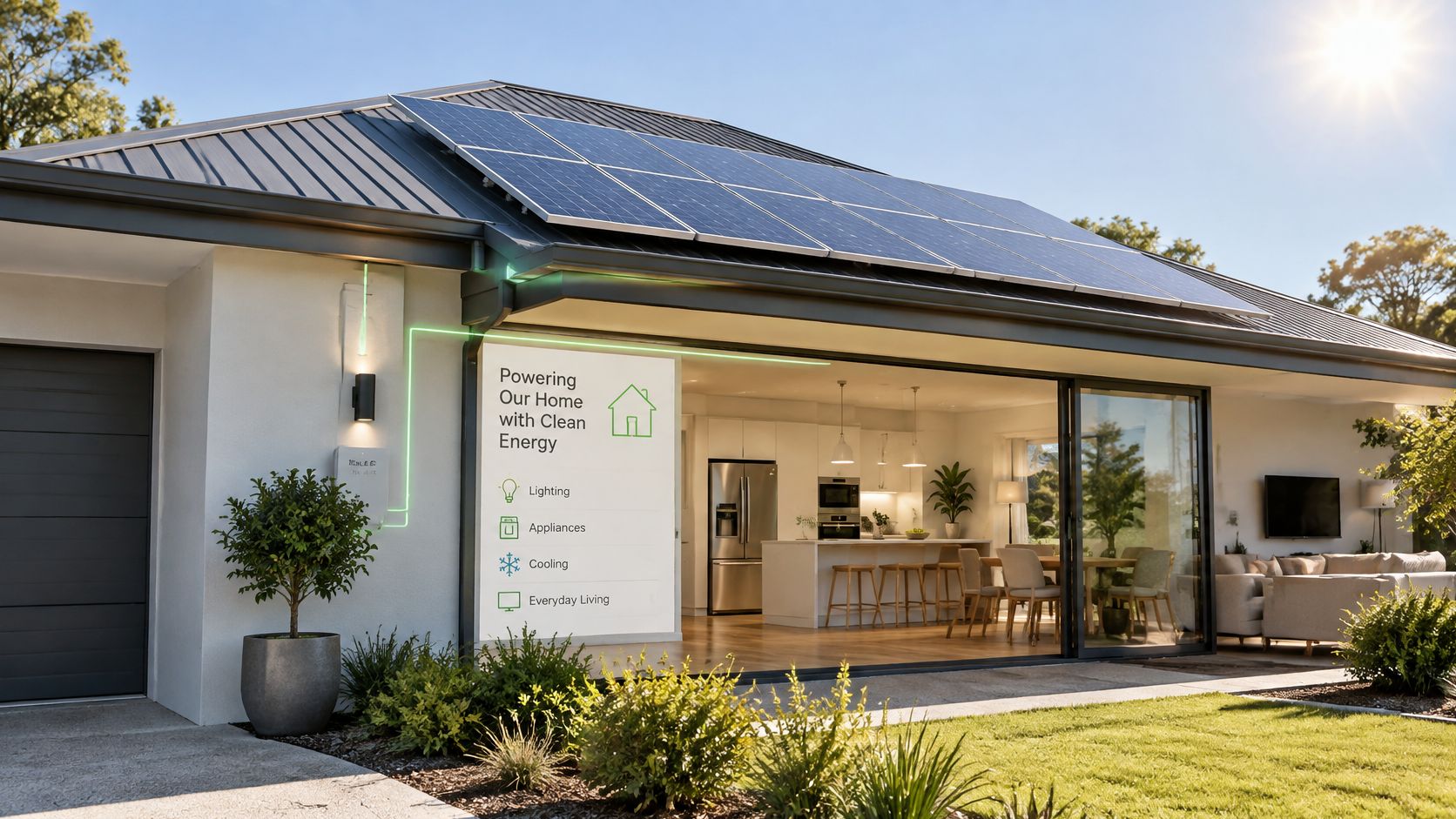
Check your monitoring for the pattern, not just daily totals. If exports surge from 10am to 3pm while grid imports surge after 6pm, timing is your problem. Move flexible loads first. Then consider whether battery settings or capacity are limiting the shift. Panel condition also matters in dusty or coastal areas, so assess when solar panel cleaning pays off rather than cleaning on a fixed schedule regardless of output loss.
Some households in NSW and South East Queensland can access Solar Sharer Offers from eligible retailers, with free electricity during specified midday periods. If you're eligible, that changes the maths and may favour running loads or charging the battery then. Always compare feed-in and buy rates together, confirm your distributor's export limit, and don't judge solar value on export income alone.
8. Home Battery Optimisation and Virtual Power Plant Participation
A battery only creates value when its charge and discharge timing matches your tariff, solar forecast and household demand. Charge from surplus solar, discharge through the evening peak, and keep enough reserve for the loads you care about. That's battery optimisation. Set it once and ignore seasons, tariff changes and usage shifts, and the asset underperforms.
Adoption is moving quickly. The Clean Energy Council rooftop solar and storage report states Australian households installed more than 14,200 batteries alongside rooftop solar in the first half of 2025, with 4,782 in New South Wales and 2,196 in Queensland. More owners now face the next question, which is whether simple self-consumption is enough.
A Virtual Power Plant, or VPP, coordinates many home batteries so spare capacity can support the grid during demand events or high wholesale prices. Household needs should come first, with a minimum reserve you understand and control. The Australian Competition and Consumer Commission NEM inquiry report identified 38,200 VPP customers across NSW, Queensland, Victoria and South Australia in January 2025, so participation is growing but still early-stage.
HighFlow Energy offers a retailer-based Bring Your Own Battery VPP in Queensland and NSW for eligible owners with solar and a compatible battery. Its bill-free electricity allowance is subject to eligibility and terms, and usage above the allowance is charged at standard rates.
- Confirm compatibility: Check battery and inverter eligibility before enrolling.
- Review warranty limits: Look at cycle and throughput conditions before enabling automated dispatch.
- Compare control terms: Assess reserve settings, override rights, exit conditions and allowance structures.
- Monitor results: Track imports, exports and battery cycling against your bills each quarter.
Energy saving measures compared by upfront cost, ongoing effort and best fit
The best-value measure depends on where the saving comes from: reducing heating and cooling demand, heating water efficiently, shifting flexible use, consuming more rooftop solar or improving battery value. Compare each option with your electricity tariff and export settings, since the benefit of shifting or storing energy depends on when you import and what you receive for exports.
| Item | Upfront Cost | Ongoing Effort | Best For |
|---|---|---|---|
| Heating and Cooling Efficiency | Low for operating changes; higher if replacing equipment | Set sensible temperatures, clean filters and maintain the system | Homes seeking to reduce heating and cooling demand |
| Heat Pump Hot Water Systems and Usage Timing | Higher installation cost than basic electric storage | Schedule heating and check settings and system performance | Households replacing electric hot water or aligning use with solar |
| Building Fabric: Insulation, Draught Sealing and Shading | Sealing gaps and basic shading are lower-cost measures; insulation costs more, while glazing upgrades are the most expensive option | Low after installation | Homes with heat loss, draughts or excessive summer heat |
| Efficient Lighting and Appliance Selection | LED swaps are low cost per fitting; replacing a fridge or dryer is a larger purchase | Low; choose efficient products when upgrading | Households replacing older lights or appliances |
| Standby Power and Phantom Load Reduction | Low; may require switched power boards or monitoring plugs | Low once devices are set up | Households with unused entertainment or office equipment |
| Time-of-Use Tariffs and Load Shifting | Usually low; timers or smart plugs may be needed | Schedule flexible appliance use and review tariffs | Households able to shift electricity use to cheaper periods |
| Rooftop Solar Self-Consumption and Export Management | Low if using existing solar and monitoring tools | Monitor usage and shift flexible loads to sunny periods | Solar households seeking to use more of their own generation |
| Home Battery Optimisation and Virtual Power Plant Participation | No new hardware if a compatible battery is already installed | Low with automated controls; review program and battery performance | Battery owners seeking to optimise storage or consider VPP participation |
For Queensland and NSW homes, tariff periods and export settings affect the value of flexible use, solar self-consumption and battery dispatch. A low-cost change can suit a home with suitable timing and rates, while a larger upgrade needs to address a persistent source of demand. Compare the upfront commitment with the ongoing effort required to capture the benefit.
Turning Energy Savings into Measurable Bill Reduction
Start with the building and the baseline load, then align hot water, flexible appliances and solar self-consumption with the tariff and export settings that apply to your home. That sequence prevents a common waste of money, which is buying more generation or storage to cover a house that's leaking cooled air, heating water at dawn and running its largest flexible loads at peak prices.
Build a simple quarterly review. Compare grid imports by time of day, solar exported, battery charge source and the hours when the battery hits its reserve limit. If imports cluster after the battery empties, look at evening load and reserve settings. If exports remain high at midday, look at hot water timing, pool filtration and pre-cooling before you assume you need more storage.
Tariff fit deserves the same discipline. Retail plans, feed-in rates, daily supply charges and network tariff structures change, and your usage changes with seasons, working patterns and new appliances such as an EV. A battery schedule built for an old time-of-use window can discharge too early and leave the highest priced hour exposed. Updating charge and discharge windows costs nothing, yet it can change the value of hardware you already own.
Be clear about what each measure can't do. Insulation won't fix a badly timed hot water boost. Load shifting won't hide an inefficient, oversized air conditioner. A VPP won't create spare capacity if the battery is already drained by preventable overnight load. Savings stack when the measures support each other, and they disappoint when each one is treated as a standalone fix.
Review your battery's performance data against your bills at least every quarter. Most battery owners focus on installation quality. Far fewer focus on ongoing performance and optimisation. HighFlow Energy is an electricity retailer built around maximising the full value of your existing solar and battery system. If you would like to understand whether your battery is underperforming financially, request an eligibility assessment today.
That assessment should be specific. Ask how household priority is protected, what reserve remains available to you, how allowance and excess usage work, and what happens if you leave. Transparent answers on those points matter more than a broad savings claim, because they determine whether an energy saving at home strategy still works on a cloudy week, during a heatwave or when wholesale and network conditions turn against you.
If you already own solar and a compatible battery in Queensland or NSW, HighFlow Energy can coordinate spare battery capacity through its retailer-based Virtual Power Plant while prioritising your household use. Check your eligibility, review whether your battery is underutilised under your current tariff, and see how a monthly bill-free allowance could apply to your home, subject to terms.