


Rooftop Solar Australia: Guide to Savings and VPP Value
Rooftop solar now supplies 12.8% of Australia's total electricity, and the money for a battery starts after installation, when you coordinate what happens to stored energy. In Australia's market, 183,245 batteries were installed in the second half of 2025, which shows the hardware boom is already here, but not every battery is being used well.
Australia's rooftop-solar market is no longer a niche story. It's a system-level electricity story, and homeowners in Queensland and New South Wales are sitting in the middle of it. If you own solar, the question isn't whether panels work. It's whether your system is timed, exported, and dispatched in a way that actually improves your bill.
Australia's Solar Revolution Is Already Here
The rooftop-solar boom has moved past the “emerging technology” stage. By June 2025, Australia had 4.2 million rooftop-solar installations across homes and businesses, with 26.8 GW of installed capacity, and rooftop solar generated 15,463 GWh in the first half of 2025, equal to 12.8% of national electricity generation. Queensland led the country with roughly 1.1 million systems, while Queensland and New South Wales recorded the two largest capacity additions, at 326 MW and 321 MW respectively. Clean Energy Council report
The system has already changed
That scale changes how the grid behaves. Rooftop systems now shape daytime supply in a way that older electricity planning never had to handle, which is why simple household explanations of rooftop solar Australia often fall short. A panel system is no longer just a private savings device, it's part of how the National Electricity Market operates.
Practical rule: once solar is widespread, the value of each extra kilowatt-hour depends less on generation alone and more on when it's used, stored, or exported.
For homeowners, that means the conversation shifts from “Should I install solar?” to “How do I get the most from the system I already have?” The answer increasingly depends on battery control, tariff structure, and whether the battery is allowed to do more than just sit behind the meter.
How Rooftop Solar Works and What It Actually Saves
The economics of rooftop solar are best understood kilowatt-hour by kilowatt-hour. In 2024–25, Australian households generated enough rooftop electricity to supply roughly half of their own solar production directly on average, with the rest exported to the grid. The ABS estimated that household solar electricity saved households more than $3 billion in 2024–25, while total household electricity use was valued at about $23.9 billion. ABS National Accounts estimate
Self-consumption and export are not the same thing
The part of solar you use at home usually matters more than the part you export. Self-consumed solar avoids the retail rate you would otherwise pay, while exported solar earns whatever feed-in tariff your retailer offers. Those are different value streams, and they rarely have the same financial weight.
For a homeowner in Queensland or New South Wales, that creates a simple but important checklist:
- How much daytime load do you already have? If the house is empty during the day, more of your solar is likely to be exported rather than used on-site.
- What does your tariff reward? A time-of-use plan can change the value of charging a battery in the middle of the day versus evening.
- How often does your battery discharge? A battery that stays full for long periods is a sign the control settings may not match your load profile.
The point isn't that solar is underperforming. The point is that value leaks happen when households treat every exported kilowatt-hour as interchangeable with one they consume themselves.
A good solar system is not just a generator, it's a timing problem.
For readers who are trying to map the household side of this equation, the logic used in net metering and solar export discussions helps clarify why exports and self-use are priced differently in practice. Queensland and New South Wales matter here because both states have large installed bases and strong solar generation patterns, which means household timing decisions affect both the bill and the network.
Installing Solar in Queensland and New South Wales
Queensland had the highest solar penetration among states and territories at 39% of suitable dwellings, while New South Wales remained one of the country's largest markets by total installations. The ABS also shows how quickly household solar moved from a niche upgrade to mainstream infrastructure, rising from 118 household solar installations in 2001 to 639,803 in 2011, with 168,167 in New South Wales and 166,395 in Queensland in that 2011 count. ABS solar installation data
The practical decision points
The installation choice starts with the roof, but it does not end there. A system can look tidy on paper and still disappoint if the inverter cannot support a later battery, if export limits cap the solar you can send out, or if the setup cannot join a Virtual Power Plant later. For homeowners trying to size the system properly, solar system sizing guidance helps frame the roof, the tariff, and the battery as one decision rather than three separate purchases.
That is when the bill impact begins to show. A small array may leave daytime load uncovered, while an oversized one can create friction if the export pathway is weak or the battery plan is unclear. The right installer should treat future use, not just panel count, as part of the design.
| Installation decision | What to check | Why it matters | Common risk if ignored |
|---|---|---|---|
| System sizing | Match array size to daytime demand and roof space | Helps the home use more of its own generation | A system that is too small leaves avoidable grid imports |
| Inverter readiness | Confirm battery compatibility and control options | Makes later battery installation less disruptive | A retrofit can cost more and limit equipment choice |
| Export limits | Check what the network will allow to flow out | Shapes how much excess solar can earn value | Strong solar production may be capped at the meter |
| VPP compatibility | Confirm the battery can participate if offered | Keeps future coordination options open | Spare battery capacity may stay underused |
A useful comparison also comes from how contractors choose their own tools. Homeowners can compare roofing software options the same way an installer evaluates workflow, because a system that is easy to monitor and adjust is easier to keep performing well after the panels go live.
Queensland and New South Wales share a practical lesson. Good solar installation is not only about putting panels on a roof, it is about setting up the rest of the system so the home can use, store, or export energy without boxed-in options later. That is where the bill is won or lost, especially once the household load pattern changes and the original settings no longer fit the home.
Feed-in Tariffs versus Virtual Power Plant Savings
A feed-in tariff pays for surplus electricity sent to the grid. That works, but it only rewards one part of the battery's job. A Virtual Power Plant changes the picture by coordinating spare battery capacity at times when the battery can do more than sit full and wait.
Independent Australian market evidence found that households with rooftop solar and a battery had average energy bills of $323 per quarter, while participation in a VPP was linked to an additional average saving of $106 per quarter, bringing the reported average bill to $217 per quarter. ACCC-linked market evidence
What the comparison really means
The useful part of that comparison is not the battery alone. It is the difference between a battery that only serves one home and a battery that is occasionally available for coordinated dispatch. The ACCC-linked figure suggests that the extra saving came from households already owning the hardware, then allowing part of that capacity to be used more strategically.
A simple way to read the $217 per quarter result is to separate the value stream into three parts. First, rooftop solar still cuts daytime imports through self-consumption, which lowers the bill before any battery action begins. Second, the battery stores surplus solar instead of sending it all out for a modest export credit. Third, the VPP can call on spare capacity when the household does not need it, which is where the additional saving appears. The point is not that each piece acts alone. The bill falls because the same kilowatt-hour is assigned a better job at the right time.
The $106 per quarter saving is the most informative part for homeowners because it shows who captured the extra value. It was not the household with solar alone, and it was not a battery left on passive settings. The saving came from homes that already had a battery and then allowed a retailer or aggregator to coordinate dispatch through a VPP model. That matters for anyone comparing tariffs, because the difference is often less about the panels on the roof and more about who decides when the battery charges and discharges.
A battery that is full at midday and empty at the wrong time is a control problem, not a hardware problem.
For homeowners comparing retailer-based options, High Flow Energy's VPP structure shows how a BYOB model can coordinate an existing battery rather than require a new installation. The key question is whether the rules fit the home's load pattern, export limits, and reserve needs.
Why Most Batteries Are Underperforming Financially
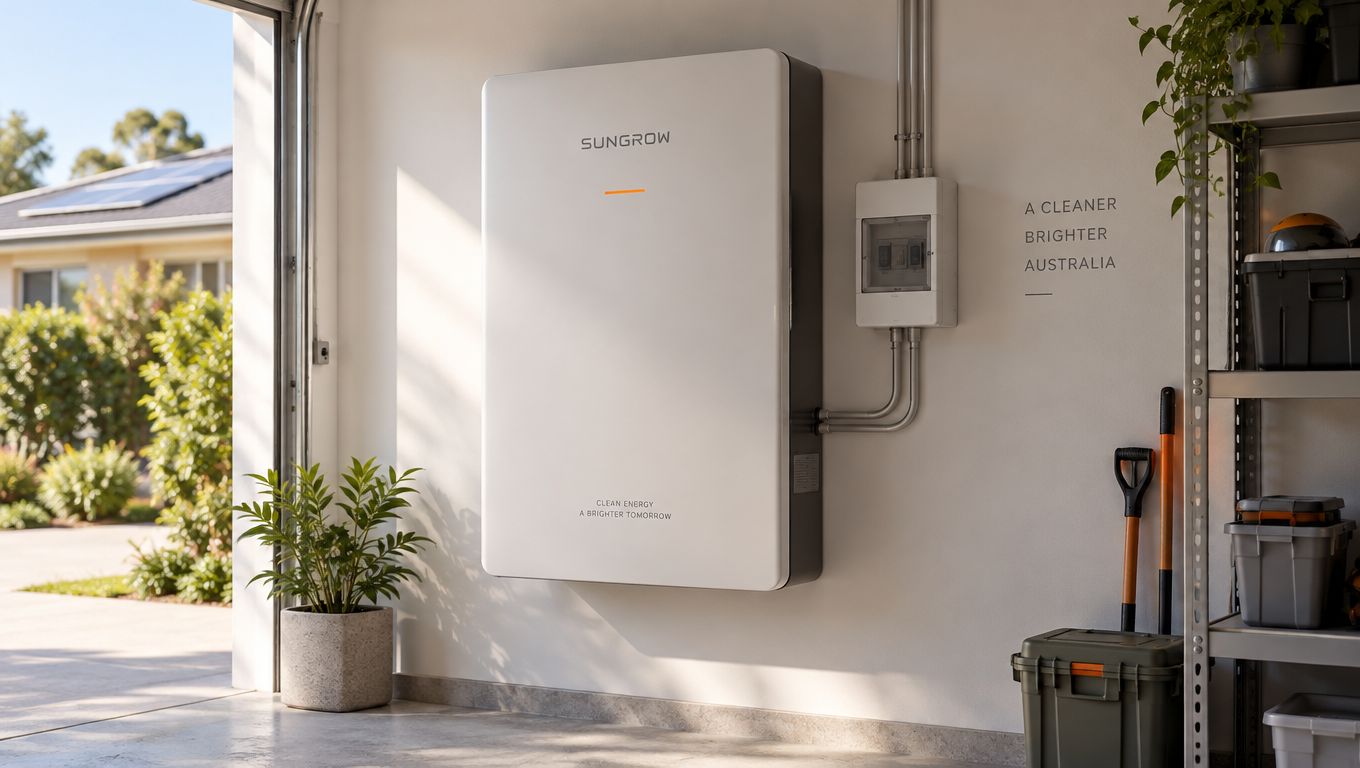
A battery is not an automatic bill-reduction machine. Its value depends on tariff design, export rules, household load timing, and the control strategy that decides when it charges and when it discharges. In a market with heavy rooftop PV, that matters because stored energy is only as valuable as the moment it is used.
The hidden cost is opportunity
The Clean Energy Council says rooftop solar has become a major part of the electricity system, and that scale creates a practical problem for battery owners. Solar generation arrives in the middle of the day, while many households use more power later, so unmanaged exports can add strain to local networks and leave extra PV earning very little. Clean Energy Council market update
A useful way to assess a battery is to ask what job each kilowatt-hour is doing. A battery should charge from surplus PV when export value is low, hold enough reserve for the home, and discharge when prices or demand are more favourable. Treating every stored kilowatt-hour as interchangeable is where performance slips.
What underperformance usually looks like
The symptoms are practical, not theoretical:
- Full too early: the battery is already full by midday, so later solar production is pushed out at weak export value.
- Empty too soon: the battery is drained before the evening peak, so the home still buys expensive grid power later.
- No grid participation: spare capacity sits idle because the system is not enrolled in a coordinated program.
- No override clarity: the household cannot easily keep backup energy aside for its own needs.
A battery works best when it serves both the home and the grid without leaving the family exposed. That means reserving energy for backup, then using spare capacity only when the control settings and market conditions make sense.
What High Flow Energy Offers Existing Solar and Battery Owners
High Flow Energy is built for households that already have rooftop solar and a compatible battery. It doesn't sell panels or batteries, it connects existing assets into a Bring Your Own Battery VPP model so spare capacity can support the grid when the household doesn't need it. The logic is simple, household use comes first, and the control layer handles the timing.
How the model works in practice
AEMO defines a Virtual Power Plant as an aggregation of distributed energy resources coordinated to deliver services for power-system operations and electricity markets, and says those resources can include residential batteries, electric vehicles, and other consumer energy resources. In plain English, the battery stays at your home, but software coordinates when it charges, discharges, or holds back. AEMO Integrated System Plan
That matters because the grid increasingly needs flexible household assets. AEMO's 2024 plan says rooftop solar and other distributed solar capacity is forecast to rise from 21 GW to 86 GW, which is one reason coordinated battery operation is becoming more relevant. The value is not just technical, it's commercial. Better control creates better timing, and better timing creates better bill outcomes.
A good program still has to protect the customer. Household consumption comes first, backup settings matter, and the app or control layer should let the owner understand what the battery is doing. That's also why clarity around device compatibility, network rules, and retailer settings matters more than glossy marketing.
If you're weighing a VPP against a passive battery setup, it helps to compare operational transparency as well as projected savings. A useful resource on how service businesses explain and convert interested customers is how home service companies win leads, because the same principle applies here, clear education works better than vague promises.
A Queensland homeowner with solar and a compatible battery may look at the system and assume it's already doing all it can. In practice, a battery that only self-consumes can leave value on the table if it never participates in a coordinated program. A retailer-based VPP can change that by putting spare capacity to work while still reserving energy for the home.
Most battery owners focus on installation quality. Far fewer focus on ongoing performance and optimisation. High Flow Energy is an electricity retailer built around maximising the full value of your existing solar and battery system.
If you want to understand whether your battery is underperforming financially, request an eligibility assessment and see whether your current setup is working as hard as it should. Visit High Flow Energy to review how a BYOB VPP can fit your household.